Massive pension relief for women SSC officers in Army, Navy and Air Force
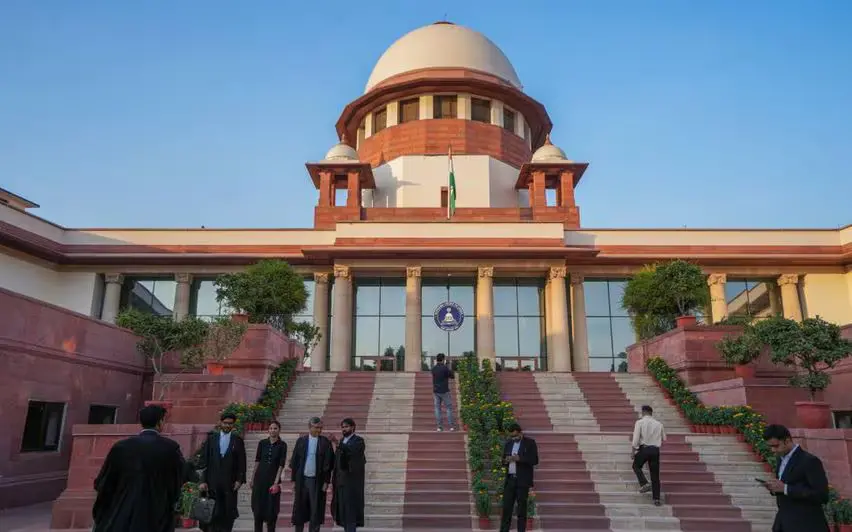
New Delhi: The Supreme Court of India ruled on Tuesday that women Short Service Commission (SSC) officers who were denied a Permanent Commission (PC) due to "arbitrary assessment" are now entitled to full pensionary benefits.
A three-judge bench, led by Chief Justice Surya Kant and including Justices Ujjal Bhuyan and N. Kotiswar Singh, declared that these officers will be "deemed" to have completed the mandatory 20 years of qualifying service required for a pension. This ruling applies even if the officers were released from the Army, Navy, or Air Force before reaching that milestone.
The court noted that the Annual Confidential Reports (ACRs) for many women officers were graded "casually" by senior officials. The bench observed that these reports were written under the flawed presumption that women would not be eligible for career progression, which unfairly damaged their overall merit during selection boards.
How does the Supreme Court's Article 142 ruling affect pension?
Invoking its extraordinary powers under Article 142 of the Constitution to ensure "complete justice," the Supreme Court provided a one-time relief measure. All SSC officers considered for Permanent Commission in selection boards held between 2019 and 2021, including those already released from service in 2021, will now be treated as having served for 20 years.
The bench clarified that while the pension will be fixed based on this 20-year deemed service, the financial benefits will be effective starting November 1, 2025. However, the court declined the plea for reinstatement (returning to active duty) or notional promotions to the rank of Wing Commander, citing "operational effectiveness" as a priority for the forces.
Regarding the Indian Air Force, the court found that new performance criteria introduced in 2019 were implemented too hastily, denying women officers a fair chance to meet the requirements. Similar flaws were identified in the Army and Navy assessment models, where a lack of transparency in evaluation criteria adversely impacted women's careers.