Supreme Court orders 30% reservation for women in State Bar Councils
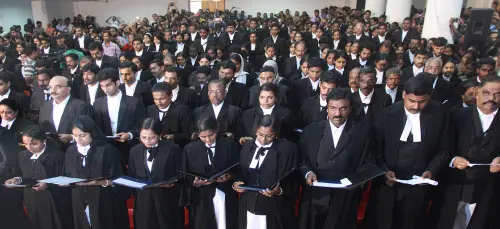
New Delhi: In a landmark move to boost gender representation in the legal profession, the Supreme Court on Monday directed that 30% of seats in State Bar Councils, where elections are yet to be notified, must be reserved for women advocates, according to Live Law. For the current election cycle, 20% of the seats will be filled by elected women members and 10% through co-option, with proposals for co-option to be placed before the Court in councils where the number of women candidates is inadequate.
States where the order will not apply for now
The Court clarified that it would not be practical to earmark seats for women in six State Bar Councils where the election process has already begun, Andhra Pradesh, Punjab & Haryana, Uttar Pradesh, Telangana, Bihar and Chhattisgarh. However, the bench urged voters in these states to make efforts to ensure adequate representation of women advocates, adding that women candidates must be encouraged to contest with “full spirit”.
Court rejects higher co-option proposal
A bench of Chief Justice of India Surya Kant and Justice Joymalya Bagchi issued the directive while hearing petitions seeking women’s reservation in State Bar Councils filed by Yogamaya MG and Shehla Chaudhary. The Court noted that although the Bar Council of India (BCI) agreed in principle to 30% women’s reservation, its suggestion to fill 15% of seats through co-option was not acceptable, ruling instead that co-option must be limited to 10%.
Push for gender diversity in the legal profession
During the hearing, several senior advocates highlighted the urgent need for greater diversity in bar leadership, while acknowledging that a blanket quota across all states may be challenging due to the low proportion of practising women in some regions. Intervention petitions from members of the legal community supported the Court’s move, calling for an end to entrenched “once a chairman, always a chairman” patterns in bar associations.
The Court’s directive is expected to have far-reaching implications for gender equality and leadership opportunities for women advocates in India’s legal system.