Sonam Wangchuk finds govt's move a trust gesture, says give-and-take needed in talks | VIDEO
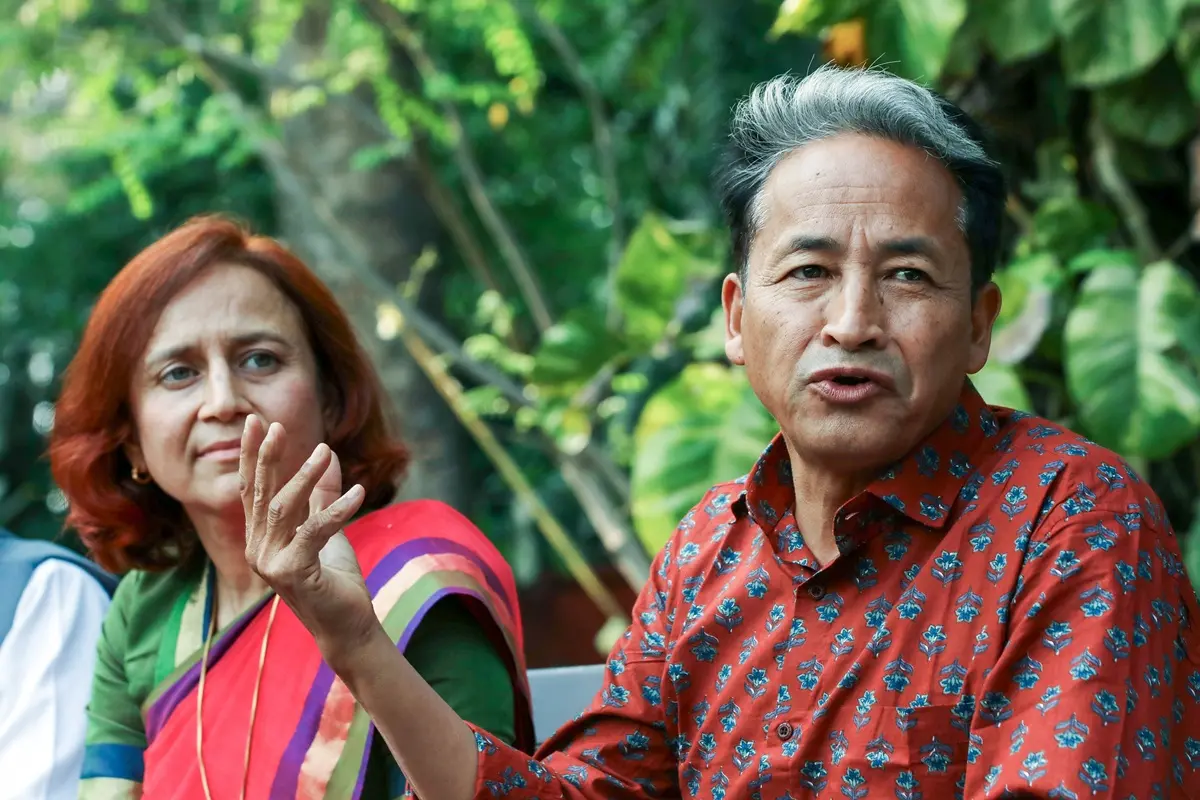
Activist and educationist Sonam Wangchuk, speaking publicly for the first time since his release from Jodhpur Central Jail, called for a “meaningful dialogue” on the demands of protest groups in Ladakh. He said he hoped the situation would be seen in a “positive light” and result in tangible progress for the region.
Addressing reporters alongside his wife and Himalayan Institute of Alternative Learning co-founder Gitanjali J Angmo, Wangchuk said the ongoing protests in Ladakh were aimed at initiating dialogue rather than confrontation.
“Dialogue is a give-and-take process,” says Wangchuk
Wangchuk emphasised that any talks must involve flexibility from both sides. “We were sure of a victory in the court, but a win was not enough. I wanted a win-win,” he said, stressing the need for outcomes beneficial to all parties.
He described the government’s decision to release him as an “extending of hand to build trust and to facilitate meaningful, constructive dialogue”.
“They have offered a constructive, meaningful dialogue. This is what we have wanted, and we had to struggle so much, walk to Delhi, sit on 'anshan' (fast). All movements in Ladakh are for starting the dialogue process,” he added.
Highlighting the unique nature of the agitation, Wangchuk said, “Usually, you see people picking up guns and the government appealing for dialogue. Here, people are urging the government to start a dialogue.” He expressed hope that the talks would be “meaningful, effective… which lead us to something good.”
He also addressed the recent unrest in Ladakh, noting “many meaningless arrests… even people who were going to donate blood got arrested and got an FIR.” Wangchuk called for a review of how the violence began and questioned the high number of injuries sustained in the chest.
Next steps: engagement with Ladakh leaders
On his future plans, Wangchuk said he would travel to Ladakh to consult with the Leh Apex Body (LAB) and Kargil Democratic Alliance (KDA), the organisations spearheading demands for statehood and Sixth Schedule inclusion.
“I have always said I don’t want to sit on hunger strike; I am forced to do it. Now that the government is extending its hand, we hope a good example is set,” he said.
He reiterated that dialogue requires give-and-take. “Overall, the two main issues are safeguards under the Sixth Schedule, statehood, or the restoration of democracy… Therefore, if not on both, we would hope on one… That’s how we want to expect to give and take and be flexible in the interest of nation building.”
Wangchuk clarified that local leaders in Ladakh would decide the outcome. “It should not be a lose-lose for one side… That will not be a successful dialogue. It can be a win-win where each side accommodates the other,” he said.
The activist, 59, spent his time in Jodhpur jail meditating and thanked the staff for their support. He was detained on 26 September under the NSA after violent protests in Ladakh left four dead, and was released on Saturday following the Union government’s revocation of his detention.
The LAB and KDA have been negotiating with the Ministry of Home Affairs over statehood and Sixth Schedule inclusion, holding rallies and shutdowns to press for the next round of talks, as promised in the February 4 meeting of the high-powered committee chaired by Minister of State for Home Affairs Nityanand Rai.