Sonam Wangchuk's health worsens after 17-day hunger strike; questions grow over Centre's silence
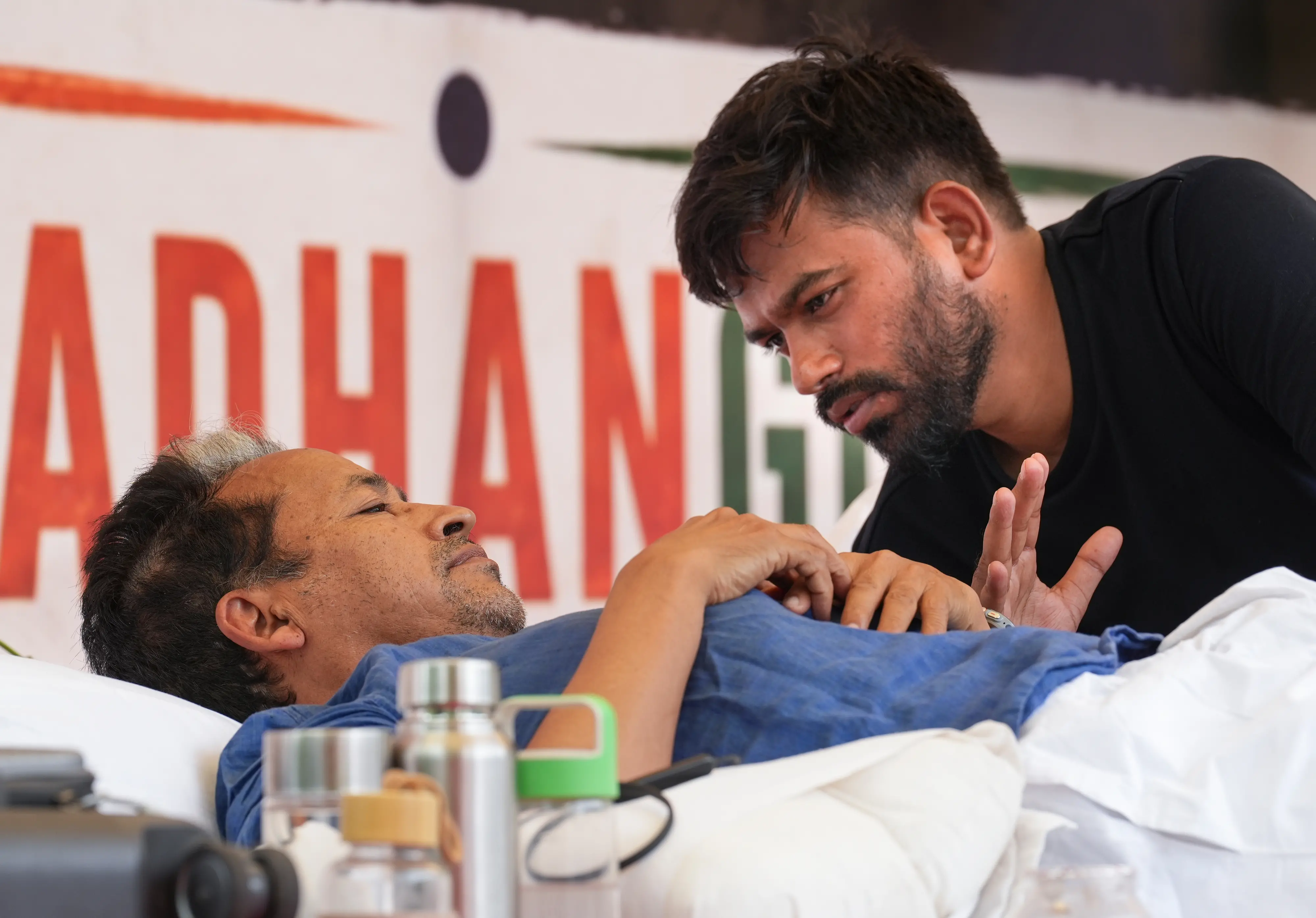
New Delhi: Concern over the health of climate activist and education reform advocate Sonam Wangchuk has intensified as his indefinite hunger strike entered its 17th day, with supporters saying his condition is worsening and calling on the Centre to initiate dialogue with protesters.
According to organisers monitoring his health, Wangchuk has lost 8.5 kg since beginning his fast and is showing signs of muscle loss and physical weakness.
What is Wangchuk's current health condition?
Cockroach Janata Party (CJP) founder Abhijeet Dipke, who has been sharing regular health updates, said Wangchuk's condition continues to decline.
According to Dipke:
- Wangchuk has lost 8.5 kg.
- His blood pressure was recorded at 109/70 mm Hg.
- Earlier readings showed his blood glucose level had dropped to 67.
- He has reportedly begun losing muscle mass and is experiencing persistent pain.
- Dipke said he urged Wangchuk to end the hunger strike, but the activist refused.
According to Dipke, Wangchuk replied: "Don't ask me to end my fast. Ask the government why they won't even have a dialogue."
Dipke has also appealed to the government not to allow the issue to become what he described as a "battle of egos", saying human lives should come before political differences.
Why is Sonam Wangchuk protesting?
The protest began on 20 June, with Wangchuk joining the agitation on 28 June and starting an indefinite hunger strike.
The movement is demanding:
- The resignation of Union Education Minister Dharmendra Pradhan.
- Accountability over alleged examination irregularities, including the NEET paper leak.
- ₹1 crore compensation for families of students who allegedly died by suicide following examination-related controversies.
- Wider reforms to improve transparency and accountability in India's examination system.
The organisers have also announced a march from Jantar Mantar to Parliament on 20 July, coinciding with the start of the Monsoon Session.
Political leaders and public figures appeal to Wangchuk
Support for Wangchuk's campaign has continued to grow across political parties and civil society.
Trinamool Congress MP Mahua Moitra appealed to Wangchuk to end his fast, saying his movement had already inspired young people across the country.
An Aam Aadmi Party delegation led by Atishi visited the protest site to express solidarity.
Former Maharashtra Chief Minister Uddhav Thackeray also extended support to the movement while urging Wangchuk to prioritise his health.
CPI(M) MP Amra Ram and senior party leaders from Andhra Pradesh and Rajasthan also visited the protest site and backed the protesters' demands.
Outside politics, writer Arundhati Roy, actors Naseeruddin Shah, Ratna Pathak Shah, economist Jayati Ghosh and several other public figures issued a joint appeal asking Wangchuk to end the fast while continuing the larger campaign.
Their statement described the movement as "a marathon, not a sprint" and stressed that his leadership would remain vital in the months ahead.
Actor Omi Vaidya, who played Chatur Ramalingam in 3 Idiots, also urged people to support Wangchuk, recalling that he inspired Aamir Khan's character Rancho in the film.
"I don't want Funsukh Wangdu to die," Vaidya said in a video message, referring to Wangchuk's real-life inspiration for the character.
Why are protesters accusing the government of inaction?
Supporters of the protest say their biggest concern is the absence of formal dialogue between the government and the protesters despite the hunger strike entering its third week.
Dipke and several opposition leaders argue that the Centre should engage with the protesters before Wangchuk's health deteriorates further.
Mahua Moitra also criticised the government's response, saying Wangchuk's life mattered even if, in her words, "the government may not care."
However, the Union government has not publicly responded to these specific allegations or announced any formal talks with the protesters at the time of writing.
What has been the government's response?
As of July 14, the Union government has not issued a public statement responding to Sonam Wangchuk's latest health updates or announced any formal talks with the protesters.
Protest organisers say repeated appeals for dialogue have not received a response and argue that negotiations should begin before Wangchuk's health deteriorates further.
Cockroach Janata Party founder Abhijeet Dipke has urged the Centre to engage with the protesters, saying the issue should not become "a battle of egos." Wangchuk has also maintained that he is willing to continue discussions but wants the government to open a dialogue.
Opposition leaders, including Trinamool Congress MP Mahua Moitra, have criticised what they describe as the government's silence. In a social media post, she appealed to Wangchuk to end his fast while alleging that the government had failed to respond to the protest.
However, the Union government has not publicly addressed these allegations, and no official explanation has been issued regarding whether talks with the protesters are being considered.
What happens next?
As Wangchuk's health continues to decline, pressure is mounting on both the protesters and the government.
Supporters are urging the Centre to begin discussions to resolve the standoff, while many of Wangchuk's allies hope he will preserve his health and continue leading the campaign through other democratic means.
With the proposed Parliament march approaching and the Monsoon Session due to begin on 20 July, the coming days could prove crucial for both the protest movement and any potential government response.