India launches first private orbital rocket Vikram-1, enters elite global space club
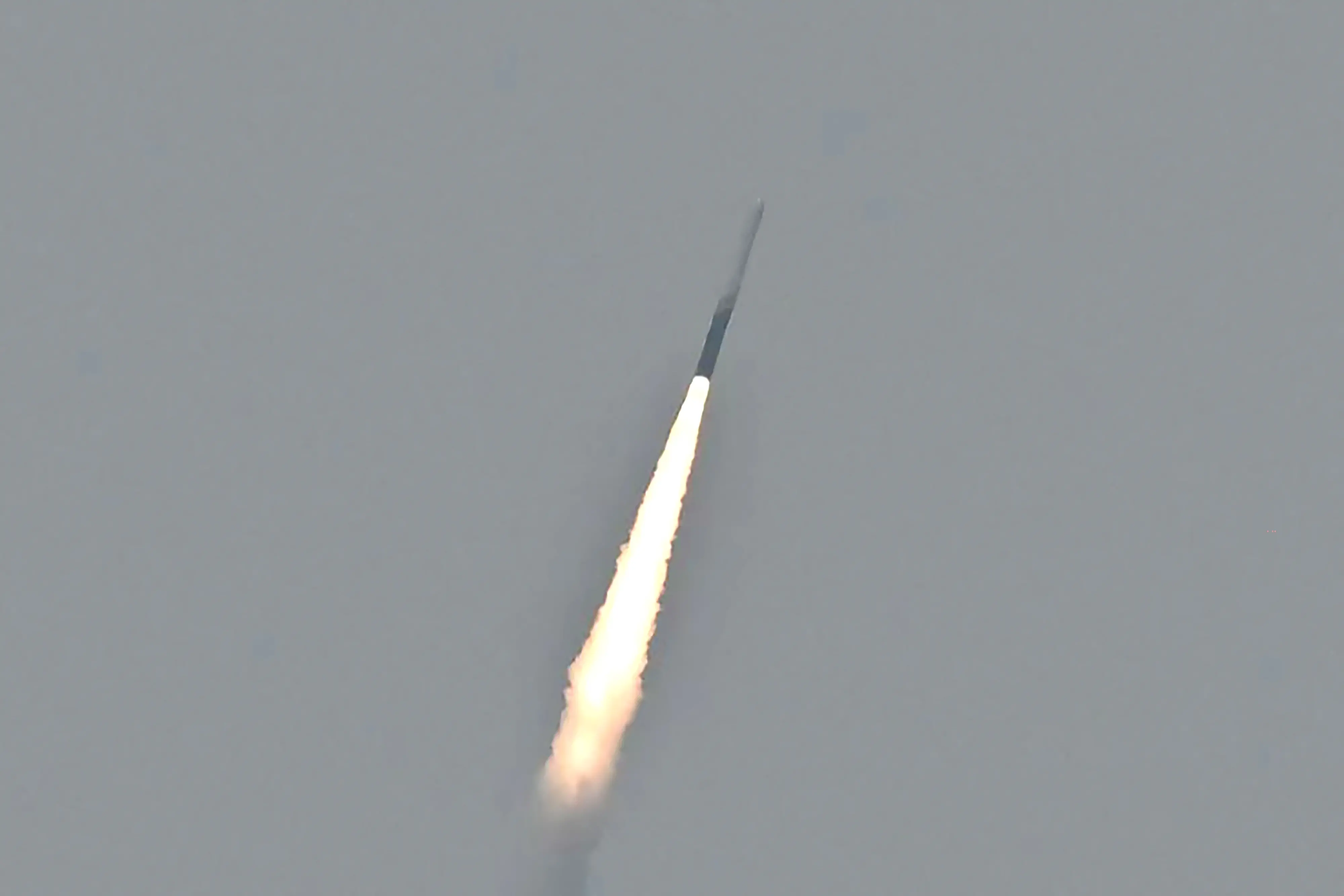
India marked a major milestone in its space programme on Saturday as Hyderabad-based Skyroot Aerospace successfully launched Vikram-1, the country's first privately developed orbital-class rocket, from the Satish Dhawan Space Centre (SDSC-SHAR) in Sriharikota.
The successful maiden flight, named Mission Aagaman, completed all planned stages before deploying multiple payloads into a nearly 450-kilometre Low Earth Orbit (LEO). The achievement makes India one of the few countries with the capability to launch privately built orbital rockets, signalling the growing maturity of its commercial space ecosystem.
Skyroot Aerospace announced the success on X, saying, "Hello space, we have arrived! Vikram-1's Test Flight-1 has completed its mission. The first ever Indian private sector launch has been successfully completed."
What was the purpose of Mission Aagaman?
Mission Aagaman was primarily a technology demonstration mission aimed at validating Vikram-1's design, propulsion, guidance, navigation, control systems and stage separation under real orbital conditions.
The 24-metre rocket is designed to carry payloads of up to 350 kg into a 450-km Low Earth Orbit, targeting the rapidly growing global small satellite market. Skyroot plans to offer affordable, reliable and on-demand launch services for commercial satellite operators, universities, research organisations and governments.
The mission also carried several technology demonstration payloads from Indian and international customers, including Bengaluru-based Cosmos Diamonds' Diamond Lotus, a lab-grown diamond experiment. A handwritten postcard by Prime Minister Narendra Modi bearing the words "Vande Mataram" also travelled onboard alongside handwritten messages from scientists, engineers and members of the Skyroot team.
ISRO's role in the launch
Although Vikram-1 was designed and built by Skyroot Aerospace, the mission relied on India's public space infrastructure.
The rocket was launched from ISRO's Satish Dhawan Space Centre in Sriharikota after receiving regulatory approvals from IN-SPACe, the national agency established after India's 2020 space sector reforms to facilitate private participation.
ISRO provided launch infrastructure, range safety support, tracking systems and technical coordination, while Skyroot independently developed and operated the launch vehicle. The mission highlights the collaboration between India's government space programme and its emerging private space industry.
Why the mission is significant
The successful launch is expected to strengthen India's position in the global commercial launch market, where demand for dedicated small satellite launches has grown rapidly due to increasing Earth observation, communications and scientific missions.
India's private space sector has expanded significantly since the government opened the sector to private companies in 2020. Today, hundreds of space startups are developing launch vehicles, satellites, propulsion systems and space technologies.
Criticism and challenges
Despite the historic success, experts note that Vikram-1 represents only the first step in building a sustainable commercial launch business.
Analysts say Skyroot must now demonstrate consistent launch reliability, competitive pricing and the ability to conduct regular commercial missions to compete with established international launch providers such as SpaceX, Rocket Lab and emerging Chinese companies.
Some experts have also cautioned that India's private launch ecosystem still depends heavily on ISRO's launch infrastructure and regulatory support. Expanding independent manufacturing capacity, launch facilities and private investment will be crucial for long-term competitiveness.
The mission nevertheless represents a major proof of concept for India's private space ambitions and is expected to encourage further investment and innovation in the country's rapidly expanding commercial space sector.