School textbooks should include Emergency history, says former vice president Venkaiah Naidu
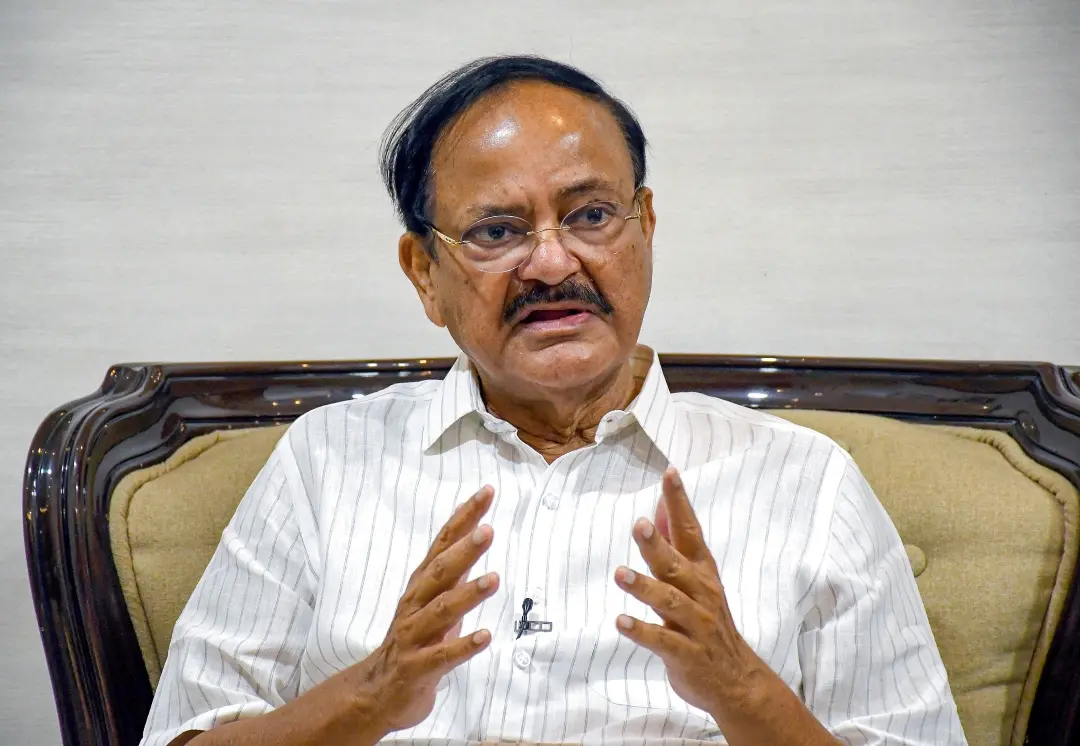
New Delhi: Former vice president M Venkaiah Naidu highlighted on Tuesday that the Emergency in 1975 had left a stain on India's democracy. He emphasised the importance of including lessons in textbooks to educate students about how this challenging period unfolded in the country.
Speaking on the occasion of the 50th anniversary of the enforcement of the Emergency, Naidu said, "The Emergency has put a taint on the country's democracy. There should be a lesson in the textbooks for all the students about what was and how it was imposed. Students should know that an emergency was imposed and how lakhs of people were arrested."
Earlier, Prime Minister Modi, in strong criticism directed at the Congress Party, denounced the dark days of the Emergency as a stark reminder of how the party had disregarded the Indian Constitution to maintain power. He pointed out that the Congress government at that time had ignored democratic principles merely to cling onto authority.
Taking to X PM Modi posted, "Today is a day to pay homage to all those great men and women who resisted the emergency. The Dark Days of Emergency remind us of how the Congress Party subverted basic freedoms and trampled over the Constitution of India, which every Indian respects greatly."
"Just to cling on to power, the then Congress government disregarded every democratic principle and made the nation into a jail. Any person who disagreed with Congress was tortured and harassed. Socially regressive policies were unleashed to target the weakest sections," the Prime Minister wrote.
Senior BJP leaders including JP Nadda, Rajnath Singh, and Jaishankar also launched scathing criticisms against the Congress regarding its actions during the Emergency.
The Emergency, imposed by former Prime Minister Indira Gandhi from June 25, 1975, to 1977, remains one of the most contentious periods in India's post-independence history. It was characterised by political arrests, forced sterilisations on a mass scale, and other controversial government actions aimed at consolidation of power. During this period, prominent opposition leaders such as Atal Bihari Vajpayee, LK Advani, and Jay Prakash Narayan were either jailed or placed under detention, reflecting widespread political suppression.
ANI