Justice after 35 years? J&K Police chargesheets Yasin Malik in Sarla Bhat murder case
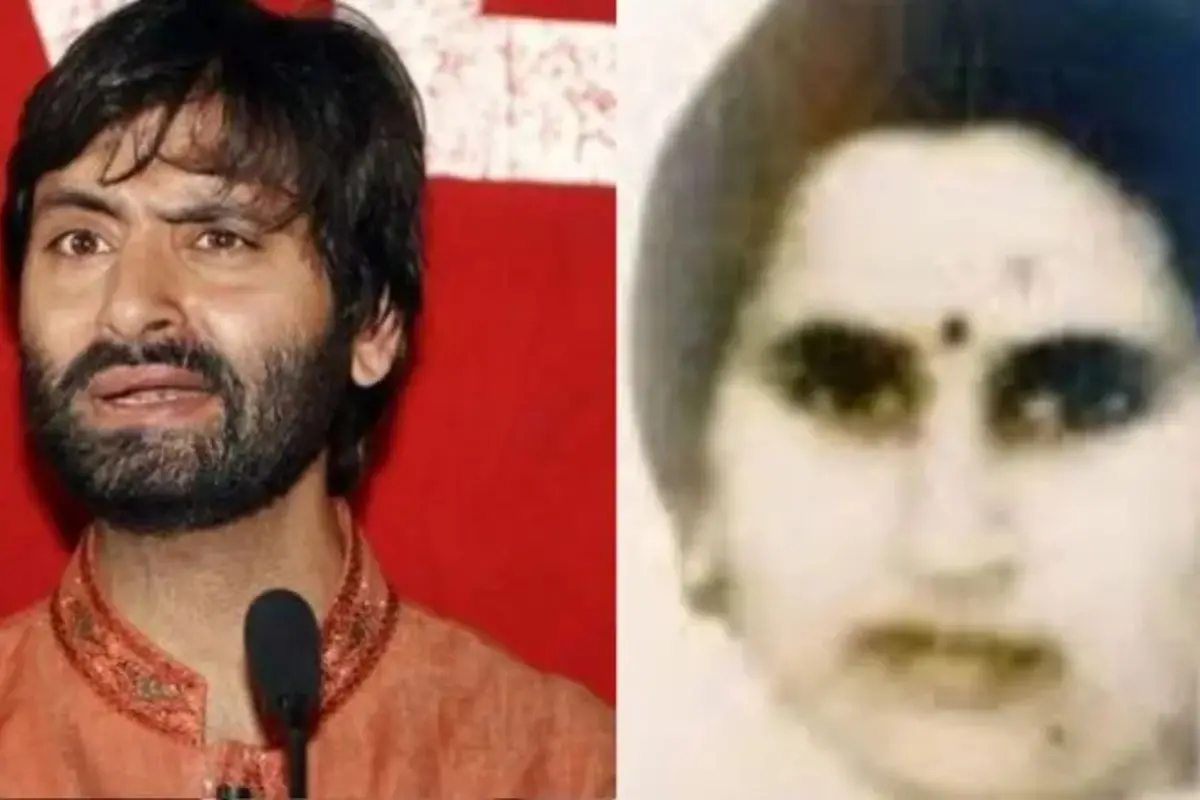
More than 35 years after the abduction and murder of Kashmiri Pandit nurse Sarla Bhat, the Jammu and Kashmir Police's State Investigation Agency (SIA) has filed a chargesheet naming Jammu and Kashmir Liberation Front (JKLF) chief Yasin Malik and four others, marking a significant breakthrough in one of the Valley's oldest unresolved terror cases.
The 737-page chargesheet, to be filed before a special court in Srinagar, alleges that Malik and his associates were part of a larger terrorist conspiracy behind the April 1990 kidnapping and killing of Bhat.
Investigators say the crime formed part of a systematic campaign of targeted violence aimed at intimidating civilians, particularly members of the Kashmiri Pandit community, during the early years of militancy in Kashmir.
Besides Malik, who is serving a life sentence in Delhi's Tihar Jail in a terror funding case, the chargesheet names former JKLF chief Abdul Hamid Sheikh, Ghulam Mohammad Taploo, Mohammad Yousuf Sofi alias Idrees, and Khurshid Ahmad Chalkoo.
While Sheikh, Taploo and Idrees have since died, Chalkoo is believed to have fled to Pakistan-occupied Jammu and Kashmir. Authorities have initiated proclamation proceedings against both Malik and the absconding accused.
Case reopened after decades
According to investigators, Sarla Bhat, a nurse at Sher-i-Kashmir Institute of Medical Sciences (SKIMS), was abducted from the hospital hostel premises in Srinagar's Soura on April 18, 1990.
Her bullet-riddled body was recovered the next day from Omer Colony in Malbagh, a few kilometres away, with a note branding her a 'mukhbir' (informant).
An FIR was registered at Nigeen Police Station soon after the incident, but the investigation remained inconclusive for decades as witnesses were unwilling to come forward amid widespread terror and intimidation.
The case was reopened in 2023 before being transferred to the SIA in March 2024 for a fresh investigation.
In 2025, investigators searched eight locations, including Malik's residence in Srinagar's Maisuma, where they claimed to have recovered incriminating material.
Over the past year, the agency reconstructed the crime scene, recorded protected witness statements, gathered independent eyewitness accounts and relied on forensic, ballistic, medical and documentary evidence to rebuild the case.
The SIA said the investigation established that Bhat's killing was not an isolated act but part of a broader terrorist conspiracy allegedly orchestrated by the JKLF to spread fear, force the displacement of Kashmiri Pandits from the Valley, and further the organisation's secessionist agenda.
The chargesheet invokes Sections 364, 341, 302, 201, and 120-B of the Indian Penal Code, along with provisions of the Terrorist and Disruptive Activities (Prevention) Act (TADA) and the Arms Act.
Officials said the successful investigation, despite the passage of more than three decades, underscores that criminal liability does not diminish with time.
They maintained that advances in forensic analysis, protected witness testimonies and fresh evidence enabled investigators to reconstruct the events surrounding the 1990 killing and move the case towards prosecution after 35 years.