Why Sambhal remains under watch: Holi, Jumma, and lingering tensions
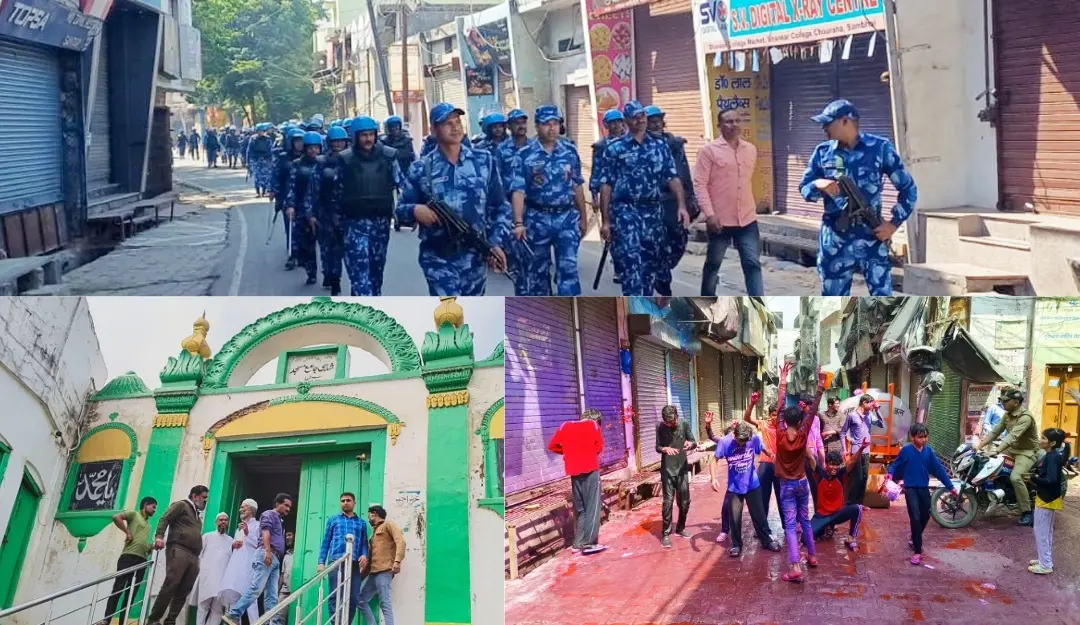
Sambhal: On Friday as Holi celebrations and Friday prayers (Jumma Namaz) coincided, authorities imposed strict security measures to prevent any possible flare-ups.
The heightened vigilance follows past communal tensions, including violence triggered by a court-ordered survey of the Jama Masjid in November 2024, which resulted in multiple deaths and injuries.
The administration took preemptive action, including:
- Deploying seven companies of Rapid Response Force (RRF) and Territorial Armed Constabulary (PAC) to sensitive areas.
- Conducting drone surveillance and foot patrols by police personnel.
- Organizing flag marches by police and paramilitary forces to maintain law and order.
- Restricting Holi celebrations to 2:30 PM, allowing Friday prayers to proceed peacefully.
Superintendent of Police KK Bishnoi stated that the administration had taken all necessary precautions, and officers remained on high alert to prevent any disturbances.
November 2024 Violence
The current security measures stem from tensions that erupted in November 2024, when protests over a court-ordered survey of the Shahi Jama Masjid led to clashes between police and demonstrators. The violence resulted in four deaths and dozens of injuries, including security personnel and administrative officials.
In the aftermath:
- The police filed multiple FIRs, naming Samajwadi Party MP Zia-ur-Rehman Barq and MLA Iqbal Mehmood’s son, Sohail Iqbal, as accused in inciting violence.
- The district administration imposed prohibitory orders, barring the entry of outsiders into Sambhal until November 30, 2024.
- The Congress and BJP accused each other of escalating communal tensions for political gain.
The Congress demanded Supreme Court intervention, alleging that the BJP-led UP government mishandled the situation and acted with bias. Meanwhile, BJP leaders defended the police action, stating it was necessary to restore law and order.
Political fallout: BJP vs. Congress
The Sambhal violence sparked sharp political reactions, with both Congress and BJP trading blame.
Congress leader Rahul Gandhi had accused the BJP of creating communal divisions, calling the police action biased and excessive. In a post, he stated:
"The BJP's use of power to create a rift between Hindus and Muslims is neither in the interest of the state nor the country."
Similarly, Congress General Secretary Priyanka Gandhi Vadra criticized the UP government for taking hasty action, arguing that the administration acted without consulting all parties involved. She urged the Supreme Court to take cognizance and ensure justice.
The BJP, on the other hand, dismissed these allegations, arguing that the Congress was politicizing the issue. UP Chief Minister Yogi Adityanath defended the police response, stating that strict action against miscreants was necessary to maintain peace in the state.
Current situation in Sambhal
As Holi and Friday prayers passed peacefully, authorities remained cautious, ensuring continued security presence in sensitive areas.
Sambhal MP Zia ur Rehman Barq issued an appeal for communal harmony, urging:
- Muslims to offer prayers at nearby mosques and avoid areas where Holi is celebrated, if they preferred.
- Hindus to celebrate Holi with joy while respecting religious sites such as mosques.
His message emphasized unity, stating:
"I appeal to both communities not to do anything that hurts anyone's sentiments. This is about mutual brotherhood, peace, and the progress of our city, state, and country."
Despite relative calm, security officials remain vigilant, knowing that Sambhal’s communal history requires ongoing monitoring to prevent the spread of misinformation and further tensions. The possibility of the Supreme Court ultimate, given the ongoing investigations and FIRs, legal proceedings may take time.
Meanwhile, political tensions over Sambhal are unlikely to subside, as the issue remains a flashpoint ahead of the next elections. The real challenge lies in preventing further violence and ensuring that legal processes unfold without political interference.
The Sambhal case reflects broader communal and political challenges in India, highlighting the delicate balance required to maintain peace while addressing legal and religious disputes.