Sajjan Kumar dies: How a former Congress MP was convicted decades after 1984 riots
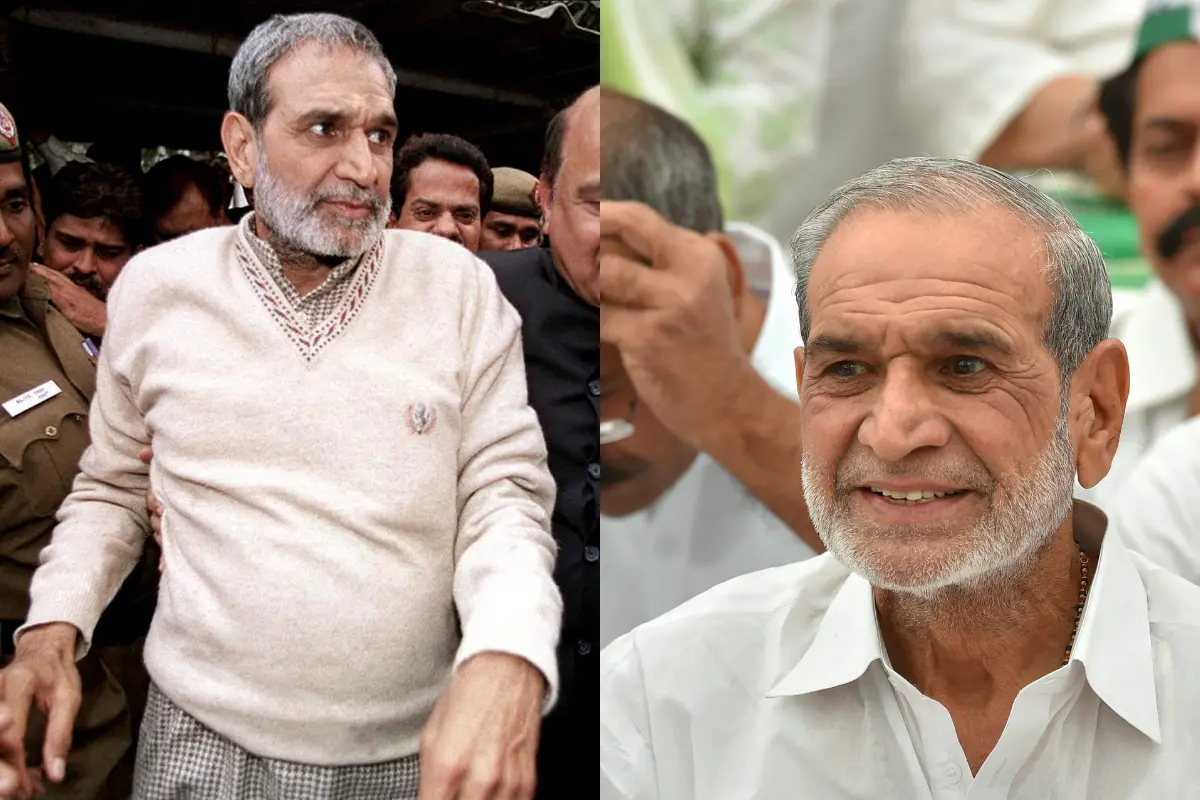
Former Congress MP Sajjan Kumar, who was serving a life sentence for his role in cases linked to the 1984 anti-Sikh riots in Delhi, died on Thursday at Safdarjung Hospital.
He was one of the prominent political figures whose conviction decades after the violence became a significant development in the long-running legal cases arising from the riots.
Who was Sajjan Kumar?
Sajjan Kumar was a former Congress leader and a three-time Lok Sabha MP who represented the Outer Delhi constituency. He was a prominent Congress politician during the period when the party dominated Delhi politics.
His political career, however, became closely associated with allegations and criminal cases arising from the violence against Sikhs in Delhi following the assassination of then Prime Minister Indira Gandhi on October 31, 1984.
Kumar denied the allegations against him and maintained that he was not responsible for the killings.
Following his conviction by the Delhi High Court in 2018, Kumar resigned from the Congress.
What happened in the 1984 anti-Sikh riots?
The violence erupted in Delhi and several other parts of India after Indira Gandhi was assassinated by two of her Sikh bodyguards on October 31, 1984.
Large-scale attacks against members of the Sikh community followed. In Delhi, thousands of Sikhs were killed over several days.
The violence remains one of the most controversial episodes in independent India's political history, with allegations that political leaders and members of the ruling Congress were involved in inciting or failing to prevent attacks.
Multiple investigations and commissions were subsequently established to examine the violence and allegations of political involvement.
What was Sajjan Kumar convicted for?
In December 2018, the Delhi High Court convicted Sajjan Kumar in a case concerning the killing of five members of a Sikh family in Raj Nagar, Delhi, during the 1984 violence.
The court sentenced him to life imprisonment.
The case also involved the burning of a gurdwara. The High Court overturned his earlier acquittal by a trial court and found him guilty in the case.
Kumar was subsequently lodged in Tihar Jail.
What was the second case?
Kumar was convicted in another 1984 riots case in February 2025.
A Delhi court sentenced him to life imprisonment for the killings of two Sikh men, Jaswant Singh and his son Tarun Deep Singh, in the Saraswati Vihar area of Delhi.
The case concerned violence that occurred after Indira Gandhi's assassination.
The conviction meant Kumar was serving life sentences in connection with two separate cases arising from the 1984 violence.
Why was the 2018 conviction significant?
Kumar's 2018 conviction was considered a major development because it came more than three decades after the 1984 violence.
The Delhi High Court's judgment also represented a reversal of his earlier acquittal in the case.
The court's decision renewed attention on the long-running demand for accountability for those accused of involvement in the anti-Sikh violence.
What happened to Kumar after his conviction?
Kumar resigned from the Congress after the 2018 conviction and spent his final years in prison.
He was later convicted in the separate 1984 killings case in 2025.
According to hospital sources, Kumar was brought from Tihar Jail to Safdarjung Hospital on Thursday, where doctors declared him dead. The hospital had not immediately clarified the cause of death.
Why the 1984 cases remain significant
The legal proceedings linked to the 1984 anti-Sikh violence have continued for decades, with several cases involving allegations against political figures, police officials and others.
The delayed convictions have repeatedly raised questions about the pace of investigations and trials and whether victims and families received timely justice.
Sajjan Kumar's convictions were among the most prominent cases involving a former senior Congress politician.
His death now marks the end of the legal journey for the accused in his cases, although the wider debate over accountability for the 1984 violence continues.
Sajjan Kumar's political career and legacy
Kumar entered electoral politics in Delhi and went on to represent Outer Delhi in the Lok Sabha three times. He became an influential Congress politician in the capital.
His political career was eventually overshadowed by the allegations connected with the 1984 violence. The 2018 conviction brought his decades-long political career to an end and resulted in his resignation from the Congress.
His death comes while he was serving life imprisonment for convictions arising from the same period of violence.