'Safe City' project: Delhi to roll out 3,500 AI surveillance cameras from October 1
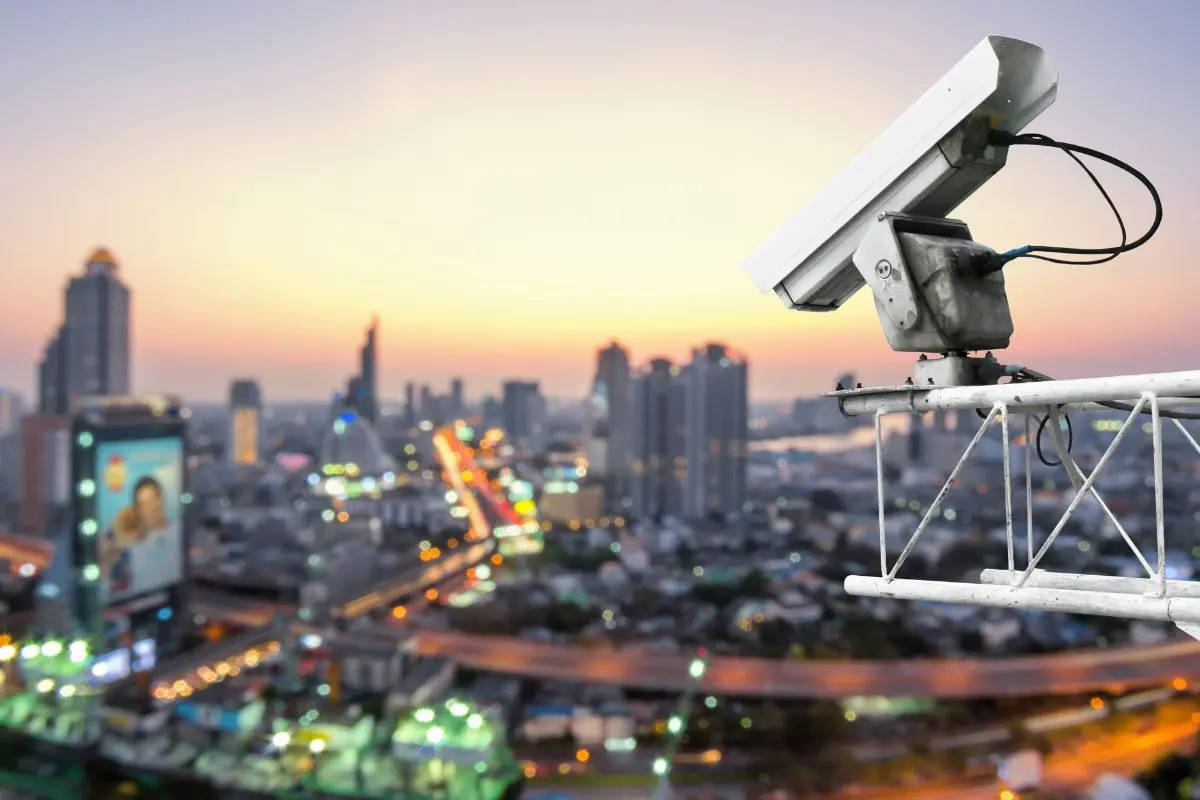
New Delhi: Beginning 1 October, more than 3,500 AI-powered surveillance cameras, gunshot detection systems and public alert mechanisms will be activated across Delhi as part of the first phase of the ambitious ‘Safe City’ project. The initiative aims to revolutionise policing in the national capital, officials confirmed on Saturday.
The surveillance network is equipped with Artificial Intelligence Video Analytics (AIVA), enabling real-time alerts for a wide range of incidents including gunfire, crimes against women, vehicle thefts, and abandoned objects. This phase comes in direct response to the horrific Kanjhawala incident of 31 December 2022, where a 20-year-old woman was fatally dragged by a car for over 12 kilometres—an event that triggered widespread public outcry and a critical review of the city's surveillance infrastructure.
“Following the Kanjhawala case, the Ministry of Home Affairs ordered a vulnerability audit. We identified a requirement for around 10,000 additional cameras. The rollout is being done in phases, with high-risk and densely populated areas given priority,” a senior police officer said.
The initial rollout will see 3,500 cameras made operational. These are drawn from a larger planned deployment of 6,121 bullet cameras, 1,622 Automatic Number Plate Recognition (ANPR) cameras, 370 Facial Recognition System (FRS) units, and 1,876 Pan-Tilt-Zoom (PTZ) cameras.
Also included in this phase are 200 gunshot detection units--each equipped with three acoustic sensors--and 300 public address systems for emergency announcements.
“These are not traditional CCTV cameras. They're intelligent systems with AI video analytics. When abnormal activity is detected, real-time alerts are sent to the Integrated Command, Control, Communication and Computer Centre (C4i) at police headquarters,” the officer added.
Alerts will also be routed to the offices of the Deputy Commissioner of Police (DCP) and relevant local police stations, ensuring multi-tiered response coordination and increased accountability.
At the core of the Safe City project is the goal of enhancing women’s safety. The AI system is designed to identify high-risk situations, such as a woman being surrounded by a group of men or gesturing for help. Both scenarios will automatically trigger high-priority alerts, with police units dispatched even without a formal complaint.
“Women’s hostels, PG accommodations, university campuses, and offices with a high female presence are being prioritised. We've also mapped known hotspots for harassment, snatching, and eve-teasing,” the officer noted.
The system will also monitor public gatherings. If more than 50 individuals congregate in a non-designated area, a high-priority alert will be triggered. Smaller groups will be marked as low-priority events for monitoring.
Other features include detection of abandoned objects, real-time tracking of blacklisted vehicles via ANPR, and facial recognition using a database of over 20,000 known criminals. In case of gunfire, acoustic sensors will determine the source’s direction, prompting PTZ cameras to zoom in and provide live footage to responders.
“Upon receiving an alert, operators at C4i verify its authenticity. If confirmed, the incident is categorised by priority and the nearest patrol unit is deployed. False alerts are logged and dismissed with justification,” the official said.
The system is also intended as a force multiplier for the Delhi Police, capturing high-definition, time-stamped footage for use as evidence and in post-incident reviews.
Supervisors will be able to assess the response of field officers, enabling both accountability and training opportunities. “This isn’t just about adopting technology--it’s about transforming how we police the city,” the officer added.
The first phase is expected to significantly enhance the Delhi Police’s ability to detect and respond to crimes in real time. The remaining phases are scheduled for completion by the end of 2026, by which point the entire capital will be covered by AI-backed surveillance.