New MSME law: Rajya Sabha clears bill to fast-track payments, dispute resolution
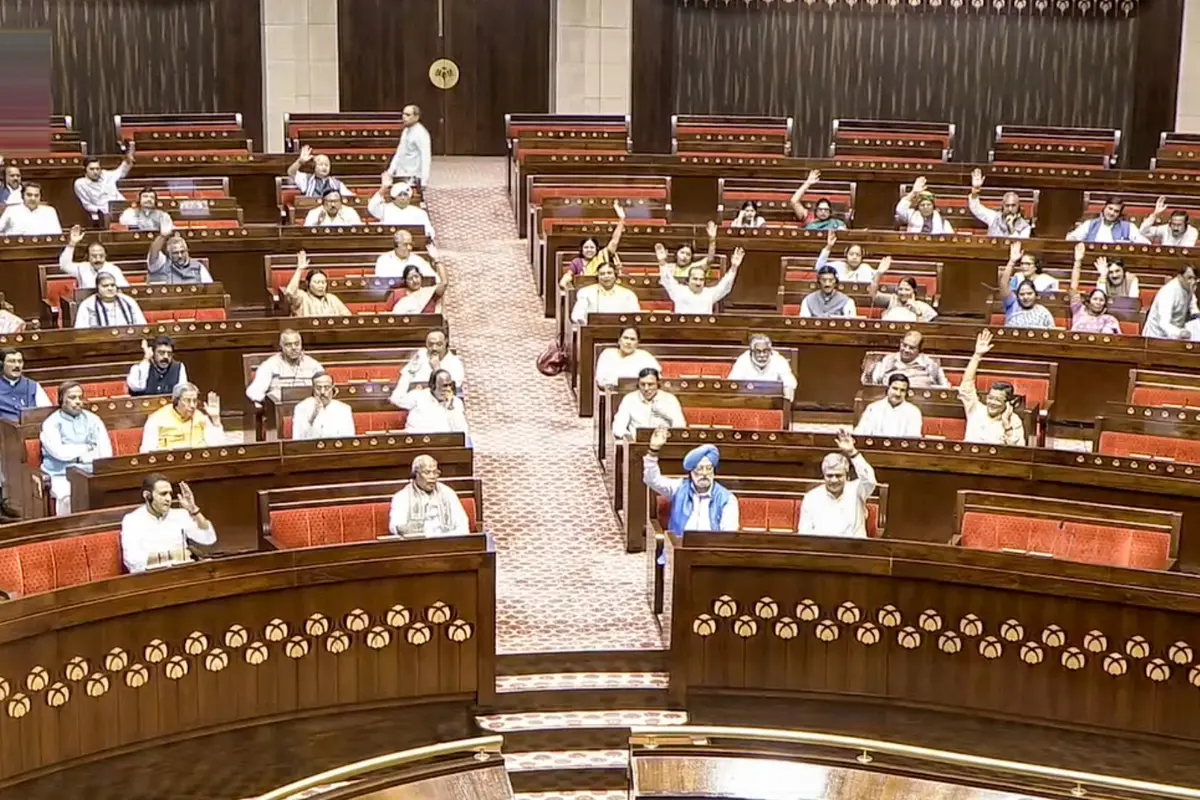
New Delhi: The Rajya Sabha cleared legislation on Monday designed to combat delayed disbursements to micro, small, and medium enterprises (MSMEs) by establishing strict schedules for rapid dispute resolution, facilitating the recovery of settlement agreements, and easing cash-flow pressures, amidst persistent opposition demonstrations on the floor.
The Upper House was adjourned immediately following the enactment of the Micro, Small and Medium Enterprises Development (Amendment) Bill, 2026.
Opposition maintained continuous sloganeering throughout the legislative process, demanding that Home Minister Amit Shah attend the chamber to address law enforcement measures directed against students protesting irregularities in the NEET entrance examination.
Winding up the debate on the statute, Union Minister for MSME Jitan Ram Manjhi detailed the benefits the proposed law offers the industry and wider society, whilst voicing disappointment at the vociferous disruptions from opposition benches.
"We expected our opposition allies to support, cooperate, and pass this bill, but today they are opposing ... I am surprised, but despite this, I propose before the House that this bill be passed by amending the 2006 Act," the minister stated.
The measure aims to resolve existing hurdles confronting the MSME ecosystem by upgrading administrative frameworks and streamlining payment pathways, the minister added.
"Its objective is to balance the interests of all concerned parties while maintaining constitutional principles and the interests of businesses," Manjhi remarked, reiterating the administration's dedication to industrial advancement.
He characterised the MSME sector as the cornerstone of the economy, driving substantial shares of domestic manufacturing and international shipments.
Speaking to Deputy Chairman Harivansh after the bill's adoption, Leader of the House J P Nadda noted, "I just want to bring to your notice that the Opposition members have not even supported the amendments moved by their party."
The new legal framework empowers judicial authorities to mandate the disbursement of a minimum of 50 per cent of awarded sums to MSME vendors if an application seeking to invalidate an order remains unresolved beyond six months.
Furthermore, it provides mechanisms to recover mediated settlement accords or arbitration awards as if they were arrears of land revenue.
The legislation also decriminalises certain regulatory infractions, substituting criminal penalties with graded monetary fines preceded by an initial formal warning.
It mandates the establishment of a national digital portal offering free, voluntary enrolment for micro, small, and medium enterprises. An additional core clause tackles liquidity constraints by requiring all central public sector undertakings to channel invoice settlements through the Trade Receivables Discounting System when procuring supplies or services from MSMEs.
Provisions are likewise included to enable state administrations to institute comparable mandates for their respective public enterprises.
The framework further authorises state governments to set up additional Micro and Small Enterprises Facilitation Councils by streamlining their membership criteria, alongside setting clear deadlines to expedite overdue payment conflicts.
Modifications to the legal framework have become necessary due to technological evolution, the expansion of IT-enabled systems, and shifts in the broader legal environment over recent years to foster enterprise growth, the bill outlined.
The proposed amendments are intended to catalyse MSME expansion, enabling businesses to scale operations and emerge as key economic drivers.
Under the bill's provisions, mediated settlements or arbitration awards may be recovered as land revenue dues by state machinery through district collectors, deputy commissioners, or designated authorities where the buyer's assets are situated.
The text specifies that any sum established via mediation or arbitration constitutes a legitimate, enforceable debt qualifying for recognition under the Insolvency and Bankruptcy Code, 2016.
PTI