Rajasthan's rural safety net crisis: ₹2,000 crore dues, unpaid workers and incomplete projects
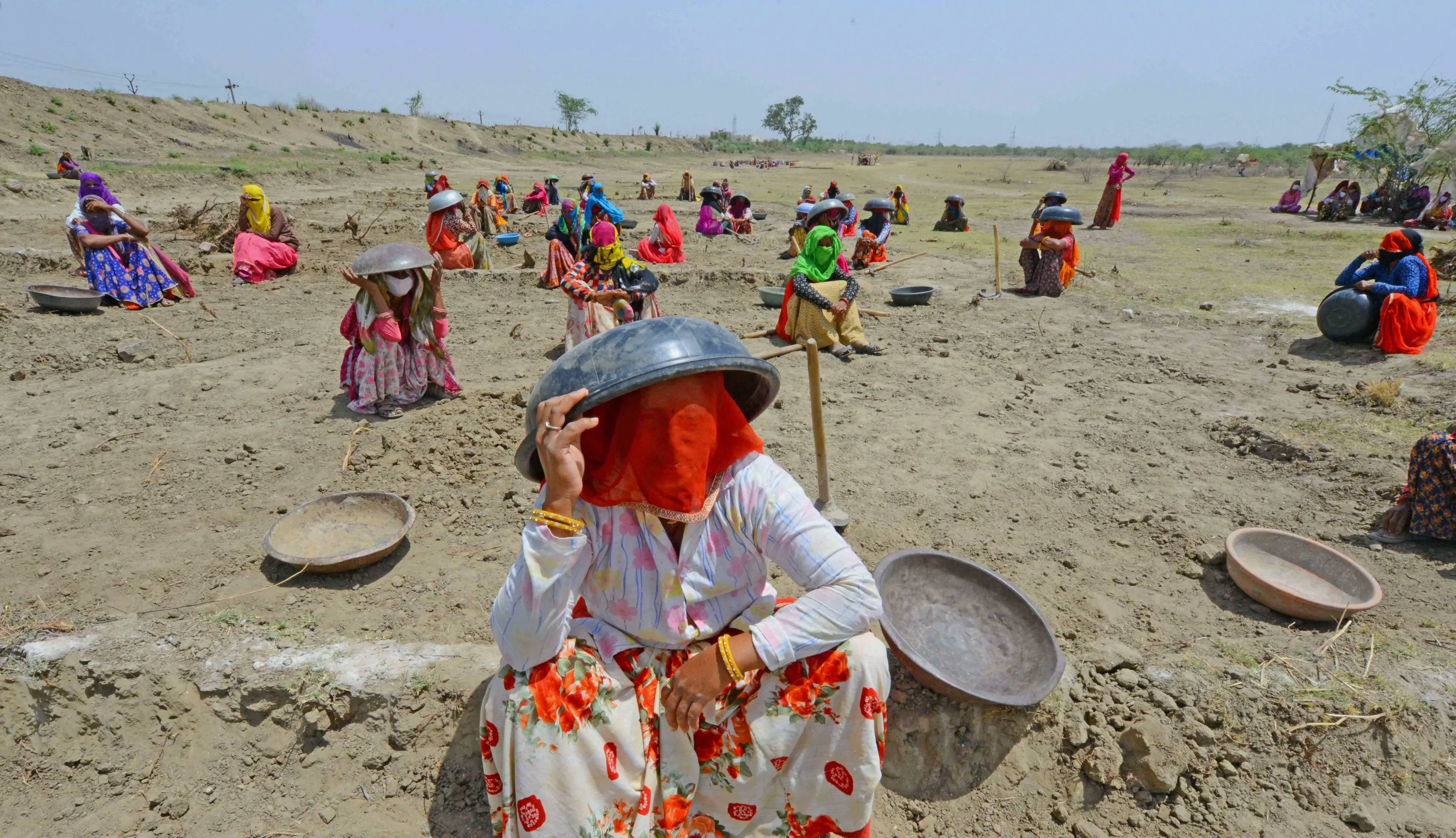
A performance audit by the Comptroller and Auditor General of India has exposed deep and persistent failures in the implementation of the now-repealed Mahatma Gandhi National Rural Employment Guarantee Act or MGNREGA in Rajasthan, revealing how years of administrative neglect, staffing shortages, delayed payments and weak oversight have undermined one of the country’s most important rural employment programmes.
The MGNREGA was replaced by the new Viksit Bharat-Guarantee for Rozgar and Ajeevika Mission (Gramin) Act, 2025 on July 1, 2026.
The CAG's findings cover the period from 2019-20 to 2023-24, spanning more than one state administration. The audit, tabled in the Rajasthan Assembly, examined planning, financial management, employment generation, creation of durable assets, monitoring, social audits and grievance redressal.
The report’s central message is stark: the problems were not confined to one department, one district or one political term. They were embedded across the system. Villages were expected to plan without reliable data, officials were asked to deliver work with depleted staff, workers waited for wages and allowances, and monitoring bodies failed to perform the functions for which they had been created.
The result was a rural employment guarantee that often existed on paper but failed to provide either timely work or durable public assets on the ground.
Planning began without reliable data
MGNREGA depends on local planning. Gram Panchayats are expected to identify households likely to seek work, assess local needs and prepare a list of projects that can generate employment while creating useful assets.
The CAG audit found that none of the test-checked Gram Panchayats had conducted a baseline household survey between 2019 and 2024. Such surveys were intended to be reassessed every five years so that the administration could understand changes in rural livelihoods and anticipate demand for work.
Officials reportedly told auditors that earlier records from 2013-14 were not available. Without updated household data, local authorities had no dependable basis for estimating how many people might seek employment or which communities were most vulnerable.
The weaknesses continued at the district level. Multi-year District Perspective Plans, intended to identify developmental gaps and coordinate works across departments, were absent in all the selected districts examined by the auditors.
In 16 selected Gram Panchayats, annual plans were prepared without ranking projects by priority. Instead of a carefully sequenced development plan, the audit found what amounted to an unstructured shelf of works. This reduced planning to paperwork rather than turning it into a roadmap for improving village infrastructure and livelihoods.
The Block Resource Centres that were supposed to provide technical support and maintain environmental databases were not established in any of the selected blocks. Villages were consequently left without the technical capacity needed to design, estimate and supervise complex works.
Vacancies hollowed out the rural machinery
The implementation structure was weakened further by large-scale vacancies. The CAG found that vacancies ranged from 3% to 64% among regular employees and reached as high as 80% among contractual staff.
At the block level, 57.29% of regular administrative posts were vacant. At the Gram Panchayat level, 80.19% of contractual posts remained unfilled. The positions affected included Village Employment Assistants and Junior Technical Assistants, whose work is central to registering demand, preparing estimates, maintaining records and inspecting projects.
The staffing crisis was not simply a failure to recruit. Between 2020 and 2024, the Rural Development Department abolished 14,898 posts. Its sanctioned regular strength fell by 55%, from 26,994 posts to 12,129.
That decision left a programme that depends on constant field-level contact with fewer people to perform more tasks. In villages, the consequences were visible in incomplete records, weak inspections, delayed payments and projects that were sanctioned without adequate technical supervision.
The shortage also affected social audits. At the state level, all regular Block Resource Person and Village Resource Person posts were vacant as of July 2024.
The state had planned to train 35,200 village resource persons, but only 12,810 — about 36% — received training. In the absence of trained personnel, local Mates and Sathins were required to assist with social audits, weakening the independence and quality of the process designed to detect irregularities.
Money reached late and bills piled up
The audit found serious delays in the transfer of funds. After the Centre released money, the state was required to transfer it, along with its matching share, to the state fund within three to 15 days.
Instead, the transfers were delayed by between 3 and 169 days. Those delays generated interest liabilities of ₹9.08 crore between 2019-20 and 2020-21.
The financial backlog remained severe. As of September 2025, Rajasthan had committed liabilities of ₹2,014.39 crore for the 2019-24 period. Of this, ₹1,892.67 crore — nearly 94% — related to the material component.
The unpaid material bills affected suppliers, contractors and the pace of construction. The Times of India reported that the CAG had flagged the backlog as a major concern, with most of the outstanding amount linked to material expenses.
Payment failures added another layer of distress. Administrative mistakes involving incorrect bank IFSC codes and Aadhaar accounts that had not been properly linked caused millions of wage and material transactions to fail.
Under the wage component, 25.98 lakh payment transactions worth ₹457.17 crore were rejected. Although many were sent again, ₹22.35 crore remained stuck at the banking level. More than 78% of those failed transactions had remained unpaid for four to five years.
A further ₹353.39 crore in failed material payments remained frozen at banks, with most of the amount dating back to 2022-23.
For workers, vendors and rural communities, these failures were not merely accounting entries. They meant unpaid wages, delayed construction and a loss of confidence in the scheme.
Workers received far less than the promised employment
MGNREGA provides for up to 100 days of wage employment per rural household in a financial year, subject to demand and the availability of work. The audit found that only a small proportion of households that received employment reached the 100-day limit.
Across the audited period, the share of households obtaining the full 100 days ranged from just 7.15% to 16.33%. On average, 42.36% of households received fewer than 50 days of work annually.
Persons with disabilities were particularly poorly served. They received an average of only 38 to 44 days of employment, and Rajasthan had no proper physical or digital system to track their demand for work.
The state also failed to conduct annual door-to-door surveys to identify eligible marginalised households that had not been registered. In a sample of 400 job cards, 65.5% had incomplete work entries, 62.75% had no payment details and 20.75% lacked photographs of adult members.
These gaps made it difficult for workers to establish what work they had performed, when they had been paid and whether the records held by the administration were accurate.
Unemployment allowances and compensation were withheld
The law requires the state to pay an unemployment allowance when it fails to provide work within 15 days of a valid demand.
At the state level, ₹54.09 lakh was identified as payable, but only ₹1.18 lakh — 2.18% — was actually disbursed.
The audit’s sample-based findings were even more disturbing. In just 32 Gram Panchayats, ₹80.26 lakh in unemployment allowance remained unpaid to 6,026 workers. The amount identified in those villages exceeded the entire outstanding balance reported by the state, suggesting that the official figures did not capture the full extent of the liability.
The system also calculated ₹831.03 lakh in compensation for delayed wage payments. Instead of paying the amount, local authorities rejected 80% — ₹662.28 lakh — citing reasons such as natural disasters or compensation not being due.
The audit found that many of these reasons were vague or not supported by traceable documentation. A mechanism intended to compensate workers for administrative delay thus became another point at which claims could be rejected.
ALSO READ | Nepal flood viral video: Elephant ‘rescuing’ stranded man is not from Nepal, here's the truth
Projects were incomplete, abandoned or finished only on paper
The CAG also found substantial failures in the creation of durable assets. At the state level, 21% of approved works — 19.74 lakh projects — were incomplete as of September 2025. Another 5% had not begun.
The situation was worse in the test-checked locations. Around 41% of active works were incomplete, while nearly 30% had been abandoned for periods extending up to four years.
Physical verification showed that some projects had been marked complete and geo-tagged even though essential components were missing.
At Seemaliya in Kota, a gravel road was officially recorded as complete, but only earthwork had been carried out. No gravel had been purchased or laid.
At Mandela Minor in Banswara, a canal repair was shown as completed, although the work consisted only of silt clearance. There was no evidence of the cement, sand or masonry specified in the technical plan.
Two model ponds cost ₹45.41 lakh, with the projects intended to include stone pitching, bathing ghats and shade trees. Auditors found that only basic earth excavation had been completed. The promised facilities had not been created, while the material component was recorded as nil.
Encroachments, theft and questionable works
A plantation project on pastureland in Kasar, Kota, failed because protective fencing was not constructed. Animals destroyed the plants, and the land remained encroached.
In Jaisalmer, a tin shed for an animal shelter was built, but officials reported that its roof collapsed during a storm and was subsequently stolen.
The audit also identified 89 road projects in Jaisalmer costing ₹6.23 crore for which there were no clearly recorded starting or ending points. Several were reportedly constructed directly in front of private residences belonging to influential people.
Such findings raise questions not only about financial control but also about the extent to which rural works were selected for public need rather than local influence.
Muster rolls and attendance records under suspicion
The audit found evidence of weak recordkeeping and possible manipulation of attendance records.
In Ladanu and Sajjangarh blocks, ₹3.60 lakh was paid through 17 muster rolls that contained neither worker signatures nor thumb impressions.
Auditors also observed overwriting and tampering in attendance registers across several test-checked Gram Panchayats. When muster rolls are incomplete or altered, it becomes difficult to verify whether workers were present, whether the number of days claimed was genuine and whether wages reached the intended beneficiaries.
A scheme designed around publicly verifiable labour records was therefore operating with records that could not always withstand basic scrutiny.
Oversight institutions failed to function
The failure of implementation was compounded by the collapse of monitoring.
The State Employment Guarantee Council, the apex advisory and monitoring body under MGNREGA, did not meet even once during the five-year audit period. Its last meeting had reportedly been held in July 2016.
The state established Technical and Quality Monitoring Cells only in February 2025, more than 11 years after operational guidelines required them. As a result, no independent quality evaluations were conducted on completed works during 2019-24.
Field inspections through the Area Officer monitoring application were almost non-existent. Junior Engineers achieved 0% of their targeted worksite visits between 2021 and 2024. Assistant Engineers completed only 10% of their targets.
That combination — weak staffing, low inspections and inactive oversight bodies — created conditions in which poor construction, incomplete works and questionable payments could continue without timely correction.
Misappropriation flagged, recovery limited
Social audits identified financial misappropriation of ₹3.91 crore across 140 cases. Only ₹92.23 lakh, or 23.58%, was recovered.
In districts including Jaisalmer, Nagaur, Kota and Banswara, no money was recovered at all. The audit also found that separate bank accounts for holding recovered funds had not been created.
The absence of recovery mechanisms meant that even when irregularities were identified, the financial consequences for those responsible were limited or delayed.
A social audit is meant to provide the public with a route to question how money was spent. But without trained auditors, active councils, reliable records and effective recovery, its findings risk becoming another set of documents without consequences.
A failure that crossed political terms
The CAG’s report covers the period from 2019-20 to 2023-24, years that included changes in Rajasthan’s political leadership and administrative priorities. Yet the failures described in the audit do not point to a problem that began or ended with one government.
The missing surveys, staffing decisions, delayed transfers, incomplete projects and inactive monitoring institutions represent accumulated administrative failure. Different administrations may have inherited weaknesses, but the audit shows that the system was not repaired. In some areas, the state reduced staffing and allowed oversight structures to remain dormant.
That is why the findings are more serious than a routine list of departmental lapses. The report describes a welfare programme weakened over time by decisions made across multiple years, with rural workers bearing the cost.
The larger meaning for Rajasthan
Rajasthan has vast rural areas, scattered habitations, climate-sensitive livelihoods and recurring drought conditions. For many households, MGNREGA is not simply a government project. It is a fallback when farm work disappears, rainfall fails or seasonal employment dries up.
When surveys are not conducted, the administration cannot identify who needs work. When posts are vacant, demand cannot be registered and projects cannot be supervised. When funds are delayed, wages and materials remain unpaid. When social audits are inactive, irregularities remain unresolved.
The CAG findings show how these failures connect. No single breakdown explains the crisis; the problem is the chain itself.
Rajasthan’s MGNREGA system appears to have been left with too few staff, too little monitoring and too little accountability to deliver the promise made to workers. The scheme continued to exist in official records, but its basic social contract — demand work, provide employment, pay wages on time and build useful assets — was repeatedly weakened.
The audit’s message is therefore difficult to dismiss as a technical dispute over paperwork. It is a record of how the rural poor were left waiting while offices remained understaffed, bills remained unpaid, projects remained incomplete and watchdogs remained silent.