Rahul Gandhi slams PM Modi after lathi-charge on students, Priyanka seeks Parliament debate
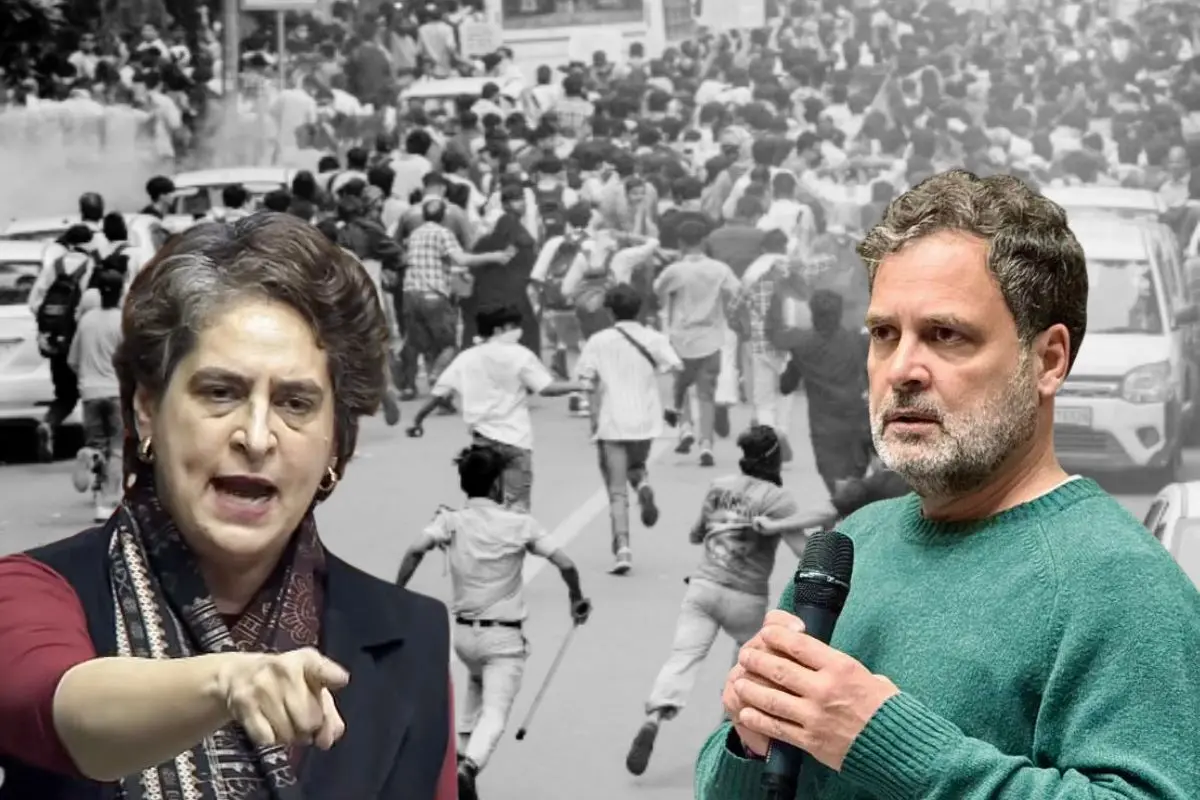
New Delhi: Congress leader and Leader of Opposition in the Lok Sabha Rahul Gandhi on Monday launched a sharp attack on Prime Minister Narendra Modi over the police action against students protesting alleged exam paper leaks in Delhi, calling him the "most anti-youth Prime Minister in India's history" and accusing the Centre of suppressing the voices of young people instead of addressing their concerns.
His remarks came after police used tear gas and carried out a lathi-charge to stop thousands of Cockroach Janta Party (CJP) supporters and students marching towards Parliament on the opening day of the Monsoon Session. The protesters were demanding accountability over repeated exam paper leaks and reforms in the education system.
In a post on X, Rahul Gandhi alleged that the government had failed to act despite repeated instances of examination irregularities.
"Prime Minister Modi is the most youth-hostile Prime Minister in India's history—so youth-hostile that he can't even demand the resignation of a failed Education Minister Dharmendra Pradhan. 152 paper leaks. 7.5 crore students victimized. And not a single guilty person punished. Who got the punishment? The hardworking youth," he said.
ALSO READ: ‘Police threw stones, used lathis’: CJP shares protest videos; Delhi Police blames demonstrators
Sharing a video message, Gandhi condemned the police action against the protesters, saying students raising legitimate concerns were met with "batons and detention" instead of answers.
"The criminals who leaked the papers roam free—and the students raising valid issues are dragged around, beaten. This government isn't just failing the youth—it's pouncing on them," he said.
Calling the protesters' demands "completely legitimate", Gandhi said the young people marching in Delhi were demanding nothing more than a fair and functioning education system.
"Tear-gassing students and lathi-charging students is not democratic. It is not India's way. The Prime Minister should accept their demands and do something about it," he said.
ALSO READ: CJP’s big demands before government: Wangchuk release, Pradhan resignation, NEET compensation
The Congress leader also accused the BJP-led government of undermining educational institutions, alleging that the RSS had gained excessive influence over the country's education system. He claimed that concerns over paper leaks and the quality of education had been raised by the Opposition for years but had gone unaddressed.
Priyanka Gandhi calls police action 'ridiculous'
Echoing Rahul Gandhi's criticism, Congress general secretary Priyanka Gandhi Vadra accused the Centre of responding with force instead of engaging with students and demanded a detailed discussion on the paper leak issue in Parliament.
Speaking to reporters in the Parliament House complex, she questioned the police crackdown on protesters.
"It's ridiculous. They are our own children. They are the future of the country. This Parliament belongs to them. It's no one's personal fiefdom," she said.
Priyanka Gandhi said the alleged paper leaks represented a genuine national concern and accused the government of refusing to debate the issue.
"We have been saying there should be a discussion because there are problems in the education policy. You are not ready to discuss and instead fire tear gas at children and beat them up. For what? They are our children," she said.
In a separate post on X, she urged the BJP government to review its policies instead of resorting to force.
ALSO READ: 'Hair pulled by Delhi Police': CJP alleges assault on Sonam Wangchuk's wife during protest
Referring to the NEET examination controversy, she questioned why repeated paper leaks and alleged irregularities continued despite assurances that the matter would be closely monitored.
"A detailed discussion on this issue should take place in Parliament, and the Prime Minister should listen to the concerns of the country's millions of youth and respond to them," she said.
Protest over paper leaks turns chaotic near Parliament
The confrontation unfolded after thousands of students and CJP supporters marched towards Parliament following a protest that began at Jantar Mantar over alleged exam paper leaks and later expanded to include demands linked to activist Sonam Wangchuk's hunger strike.
As protesters advanced towards Parliament, police attempted to stop them by erecting multiple barricades across central Delhi. Security personnel later used tear gas shells and conducted a lathi-charge after groups of protesters allegedly tried to breach the barricades.
Despite the restrictions, many protesters navigated through inner lanes, crossed several layers of barricades and attempted to move closer to Parliament from different routes. Demonstrators, including some wearing school uniforms, walked several kilometres while raising slogans and regrouping at multiple locations.
Clashes were reported near Constitution Club, Patel Chowk, Shastri Bhawan, the RBI Building and the Parliament Street police station, where police used batons and tear gas to disperse the crowds. Both protesters and police personnel reportedly sustained injuries during the confrontation, while internet services were suspended in parts of central Delhi as a precautionary measure.
Opposition protests spill into Parliament
The protests outside Parliament also reverberated inside the House on the first day of the Monsoon Session. Proceedings in both the Lok Sabha and the Rajya Sabha witnessed repeated disruptions and adjournments as Opposition members raised the issue of the CJP-led protest and demanded discussion on the alleged paper leaks and the government's handling of the demonstrations.
The confrontation has further intensified the political battle over examination irregularities, with the Congress accusing the Centre of failing to protect students' interests while the government faces mounting pressure to respond to demands for greater accountability and reforms in the education system.
With agency inputs