Rahul Gandhi joins Kanhaiya Kumar’s ‘Palayan Roko, Naukari Do’ padyatra in Bihar
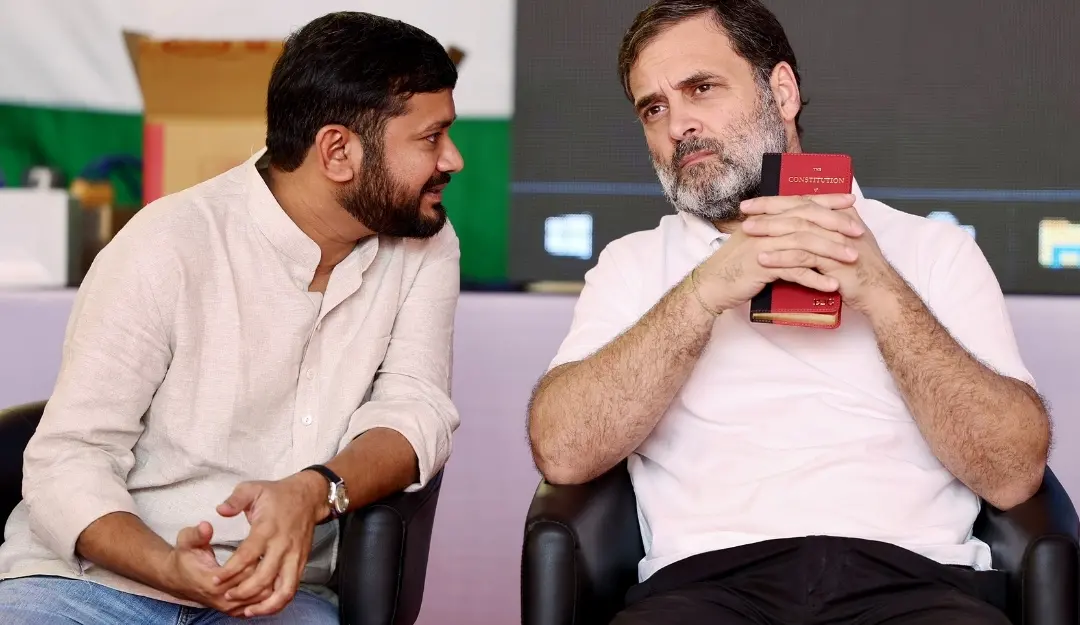
Patna: Leader of Opposition in the Lok Sabha, Rahul Gandhi, participated in a major protest event in Bihar on Monday, lending his support to former JNU Students’ Union president and Congress leader Kanhaiya Kumar’s ongoing foot march titled ‘Palayan Roko, Naukari Do’ (Stop Migration, Give Jobs). The padyatra, launched on 16 March, aims to highlight the twin crises of unemployment and forced migration affecting Bihar’s youth.
Rahul Gandhi’s visit comes just a day before the All India Congress Committee (AICC) national session in Gujarat. The party's national leadership is scheduled to gather in Ahmedabad on 8–9 April for the Congress Working Committee (CWC) meeting and a broader session, set to be held at the Sardar Patel National Memorial and Riverfront Event Centre.
In a social media post, Gandhi said, “Be it the Champaran Satyagraha or the revolution for social justice – Bihar has always stood up against injustice. Today, that history calls again – against attacks on the Constitution, against favouritism and discrimination, and in support of economic and social justice.”
He further urged citizens to join the movement, posting in Hindi, “I am coming to Begusarai to join the padyatra, which highlights the perennial problem of unemployment and migration. Wear a white shirt and join me in the movement to expose the government’s failure on jobs and migration.”
This marks Rahul Gandhi’s third visit to election-bound Bihar since January 2025. His presence in Begusarai signals the Congress’s continued focus on youth issues and employment in the run-up to the 2025 general elections.
The padyatra, covering hundreds of kilometres across Bihar, has seen significant participation from students, youth groups, and civil society members.
(With agency inputs)