‘Already passed’: Rahul Gandhi asks why women’s quota law remains unimplemented
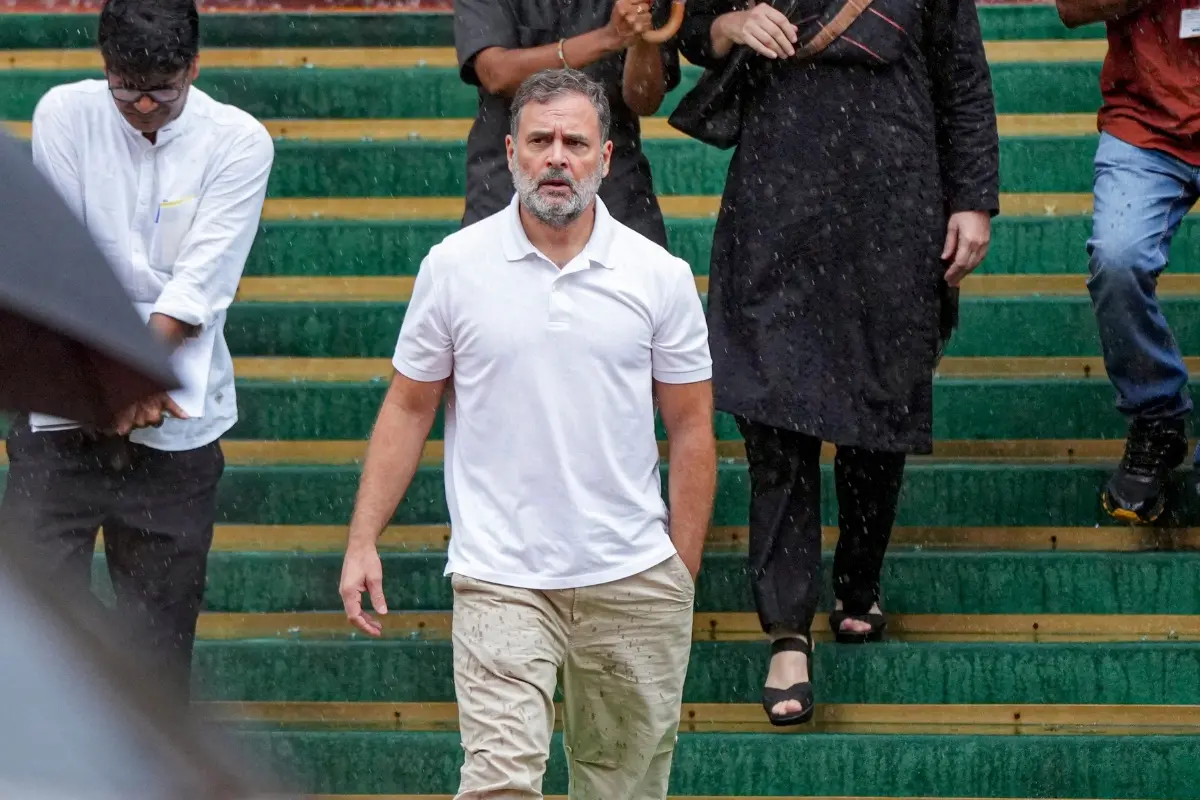
New Delhi: Rahul Gandhi has hit back at Union Parliamentary Affairs Minister Kiren Rijiju over the implementation of the Women’s Reservation Bill, 2023, saying the legislation has already been passed and should not be linked to delimitation.
Responding to Rijiju on X, Gandhi said the Constitution (One Hundred and Sixth Amendment) Act, 2023, had received Congress's “full support” and questioned why the law had not been implemented three years after its passage.
“Mr Rijiju, who would know better than you, as the Minister of Parliamentary Affairs — that the Women’s Reservation Bill 2023 has already been passed unanimously, with the full support of the Congress. The question is, why has it still not been implemented even after three years, and why do you now want to unnecessarily link it to delimitation? Implement the 2023 law. Without any conditions,” Gandhi said.
What Rijiju said
The exchange followed comments by Gandhi on women’s empowerment and freedom.
In a video shared on X, Gandhi said India needed greater freedom for women from patriarchal restrictions and argued that women should have space to express themselves and participate in public life.
“This seems to be a positive message from the Congress Party. There’s a visible change of heart in Shri Rahul Gandhi Ji about women,” Rijiju said in response.
He added that he hoped the Congress would support the Women’s Reservation Bill “unconditionally”.
What the 2023 women’s reservation law says
The Women’s Reservation Bill was enacted as the Constitution (One Hundred and Sixth Amendment) Act, 2023, also known as the Nari Shakti Vandan Adhiniyam.
The law provides for 33 per cent reservation for women in the Lok Sabha, state legislative assemblies and the Delhi Legislative Assembly.
However, its implementation is linked under the legislation to a delimitation exercise following the publication of the relevant figures from the first census conducted after the commencement of the amendment.
Why delimitation is now at the centre of the dispute
The political disagreement comes against the backdrop of a separate constitutional amendment proposal introduced by the government in April 2026.
The Constitution (One Hundred and Thirty-First Amendment) Bill, 2026, sought changes relating to the ceiling on the number of Lok Sabha seats and proposed using the 2011 Census for delimitation.
The proposed legislation sought to raise the constitutional ceiling on Lok Sabha seats from 550 to 850 and allow constituency boundaries to be redrawn using the 2011 Census.
The Bill failed to secure the two-thirds majority required for a constitutional amendment in the Lok Sabha.
There has since been speculation that the government could bring the proposal back during the ongoing Monsoon Session if it has the numbers required for passage.
Gandhi’s wider comments on women’s empowerment
Gandhi’s remarks on the quota legislation followed a discussion on women’s empowerment.
In an Instagram post after an “Ask Me Anything” session, he argued that India could not realise its full potential unless women had greater freedom and space to express themselves.
He said women’s empowerment should not be limited to participation in business or politics, but should also extend to everyday life, including homes, families and public spaces.
Gandhi also argued that women should be able to hold opinions different from those around them and question established norms within their families and society.
The political disagreement
The latest exchange between Gandhi and Rijiju centres on two connected but distinct issues: the 2023 law providing for 33 per cent reservation for women and the delimitation process that is relevant to its implementation.
Gandhi is demanding that the 2023 legislation be implemented without additional conditions and is questioning the government's approach of linking its rollout to delimitation.
The government, meanwhile, has been pursuing constitutional changes related to delimitation, while the proposed 2026 amendment failed to secure the required majority in the Lok Sabha.
The dispute is therefore not over whether the 2023 legislation was passed, but over the conditions and process governing when the women's quota will take effect.