Why Project Kusha, new long-range air defence missile could be a game changer
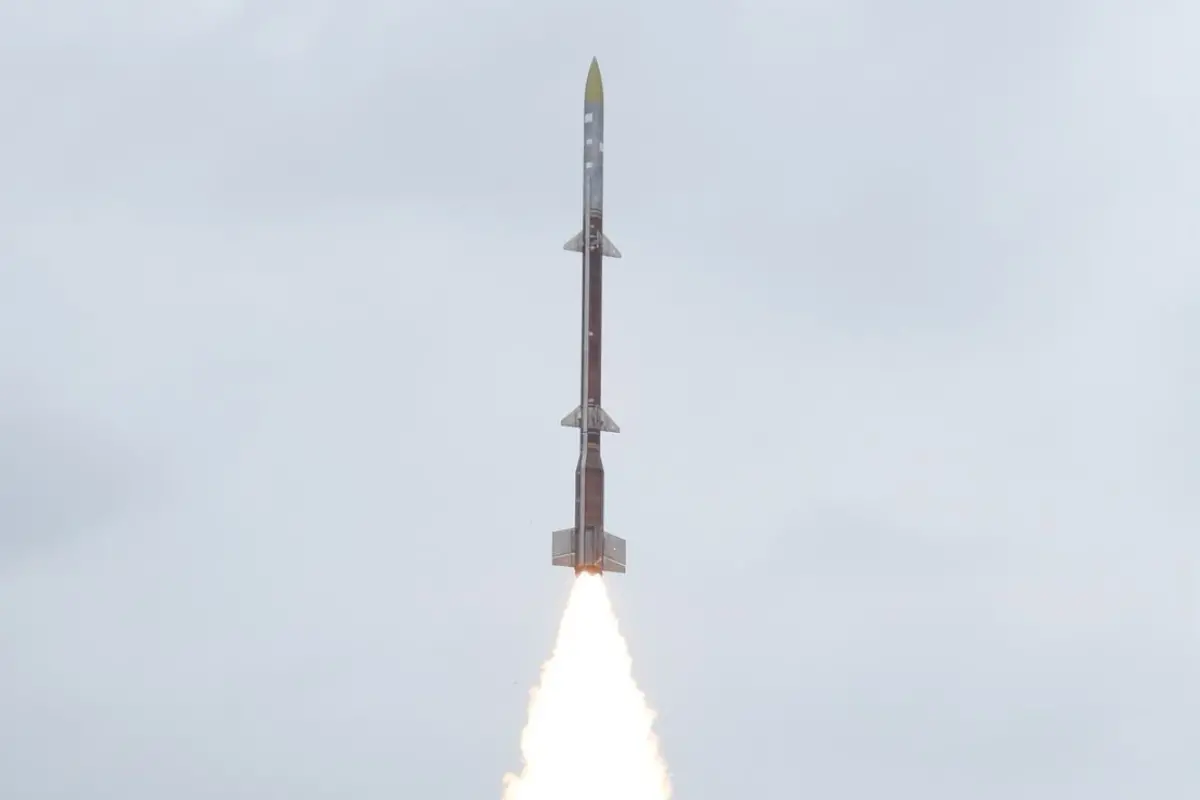
India has taken another significant step towards strengthening its indigenous defence capabilities with the successful maiden flight test of the Kusha Long-Range Surface-to-Air Missile (LR-SAM). Developed by the Defence Research and Development Organisation (DRDO), the missile was tested from the APJ Abdul Kalam Island off the coast of Odisha, where it successfully intercepted an electronic target simulating a high-speed, high-altitude aerial threat.
The successful trial is more than just another missile test. It marks an important milestone in India's long-term effort to build an advanced, self-reliant air defence system capable of protecting the country against a wide range of modern aerial threats.
What is Project Kusha?
Project Kusha is India's indigenous long-range surface-to-air missile programme designed to strengthen the country's layered air defence network.
In simple terms, it is a missile system built to detect, track and destroy enemy aircraft or incoming aerial threats before they can reach their targets. Once operational, the system is expected to protect key military bases, strategic infrastructure and important cities from enemy attacks.
The missile system has been developed by DRDO with contributions from several of its laboratories and Indian industry partners. The project includes not only the interceptor missile but also advanced radars, command-and-control systems, communication networks and mobile launchers, creating a complete integrated air defence solution.
What can the Kusha Missile do?
According to the Ministry of Defence, the Kusha system is designed to engage a wide range of aerial threats, including fighter aircraft, cruise missiles, unmanned Aerial Vehicles (UAVs), large surveillance and support aircraft and high-speed aerial targets operating at different altitudes
During the maiden test, the missile successfully intercepted an electronic target that simulated a fast-moving, high-altitude threat, demonstrating the performance of the system's guidance and interception capabilities.
Future development trials are expected to validate additional operational capabilities before the system enters service.
Filling a gap in India's air defence
One of the biggest reasons Project Kusha is strategically important is that it fills a capability gap in India's existing air defence architecture.
India already operates several air defence systems, each designed for different ranges and operational roles. Short-range systems protect military formations on the battlefield, while medium-range systems provide wider area protection.
At the other end of the spectrum is the Russian-made S-400 system, one of the world's most advanced long-range air defence platforms.
Project Kusha is being developed to bridge the gap between India's indigenous medium-range systems and the S-400, giving the armed forces another powerful layer of protection built using Indian technology.
This layered approach is considered essential in modern warfare because no single missile system can effectively defend against every type of aerial threat.
Why indigenous development matters
The successful test also highlights India's growing ability to develop sophisticated defence technologies on its own. Until recently, many advanced long-range air defence systems had to be imported from overseas. Developing an indigenous alternative offers several long-term advantages.
It reduces dependence on foreign suppliers, provides greater operational flexibility and ensures that future upgrades can be carried out within the country. Domestic production also creates opportunities for Indian private companies and public sector enterprises to participate in high-value defence manufacturing.
Defence Minister Rajnath Singh described the successful test as a "giant leap" for India's air defence capability, noting that only a limited number of countries possess the expertise to develop long-range surface-to-air missile systems.
More than a missile
Project Kusha is not simply about building a missile. It represents the development of an entire ecosystem of advanced technologies. Modern air defence systems rely on highly capable surveillance radars, secure communication networks, command-and-control centres, tracking software and sophisticated guidance systems that work together in real time.
According to the Ministry of Defence, all the major elements of the Kusha system—including the missile, radars and command-and-control infrastructure—have been developed by DRDO laboratories in partnership with Indian industry.
This reflects the growing maturity of India's defence research and manufacturing capabilities.
Beyond strengthening national security, Project Kusha could also provide a major boost to India's defence manufacturing sector. As indigenous programmes become more sophisticated, Indian companies gain valuable experience in producing advanced electronics, sensors, propulsion systems and precision engineering components. These capabilities not only support future military programmes but can also create opportunities for exports as India's defence industry expands its presence in global markets.
The project also aligns with the government's emphasis on self-reliance under the 'Atmanirbhar Bharat' initiative, which seeks to increase domestic design, development and production of critical defence equipment.
Challenges
While the maiden flight test is an important achievement, Project Kusha still has several stages to complete before it becomes fully operational. The system will undergo additional flight tests, system validation and user trials to evaluate its performance under different operational conditions. These tests are essential to ensure reliability, accuracy and integration with the Indian Armed Forces' wider air defence network.
Only after successfully completing these stages will the missile system move towards induction into service.
Greater strategic independence
The successful flight test of Project Kusha represents more than a technological achievement. It reflects India's long-term strategy of building a modern, self-reliant defence industrial base capable of designing and producing complex military systems.
As aerial threats continue to evolve from advanced fighter aircraft and cruise missiles to drones and other emerging technologies, countries are investing heavily in stronger and more integrated air defence networks.
For India, Project Kusha is expected to become an important part of that future. While further testing and development remain ahead, the programme demonstrates how indigenous innovation is gradually reducing import dependence and strengthening the country's ability to protect its skies with home-grown technology.