What are 14 critical questions on Governor’s role that President has raised with the SC?
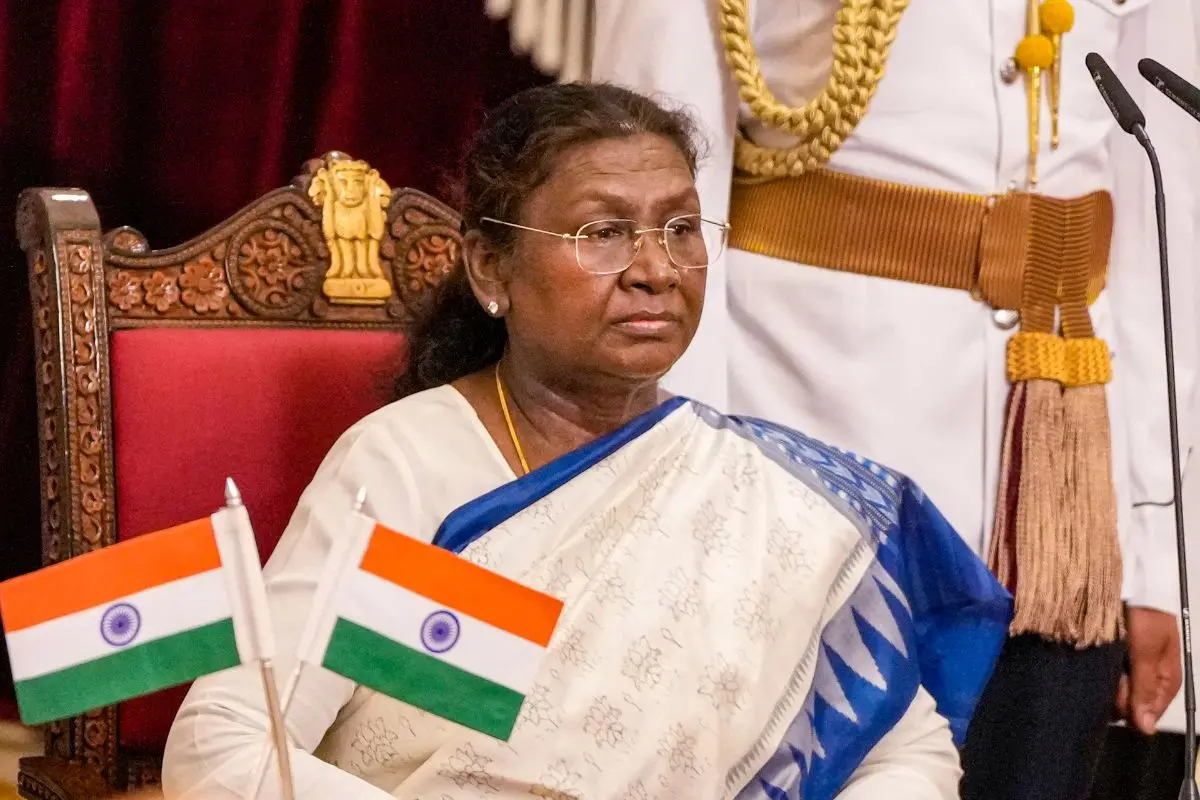
New Delhi: In a strong rebuttal to the Supreme Court’s 8 April judgment directing time-bound decisions by Governors and the President on state Bills, President Droupadi Murmu has questioned the constitutional validity of such deadlines, asserting that the Constitution does not mandate any specific time frames for exercising these powers.
In a formal response, President Murmu emphasised that Articles 200 and 201 of the Constitution—governing the assent or withholding of assent to Bills by the Governor and the President respectively—do not prescribe any timelines or procedural deadlines. The Supreme Court ruling had emerged in the context of the Tamil Nadu government’s challenge to Governor R.N. Ravi’s delay in granting assent to Bills passed by the state legislature.
Constitutional provisions and presidential reservations
President Murmu highlighted that the discretionary powers vested in the Governor and President under Articles 200 and 201 are integral to maintaining federal balance, national security, legislative uniformity, and the separation of powers. She underscored that any attempt to curtail or regulate these powers through judicial deadlines may infringe upon the constitutional scheme.
Moreover, she noted that the issue of whether the President’s assent under Article 201 is open to judicial review remains unsettled, with the Supreme Court delivering conflicting judgments over the years. Compounding the legal complexity is the frequent invocation of Article 32 by states—rather than the constitutionally mandated Article 131—when raising intergovernmental disputes, which inherently involve constitutional interpretation.
The President also took exception to the notion of “deemed assent” by either the Governor or the President, arguing that such an interpretation could fundamentally constrain the discretion granted to constitutional authorities.
Reference under Article 143
In light of these unresolved constitutional questions and to avoid further ambiguity, President Murmu has invoked Article 143(1) of the Constitution, formally referring a set of 14 critical questions to the Supreme Court for its opinion. These include:
- What constitutional choices are available to a Governor under Article 200?
- Is the Governor bound by the advice of the Council of Ministers in such matters?
- Can the Governor’s discretion under Article 200 be reviewed by the judiciary?
- Does Article 361 bar judicial scrutiny of a Governor’s decisions under Article 200?
- Can courts impose deadlines or procedural mandates on Governors despite the absence of such provisions in the Constitution?
- Is the President’s discretion under Article 201 also subject to judicial review?
- May the judiciary impose timelines and procedures on the President’s decision-making under Article 201?
- Is it mandatory for the President to seek the Supreme Court’s opinion under Article 143 before deciding on a reserved Bill?
- Are gubernatorial and presidential decisions under Articles 200 and 201 justiciable before the law receives assent?
- Can Article 142 be used by courts to modify or override constitutional powers of the President or Governor?
- Does a state law automatically come into force in the absence of the Governor’s assent under Article 200?
- Must a Supreme Court bench determine the need for a constitutional bench under Article 145(3) when interpreting significant constitutional questions?
- Do Supreme Court powers under Article 142 allow it to issue directives contrary to existing laws or constitutional provisions?
- Can intergovernmental disputes be resolved by any means other than a suit under Article 131?
Call for judicial clarification
By seeking the Supreme Court’s opinion under Article 143—a rarely invoked provision allowing the President to refer matters of public importance—President Murmu has brought to the fore fundamental questions on the limits of judicial intervention in executive functions. The move aims to clarify the constitutional boundaries between the roles of the judiciary and the executive in India’s federal framework.