President gives assent to Viksit Bharat Rozgar Bill 2025; Rural job guarantee raised to 125 days
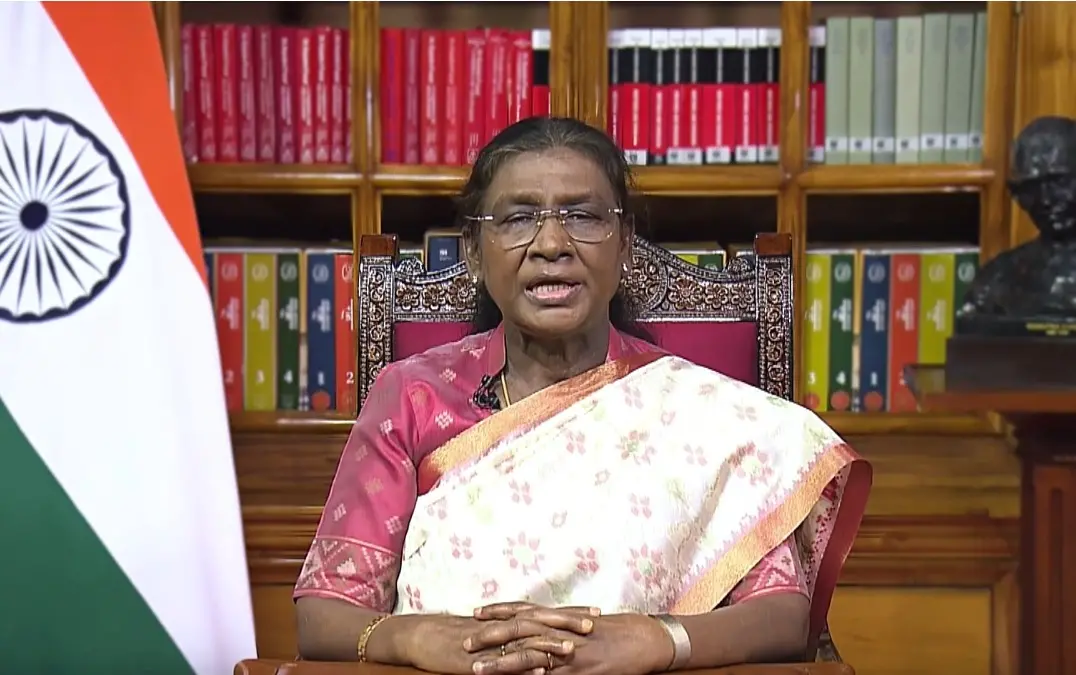
The President of India has given assent to the Viksit Bharat—Guarantee for Rozgar and Ajeevika Mission (Gramin) (VB—G RAM G) Bill, 2025, marking a significant shift in India’s rural employment framework and replacing earlier fragmented livelihood support mechanisms with a more integrated, rights-based approach.
With the Presidential assent, the Bill has now become law, substantially enhancing the statutory wage employment guarantee for rural households from 100 to 125 days per financial year.
The Ministry of Rural Development said the Act reflects the government’s commitment to building a prosperous, resilient, and self-reliant Rural Bharat, aligned with the long-term vision of Viksit Bharat 2047.
According to the Ministry, the newly enacted law goes beyond wage employment by placing strong emphasis on empowerment, inclusive growth, convergence of development initiatives, and saturation-based delivery of welfare schemes.
The objective is to ensure that no eligible rural household is left out of employment, livelihood opportunities, or essential public assets creation.
Officials said the VB—GRAMG Act introduces greater flexibility in work selection, enabling states to align projects with local development priorities such as water conservation, climate-resilient agriculture, rural infrastructure, natural resource management, and livelihood-linked asset creation.
The Act also strengthens the role of Panchayati Raj Institutions in planning, implementation, and social audits to enhance transparency and accountability.
A key feature of the legislation is its focus on livelihood augmentation, with provisions to link wage employment to skill development, self-help groups, rural entrepreneurship, and agricultural value chains.
This is expected to improve income sustainability and reduce distress migration from rural areas.
The government has also indicated that the new framework will leverage digital monitoring, real-time fund flow systems, and geo-tagging of assets, ensuring faster wage payments and improved tracking of outcomes.
Special emphasis has been placed on inclusion of women, Scheduled Castes, Scheduled Tribe,s and vulnerable rural communities.
The Ministry of Rural Development described the Act as a transformative step that consolidates employment assurance with long-term rural productivity, stating that it lays a stronger foundation for economic security, social dignity, and grassroots-led growth across India’s villages.