PM Modi meets China’s Wang Yi, calls for ‘steady progress’ in ties amid border tensions
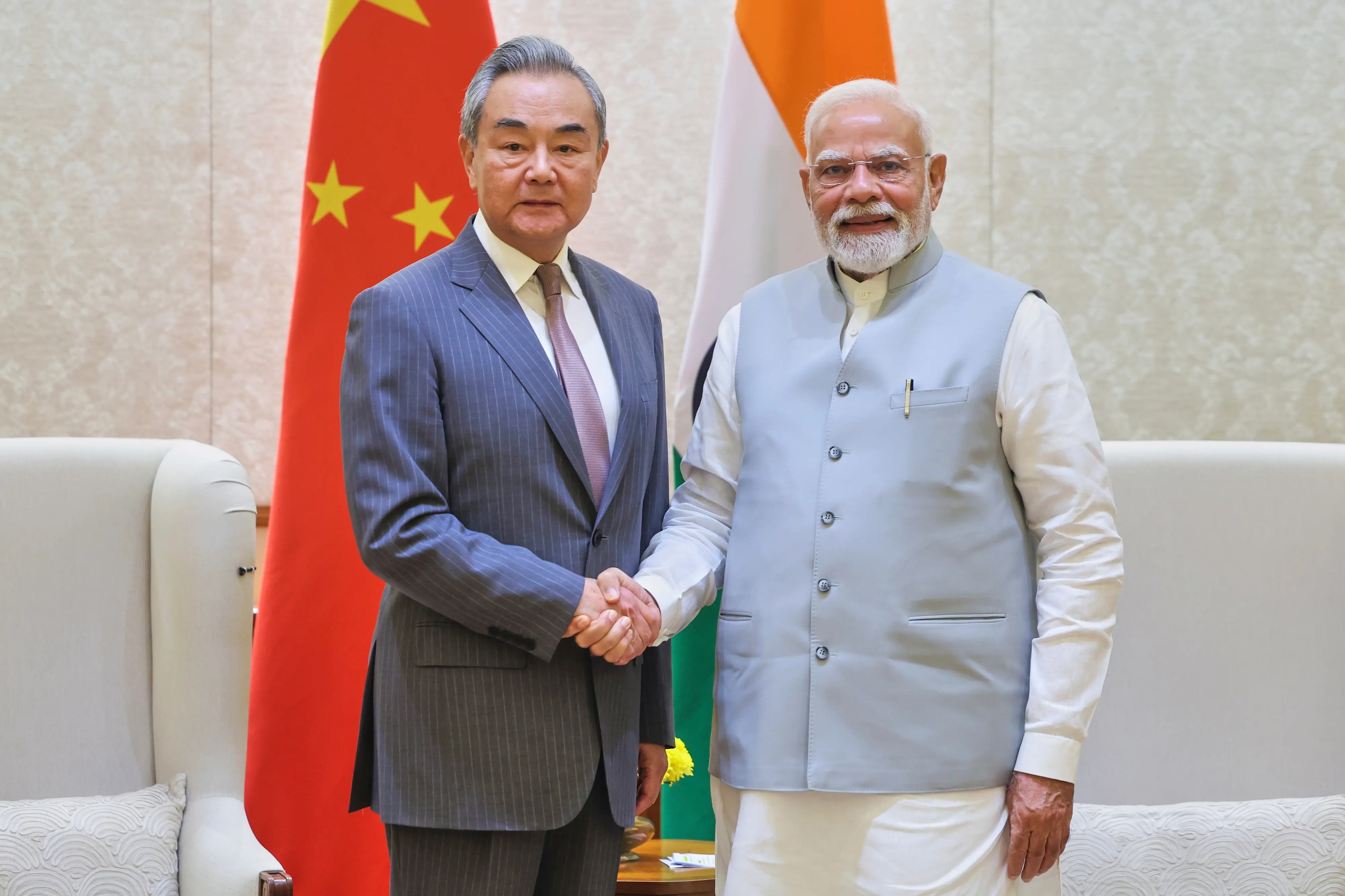
New Delhi: Indian Prime Minister Narendra Modi on Tuesday met China’s Foreign Minister Wang Yi and underscored the “steady progress” made in restoring bilateral relations following a prolonged period of tension along the disputed Himalayan border.
In a statement shared on social media after the meeting, Modi emphasised the importance of “respect for each other’s interests and sensitiveness,” as both nations seek to rebuild diplomatic and economic ties that had cooled since the deadly border clash in 2020.
China’s Foreign Ministry echoed a similar tone, stating that the relationship between the two Asian powers has entered a “steady development track” and called for both countries to “trust and support” one another.
Wang, who arrived in India on Monday, also held discussions with External Affairs Minister S. Jaishankar and National Security Adviser Ajit Doval. Talks centred around boundary issues, including “deescalation, delimitation and boundary affairs,” according to India’s Ministry of External Affairs.
Relations between the nuclear-armed neighbours deteriorated sharply in 2020 after a violent face-off between troops in the Ladakh region left 20 Indian soldiers and four Chinese soldiers dead. Since then, both sides have maintained heavy military presence along the border.
“The setbacks we experienced in the past few years were not in the interest of the people of our two countries. We are heartened to see the stability that is now restored in the borders,” Wang said on Monday.
In a statement from the Prime Minister’s Office, Modi reiterated the need for peace along the border and expressed India’s commitment to a “fair, reasonable and mutually acceptable resolution of the boundary question.”
The resumption of high-level diplomatic engagement comes at a time when India’s relationship with the United States is showing signs of strain. The Biden administration recently imposed steep tariffs on Indian goods, including a 25% penalty for the purchase of Russian crude oil. The new tariffs, which are set to take effect on August 27, follow renewed U.S. engagement with Pakistan, including a White House lunch for Pakistan’s army chief and a joint energy initiative.
India, a key member of the Quad security alliance with the U.S., Australia, and Japan, has pushed back by strengthening ties with Russia and exploring avenues to rebuild relations with China.
Some thaw in India-China ties was visible last year, when both countries agreed to reduce troop deployments in select border areas. In June, Beijing also permitted Indian pilgrims to visit holy sites in Tibet, while talks to restore direct flights and ease trade restrictions have gained momentum. Last month, India’s external affairs minister visited Beijing for the first time since the 2020 clash.
“Settling the boundary issue between the two countries requires political compromise at the highest political level,” said Manoj Joshi, fellow at the Observer Research Foundation and former member of the National Security Council Advisory Board.
According to officials, trade through three points along the 3,488-km India-China border is under discussion. This renewed engagement follows a landmark meeting last October between Modi and Chinese President Xi Jinping during a summit of emerging economies in Russia--the first such interaction between the two leaders since 2019.
Modi is also expected to travel to China later this month to attend the Shanghai Cooperation Organization (SCO) summit--his first visit to the country in seven years. Earlier this year, Xi had called for India and China to engage in a “dragon-elephant tango,” symbolising cooperation between the two Asian giants.
However, analysts remain cautious. Lt. Gen. D.S. Hooda (Retd), former commander of India’s Northern Command, noted that China’s deep ties with Pakistan remain a complicating factor. “China is heavily invested in Pakistan and, practically speaking, you can’t have any expectation that Beijing will hold back support to Islamabad,” Hooda said. “But you can’t have two hostile neighbours on your borders and simultaneously deal with them also.”