PM Modi set to surpass Nehru on June 10 as India's longest-serving elected prime minister
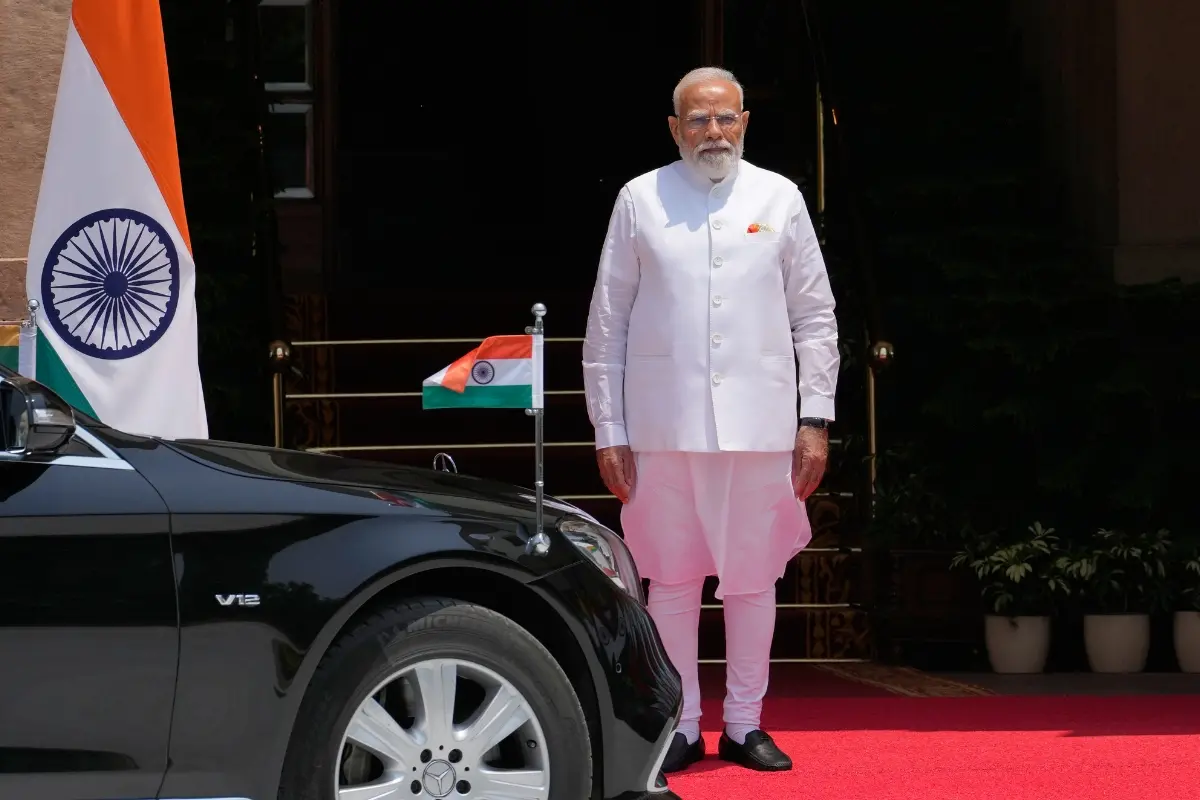
Prime Minister Narendra Modi is set to enter the record books on June 10, when he completes 4,399 consecutive days in office and overtakes Jawaharlal Nehru as India's longest continuously serving democratically elected prime minister.
The milestone comes more than a decade after Modi first took oath as prime minister on May 26, 2014. It will surpass Nehru's record of 4,398 uninterrupted days in office, a tenure that lasted from May 13, 1952, following India's first general election, until his death on May 27, 1964.
While the achievement highlights Modi's political longevity, it also reflects how dramatically India has changed since the country's first prime minister led a newly independent nation.
A record that stood for more than six decades
For over 62 years, Nehru's record remained untouched despite several long-serving prime ministers occupying the country's highest political office.
Modi had already crossed another major milestone in July 2025 when he surpassed former prime minister Indira Gandhi's longest uninterrupted tenure of 4,077 days. Gandhi served continuously between January 24, 1966, and March 24, 1977.
The June 10 milestone places Modi at the top of the list of elected prime ministers in terms of uninterrupted service, making him the longest continuously serving democratically elected prime minister in India's history.
Governing a vastly different India
The India that Nehru governed in the 1950s and 1960s bears little resemblance to the country Modi leads today.
When Nehru took office after India's first general election, the country's population was around 34 crore. Infrastructure was limited, literacy levels were lower, and democratic institutions were still taking shape.
By the time Modi assumed office in 2014, India's population had crossed 131 crore. Today, it exceeds 146 crore, making governance significantly more complex than in the early decades after Independence.
The size of the electorate has also expanded dramatically. India's first general election involved roughly 17 crore voters. By 2014, the electorate had grown to more than 83 crore, while the 2024 Lok Sabha election involved nearly a billion eligible voters.
From one-party dominance to intense political competition
The political environment faced by Nehru and Modi differs sharply.
Nehru governed during a period of Congress dominance. In the 1952 general election, the Congress party secured 364 of the 489 Lok Sabha seats, giving it overwhelming control of national politics.
Modi's tenure has unfolded in a much more competitive political landscape characterised by powerful regional parties, coalition politics in several states and a highly fragmented opposition.
The number of political parties contesting elections has increased dramatically over the decades. While 53 parties contested India's first general election, the figure rose to 464 in 2014 and reached 744 parties during the 2024 Lok Sabha elections.
Despite this competitive environment, Modi became the first non-Congress prime minister to complete two consecutive full-majority terms and later secured a third consecutive term as prime minister.
Expansion of higher education and healthcare institutions
During Modi's tenure, the government has overseen a significant expansion of higher education and healthcare infrastructure.
The number of Indian Institutes of Technology (IITs) increased from 16 in 2014 to 23 by 2026. Similarly, Indian Institutes of Management (IIMs) expanded from 13 to 21 during the same period.
Healthcare infrastructure also saw expansion, with the number of All India Institute of Medical Sciences (AIIMS) institutions increasing from seven to 23.
Supporters view these developments as evidence of institutional growth, while critics argue that expansion in numbers must also be matched by quality, staffing and outcomes.
Leadership in the age of social media
Another major difference between the two eras is the nature of public scrutiny.
Nehru governed in an age without private television channels, social media platforms or round-the-clock news coverage. Information travelled largely through newspapers, radio broadcasts and official communication channels.
Modi's government operates in a vastly different environment where every policy announcement, speech and political decision is analysed instantly across television networks, digital media platforms and social media.
This constant scrutiny has transformed the nature of political leadership and public engagement in India.
Another milestone in a long political career
The upcoming record adds to Modi's growing list of political milestones.
Earlier in 2026, he became India's longest-serving elected head of government when his combined tenure as Gujarat chief minister and prime minister crossed 8,930 days.
On June 10, he will add another distinction by becoming the longest continuously serving democratically elected prime minister in the country's history.
The achievement marks a significant moment in India's political journey, linking two leaders from vastly different eras. While the record measures longevity in office, the broader debate over the impact and legacy of each leader is likely to continue long after the numbers have changed.