Over 70% of India’s prisoners have not yet been found guilty: SC judge
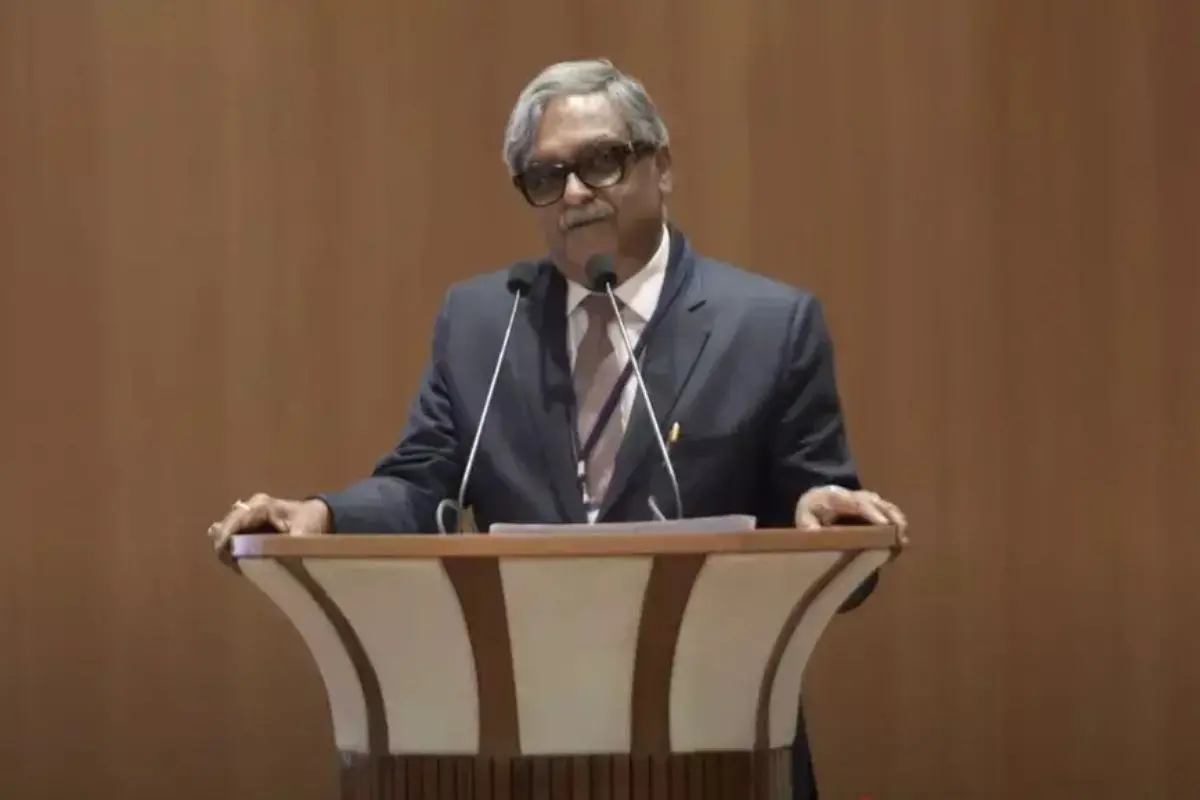
Supreme Court judge Justice Vikram Nath on Friday voiced grave concern over the country’s undertrial crisis, noting that nearly 70 per cent of India’s prisoners have not yet been convicted, and remain incarcerated due to systemic failure rather than legal necessity.
“There are undertrials who have spent more time in prison than the maximum sentence for the offence they are accused of,” Justice Nath said, speaking at NALSAR University of Law, Hyderabad, during the release of the Report of the Fair Trial Programme in Pune and Nagpur, organised by the Square Circle Clinic.
He observed that many detainees charged with bailable offences continue to languish in custody simply because they cannot afford bail.
“Most undertrials remain behind bars not because the law mandates it, but because the system has failed them,” the judge remarked.
‘Legal Aid Must Be Effective, Not a Formality’
Justice Nath underscored that India’s legal aid system is failing the constitutional promise of liberty and dignity due to a lack of awareness, access, and trust.
“When legal aid is rendered in form but not in spirit, it may still comply with procedure, but it fails the Constitution. It fails the idea of justice itself,” he said.
He pointed out that many prisoners are unaware of their right to legal aid, and even those who know about it often distrust the system due to poor past experiences.
“It is not enough to just provide a lawyer; we must ensure that the representation is effective,” he emphasised, adding that legal aid cannot function in disconnected silos.
According to Justice Nath, the state’s constitutional duty to ensure fair representation is not merely procedural — it can determine whether an individual “spends years in confinement or walks free with dignity.”
‘Law Schools Must Make Justice Come Alive’
Calling upon legal institutions to shoulder greater responsibility, Justice Nath urged law schools to treat legal aid clinics as spaces where justice takes tangible form.
“Every law school must treat legal aid clinics as places where justice comes alive, not as extra work to be checked off a list,” he said.
He added that students’ first experiences of the law should come from meeting undertrials and understanding their struggles rather than merely studying cases in classrooms.
Focus on Vulnerable Prisoners
Justice Nath also drew attention to the unique hardships faced by women, prisoners with mental health conditions, and those from marginalised backgrounds.
“True equality demands that we account for the distinct burdens carried by women and other vulnerable groups,” he said, stressing the need for institutional sensitivity, access to healthcare, and effective legal aid.
‘Improving Legal Aid Is an Act of Faith, Not Charity’
Concluding his address, Justice Nath said that strengthening legal aid is not an act of generosity but of constitutional faith.
“It is not an act of charity, but an act of faith — faith in the Constitution and faith in equality before law,” he said.
He asserted that the true test of the legal system lies in its treatment of the most vulnerable, not in its procedural efficiency.
“The measure of our legal system lies not in the elegance of our jurisprudence, but in how we treat the weakest within it.”