Operation Sindoor: State-of-the-art Indian weapons that brought Pakistan to its knees
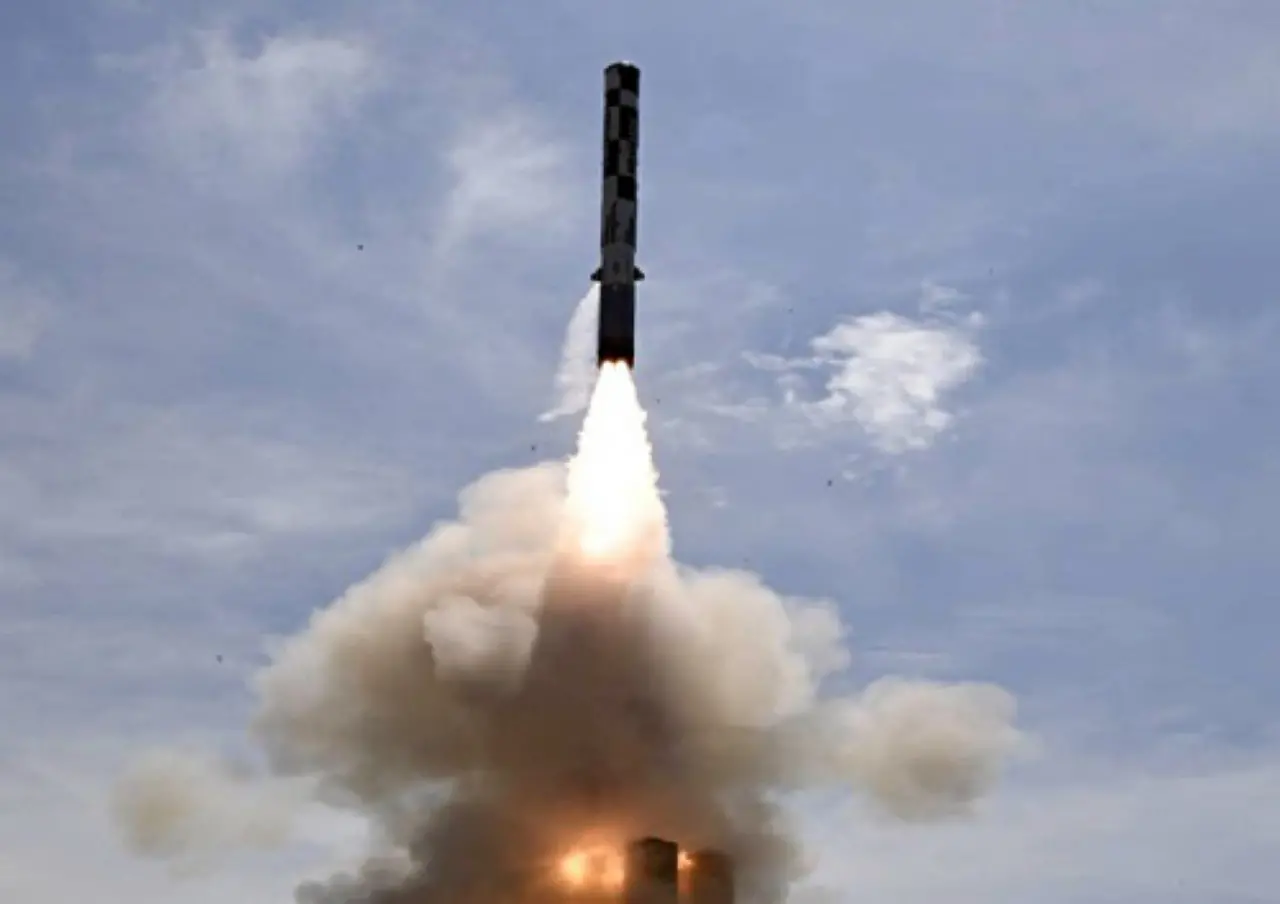
In the early hours of May 7, 2025, India launched "Operation Sindoor," a meticulously planned military operation targeting terrorist infrastructure in Pakistan and Pakistan-occupied Kashmir (PoK). The strikes were in retaliation for the April 22 Pahalgam terror attack, which claimed the lives of 26 Indian tourists. While official statements have not detailed the specific weaponry used, defense analysts and open-source intelligence suggest the deployment of advanced precision-guided munitions and drones.
Operation Sindoor marked a significant escalation in India's counter-terrorism strategy. The Indian Armed Forces targeted 21 terror camps across nine locations, aiming to dismantle the operational capabilities of groups like Jaish-e-Mohammed and Lashkar-e-Taiba. The operation emphasized precision to minimize collateral damage, reflecting a shift towards surgical strikes using state-of-the-art weaponry.
SCALP-EG Cruise Missiles, also known as Storm Shadow, are long-range, air-launched precision strike weapons developed by France and the UK. Integrated with India's Rafale fighter jets, these missiles have a range exceeding 250 km and are specifically designed for deep-strike missions against heavily defended high-value targets. SCALP missiles feature a stealthy airframe with a low radar cross-section and use a combination of GPS and inertial navigation for mid-course guidance, followed by terrain-matching radar and infrared homing for terminal accuracy. Each missile carries a BROACH (Bomb Royal Ordnance Augmented CHarge) tandem warhead, capable of penetrating hardened bunkers, command posts, and underground facilities. During Operation Sindoor, SCALP missiles were reportedly used to strike terror launch pads and infrastructure in Bahawalpur and Muridke with remarkable precision from within Indian airspace, underscoring their capability for stand-off operations without violating international boundaries.
AASM HAMMER (Highly Agile Modular Munition Extended Range) bombs, also mounted on Rafale jets, are French precision-guided munitions that combine a standard bomb body (250 kg or more) with guidance and range-extension kits. These kits can include INS/GPS, laser, or infrared seekers, providing the HAMMER with all-weather, day-night operability and precision strike capabilities. With a stand-off range of up to 70 km when launched from high altitude, the AASM HAMMER allows Indian Air Force pilots to engage multiple types of targets from hardened shelters to moving vehicles with minimal risk of exposure. The high manoeuvrability and guidance flexibility make it ideal for engaging well-concealed terrorist infrastructure. In Operation Sindoor, HAMMER bombs were employed to surgically target buildings used for training and logistical operations by terror outfits, enabling India to achieve strategic effect while avoiding civilian collateral damage.
SkyStriker Loitering Munitions or Kamikaze drones, developed by Israeli firm Elbit Systems and manufactured in India by Adani Defence, are autonomous, precision-guided "suicide drones" that loiter over a designated area before diving into their target with an explosive payload. Weighing around 35 kg and capable of carrying a 5–10 kg warhead, the SkyStriker can loiter for up to two hours at a range of 100 km. These munitions are designed for tactical precision, ideal for eliminating mobile or time-sensitive targets, including convoys, vehicles, and leadership elements. They use electro-optical and GPS guidance systems to identify and lock onto targets before impact. In Operation Sindoor, SkyStriker drones were crucial in hitting hidden or moving terrorist assets in rugged terrains, executing strikes with surgical accuracy and no risk to Indian personnel. Their successful deployment in Operation Sindoor not only neutralized key threats on the ground but also demonstrated India’s growing edge in unmanned precision warfare.
BrahMos Supersonic Cruise Missiles, a joint Indo-Russian development, are among the fastest cruise missiles in the world, capable of flying at speeds between Mach 2.8 and 3.0. With a range of 300 to 450 km (and extended-range variants under development), BrahMos can be launched from land, sea, or air platforms. The missile employs an inertial navigation system with satellite guidance and features advanced target discrimination and sea-skimming capability, making it extremely difficult to intercept. It carries a 200–300 kg conventional warhead and is designed to destroy high-value surface targets with pinpoint accuracy. Although not officially confirmed for Operation Sindoor, defence experts speculate that BrahMos missiles may have been used for rapid, precise neutralization of critical infrastructure deep within Pakistani territory. Their high speed and destructive power make them ideal for time-sensitive strike missions where deterrence and impact are paramount.
Harop Loitering Munitions, developed by Israel Aerospace Industries (IAI), are another potent asset reportedly used by India in recent years and potentially during Operation Sindoor. These drones are designed to loiter in the target area for several hours before homing in on radar-emitting systems or static infrastructure, carrying a 15–20 kg explosive payload. With a range of up to 1,000 km, the Harop is capable of autonomously identifying and destroying air defence radars or missile launchers, making it highly effective in SEAD (Suppression of Enemy Air Defenses) missions.
Together, this arsenal reflects India's growing embrace of stand-off, network-centric, and precision strike capabilities—allowing it to engage adversaries across a wide operational spectrum while minimizing risk and collateral damage.
Why Pakistani Weapons Failed to Stop Operation Sindoor?
While India executed one of the most technologically precise air campaigns in its modern history, Pakistan’s Chinese-origin defence systems failed to deliver an effective response.
According to Firstpost, Pakistan’s retaliatory attempts relied heavily on:
• CM-400AKG air-to-surface missiles, a Chinese-made weapon marketed as a “carrier killer” but never tested in actual combat. These were fired but failed to hit any Indian targets, missing the mark significantly.
• The AR-1 guided missile carried by Wing Loong-II drones, another Chinese system, was reportedly intercepted or rendered ineffective by India’s layered air defence network.
• Multiple PL-15E air-to-air missiles, launched by Pakistani fighters, were either neutralized or evaded. These missiles, while long-ranged, are not optimized for the kind of strike-repelling India had orchestrated with multi-tiered surveillance and countermeasure systems.
More broadly, Pakistan’s reliance on Chinese weaponry has exposed critical vulnerabilities such as lack of integration, poor electronic counter-countermeasures (ECCM), and limited battlefield validation. In contrast, India’s arsenal included combat-proven platforms built with modularity, precision, and interoperability in mind.
The deployment of such advanced weaponry in Operation Sindoor underscores India's commitment to counter-terrorism and its capability to conduct precise, high-impact strikes. The use of precision-guided munitions minimizes collateral damage, aligning with international norms and reducing the risk of escalation. Moreover, the operation demonstrates India's growing self-reliance in defense technology and its strategic partnerships with nations like France and Israel.
Operation Sindoor was not just a response to terrorism, it was a demonstration of technological and doctrinal superiority. India used high-end, multi-layered aerial weapons, from long-range cruise missiles and loitering drones to precision-guided bombs and executed with surgical accuracy and without a single confirmed loss or airspace breach.
Meanwhile, Pakistan's response, though loud in rhetoric, fell flat in performance. Its Chinese-made missile and drone systems failed to strike Indian targets, blunted by superior Indian air defences, such as the S-400 Triumf system and mobile gun batteries.
This operation may well mark a shift in South Asia’s military balance not just in terms of firepower, but in terms of strategic credibility and combat readiness. India’s capability to project power, retaliate precisely, and defend effectively has been showcased and the message is now loud and clear, both to its adversaries and allies.
Operation Sindoor represents a paradigm shift in India's military doctrine, emphasizing precision, technological superiority, and strategic restraint. As regional dynamics evolve, India's ability to conduct such operations will play a crucial role in maintaining stability and deterring cross-border terrorism.