'Nobody told us how to celebrate': Why Durga Puja 2026 has Bengalis worried
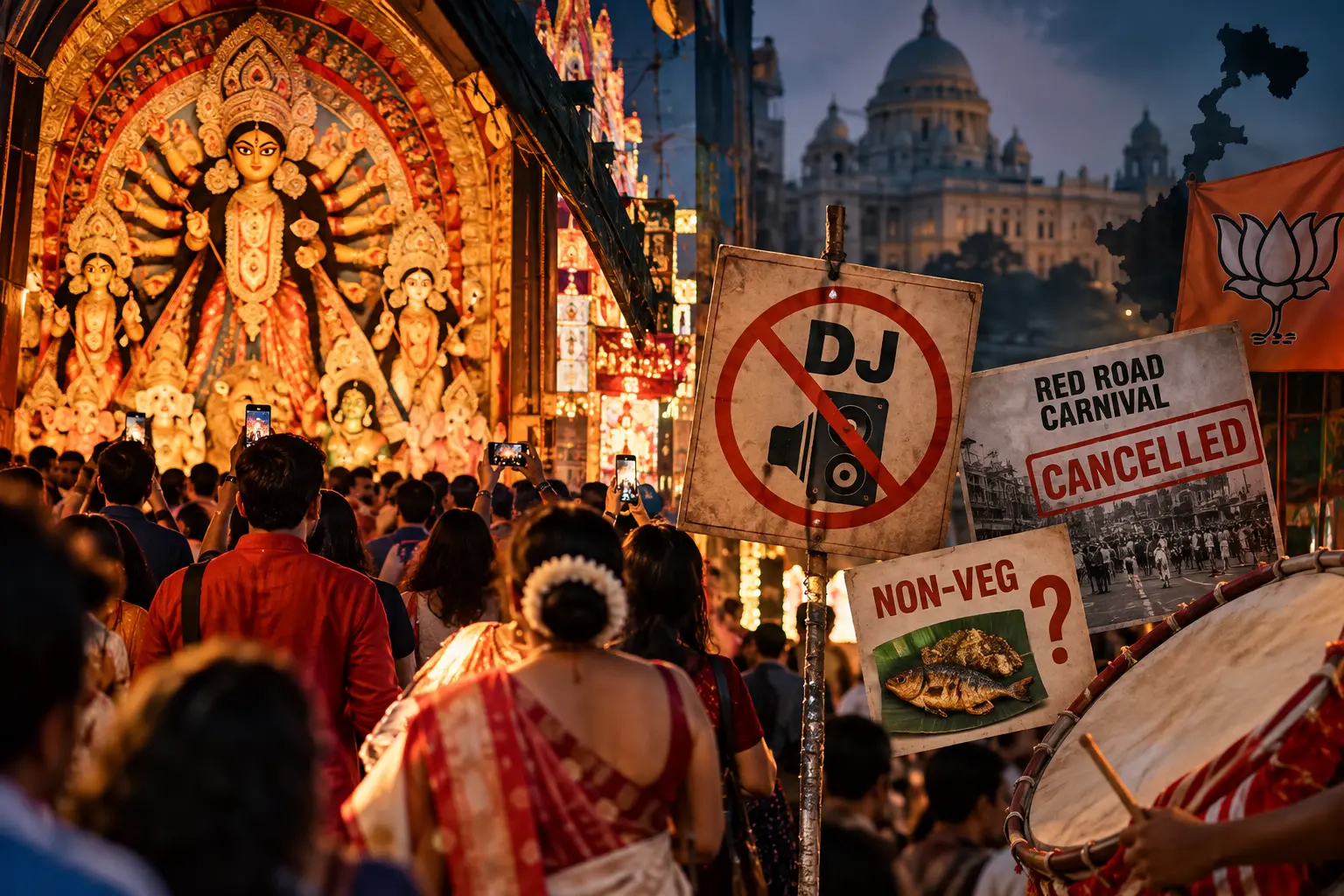
Kolkata: The beats of the dhak have begun to fill the air, Mahalaya has marked the arrival of Devi Paksha, and Kolkata is preparing for its annual transformation into a city of lights, art and celebration.
Yet, amid the anticipation surrounding Durga Puja 2026, some residents are asking whether Bengal's biggest festival will feel the same this year.
For generations, Durga Puja has meant a temporary escape from everyday life. It is the season of new clothes, late-night pandal hopping, street food, family reunions and, for those living outside Bengal, the annual journey home.
This year, however, the celebrations are unfolding against a changed political backdrop.
The BJP government, which came to power in West Bengal in May, has introduced several changes to the way Durga Puja is organised, triggering conversations about the festival's cultural identity, religious traditions and long-standing spirit of inclusivity.
Mahalaya, observed on October 10, marked the beginning of Devi Paksha. The state government organised Uma Agamani, a large-scale cultural programme at Eden Gardens featuring traditional performances, music, a drone show and fireworks.
The event formally launched this year's Puja festivities under Chief Minister Suvendu Adhikari.
The annual post-Dashami Red Road Puja Carnival, associated with the previous Trinamool Congress government, has been scrapped.
However, a roadshow showcasing Bengal's cultural traditions was held on Red Road ahead of the Eden Gardens programme on Mahalaya.
The government has also announced restrictions on DJ music during Puja celebrations and immersion processions, a statewide liquor-sale ban on Maha Ashtami, which falls on October 19, and guidelines asking organisers to ensure that idols and themes do not hurt religious sentiments associated with Sanatan Dharma. Theme-based Puja has not been prohibited.
These changes have fuelled a wider debate over whether the festival's political and cultural environment could alter how people experience it.
Mathrubhumi spoke to residents of Kolkata and people living outside Bengal to understand what Durga Puja means to them this year, and whether the developments surrounding the celebrations have changed their expectations.
'Pujo was never a Bengali festival. It was always Bengal's festival'
For Ananya Chhaochharia, 31, a geopolitical strategist who was born and raised in Kolkata, the debate goes beyond government rules. It touches on the cultural identity of a city she still calls Calcutta.
An eighth-generation non-Bengali, Chhaochharia describes Durga Puja as a celebration that has historically brought people together across linguistic and community boundaries.
'Pujo was never a Bengali festival. It was always BENGAL's festival,' she said.
Recalling her childhood, she spoke of counting the days to Mahalaya, spending hours exploring pandals and appreciating the artistic vision, messages and themes behind their designs.
She also remembered sitting with friends behind pandals, singing and dancing without a care in the world.
She said even Navratri Puja at home was planned around the schedule for pandal hopping. Now living away from Kolkata, Chhaochharia said her heart remained in the city, waiting for Maa Durga.
'The politicisation of pujo has left me deeply disturbed and upset,' she said, adding that in her 31 years, nobody had told her how to celebrate the festival.
She said she was concerned that a celebration that attracts visitors from across the world was increasingly being drawn into political and ideological debates.
'Pujo that brings people from the world to Calcutta is now being used to forward a hindutva agenda,' she said.
Chhaochharia hopes people across Bengal will reject what she described as the BJP's attack on the state's culture and traditions.
Her account highlights an important aspect of the debate: for many people who grew up in Kolkata, Durga Puja is not defined solely by religious observance.
It is also an expression of shared belonging, shaped by neighbourhoods, friendships, food, music and the city's distinctive cultural life.
'We have our freedom restrained'
For Palash Purkayastha, an IT professional from Kolkata, Durga Puja has always represented a break from the pressures of everyday life.
'Pujo for me will always be something really special that reminds us of the carefree days when, for these 10 days, the other things take a backseat,' he said.
He described the freedom of staying out until four or five in the morning, families being more accepting of eating outside food, and the feeling of returning home after spending months or even a year away.
This year, however, the celebrations have been accompanied by concerns over the non-vegetarian food debate, the cancellation of the post-Puja carnival and restrictions on DJs.
Purkayastha said these developments made him feel that 'we have our freedom restrained', adding that food and culture occupy a distinctive place in Bengali life.
'We all know the Bengali spirit. We love eating fish head even with dal,' he said. (We all know the Bengali spirit. We love eating fish head even with dal)
He also expressed concern about whether restrictions could eventually affect other forms of cultural expression, including traditional music.
He hoped the changes would not mark the beginning of a broader transformation in the years ahead.
Food, themes and the politics of Puja
The debate over how Durga Puja should be celebrated has extended beyond the government's announcements.
In August, the Vishwa Hindu Parishad (VHP) issued suggestions concerning Puja rituals, idols, themes, food around pandals and immersion.
A VHP representative also said the organisation could 'intervene' if committees failed to make changes it considered necessary, although the nature of such intervention was not specified.
The food debate became particularly contentious after Dhirendra Krishna Shastri, popularly known as Bageshwar Baba, criticised the consumption of non-vegetarian food around Durga Puja pandals during a programme in Howrah's Liluah.
His remarks drew criticism, and some BJP leaders publicly distanced themselves from them while defending Bengal's food traditions.
Later reports also noted that VHP leaders clarified their suggestions did not constitute an official, binding prohibition on non-vegetarian food during Durga Puja.
For entrepreneur Rahul De from Jadavpur, the growing focus on food has overshadowed the anticipation that traditionally precedes the festival.
'Suddenly, we are not talking about which pandal to visit or where to eat our favourite street food, for which Kolkata is famous. We are concentrating on whether we can eat non-veg,' De said.
He also said debates over food could eventually spill over into other aspects of Puja culture, including clothing and artistic themes.
Theme-based pandals have become an important part of Kolkata's celebrations, with organisers using art, installations and contemporary social issues to engage visitors.
The government has asked committees to ensure their themes do not hurt religious sentiments, but it has not banned theme-based celebrations.
For Wrishik Dexter Ganguly, another Kolkata resident, the uncertainty surrounding the festival has prompted a pessimistic assessment.
'I don't expect Puja to feel the same for the coming five years,' he said, adding, 'we all know why.'
Kumartuli's challenges and concerns over the economy
The cultural debate is unfolding alongside economic pressures affecting the people who make the festival possible.
Kumartuli, Kolkata's famed idol-making hub, faced a prolonged clay shortage earlier this year, with artisans reporting that the disruption set their work back by weeks.
Persistent rain, delayed clay supplies, and concerns over bamboo added to the difficulties idol-makers faced.
Pesticide businessman Arnab Biswas from Dum Dum also expressed concern about Kolkata's broader economic climate.
'Kolkata Durga Pujo is in a very bad condition. There is no banner, no poster, no advertisement in any part of the city,' Biswas said.
He claimed that businesses across Bengal were apprehensive, with reduced investment and spending. 'Nobody is going out to buy, no income is generated,' he said.
These concerns matter because Durga Puja supports a vast network of artisans, decorators, lighting technicians, event organisers, food vendors and small businesses.
The festival is not only a cultural celebration but also a major seasonal source of employment and income.
'Indian festivals will always be celebrated beyond class, caste and religion'
Not everyone believes the developments surrounding the festival will diminish its spirit.
Nargis Khan, 31, a public relations and management professional living in Mumbai, was born and brought up in Kolkata.
She is travelling to the city for work during the Puja period and intends to celebrate with the same enthusiasm as always.
'Despite what the ruling party wants you to feel, Indian festivals will always be celebrated beyond class, caste and religion,' Khan said.
For her, Durga Puja remains inseparable from the Kolkata she grew up in, and she does not believe the political developments surrounding it can easily dampen its spirit.
She also invoked Rabindranath Tagore's words, 'where the mind is without fear and the head is held high', saying she believed the sentiment remained relevant in the present moment.
Her perspective offers a counterpoint to the anxieties some Kolkata residents express.
For those who return home for Puja, the festival's emotional significance often lies in familiar rituals, reunions with loved ones and the feeling of belonging to a place that remains home, regardless of where they live or work.
Will Durga Puja 2026 feel different?
As the festivities get underway, the responses reveal a festival being viewed through markedly different lenses.
For some, the new rules and cultural debates represent a departure from the informal, inclusive, and sometimes irreverent atmosphere they associate with Durga Puja.
Others remain determined to celebrate as they always have, believing the festival's emotional meaning will endure despite the political changes surrounding it.
Chhaochharia's memories of growing up in Kolkata as a non-Bengali, Purkayastha's recollections of carefree nights and Khan's determination to return to the city underline a shared sentiment: Durga Puja is about more than rituals and religious observance.
It is about the pandals, the food, the music, the friendships, the late-night walks and the collective anticipation that transforms Kolkata every autumn.
The question facing Durga Puja 2026 is not simply whether the new administration's rules will change how the festival is organised.
It is whether its long-standing sense of cultural openness will remain intact amid the political and ideological debates surrounding it.
Ultimately, the answer may emerge not from government directives or political statements alone, but from the people's experiences as the dhak begins to sound, the pandals fill with visitors, and Kolkata lights up for its biggest festival.