'Deficiency of the government': Shashi Tharoor slams the system over NEET crisis
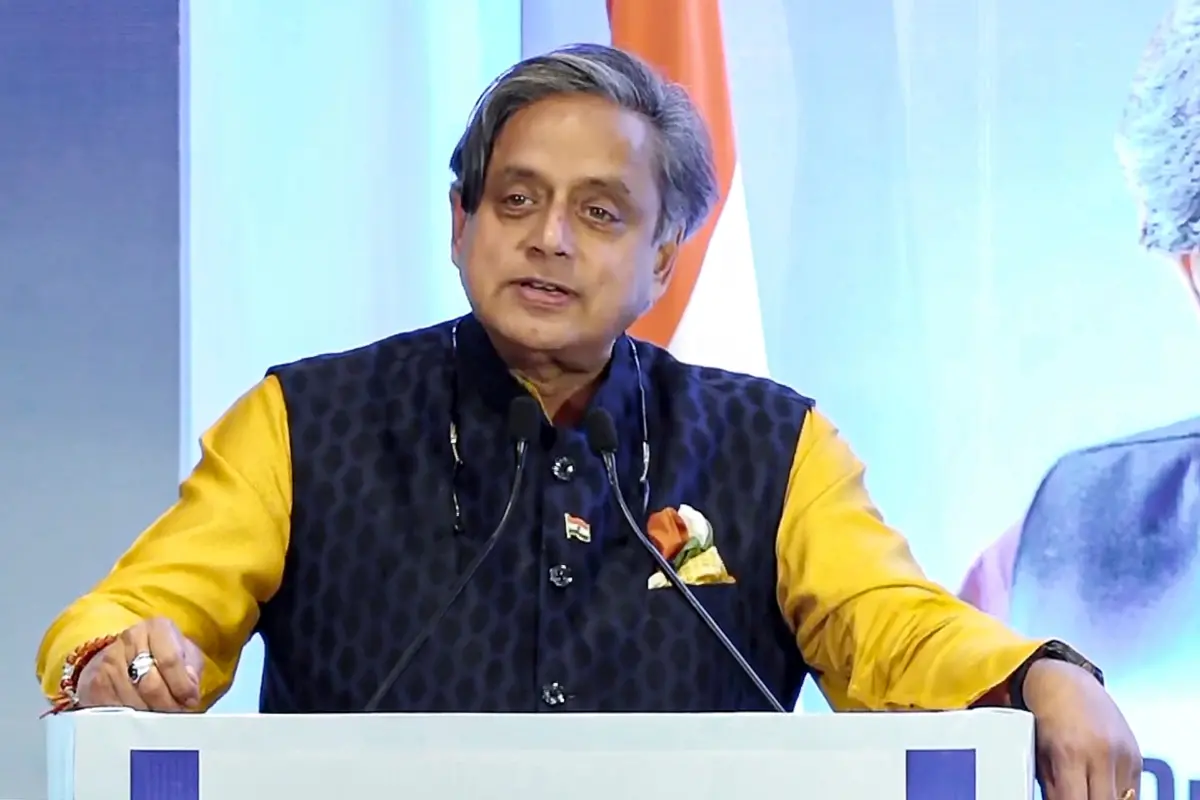
New Delhi: The political debate surrounding the NEET-UG 2026 controversy intensified on Tuesday after Congress MP Shashi Tharoor accused the government of failing to ensure the integrity of one of India's most important entrance examinations.
Speaking about the alleged paper leak and recurring examination irregularities, Tharoor said students who spend months or years preparing for competitive exams are being unfairly affected when question papers are leaked, examinations are cancelled or results are thrown into uncertainty.
According to Tharoor, repeated disruptions undermine confidence in the country's education and recruitment systems while placing enormous emotional and academic pressure on students.
What did Tharoor say?
The Congress leader argued that examination systems across the world routinely conduct large-scale competitive tests without major controversies and questioned why similar standards have been difficult to maintain in India.
He cited international examinations as examples of systems that generally operate without widespread allegations of leaks or manipulation, asking why Indian authorities continue to face recurring challenges in conducting high-stakes examinations.
Tharoor described the situation as a failure of governance and said responsibility ultimately rests with institutions entrusted with conducting examinations and maintaining their integrity.
Why is NEET-UG 2026 controversial?
The controversy erupted after allegations of question paper leaks and administrative irregularities surfaced in connection with NEET-UG 2026, one of the country's largest medical entrance examinations.
The examination is used for admission to undergraduate medical courses across India and is taken by lakhs of students every year.
Following complaints and investigations, authorities rescheduled the examination for June 21, leading to uncertainty among candidates who had already spent months preparing.
The controversy has triggered widespread debate about examination security, transparency and accountability within the testing system.
Investigation underway
The case is currently being investigated by the Central Bureau of Investigation, which has arrested several individuals in connection with the alleged leak.
Investigators are examining how the paper was allegedly compromised and whether organised networks were involved in facilitating access to examination materials.
The findings of the probe are expected to play a crucial role in determining whether additional reforms are required to strengthen examination security in the future.
Growing student concerns
The controversy has sparked protests and criticism from students, parents and education activists across several parts of the country.
Many candidates have argued that repeated examination controversies create uncertainty and place additional mental and financial burdens on aspirants preparing for highly competitive tests.
Students have also expressed concerns about fairness, arguing that honest candidates should not suffer because of alleged misconduct by a small number of individuals.
Larger debate on exam reforms
The NEET controversy has once again reignited discussion about examination reforms in India.
Education experts have called for stronger security protocols, improved digital monitoring, enhanced accountability mechanisms and quicker responses to complaints of malpractice.
The issue is also expected to be discussed by policymakers and parliamentary committees reviewing examination systems and evaluation processes.
As investigations continue, the controversy remains one of the most significant education-related issues in the country, with students awaiting both accountability and assurances that future examinations will be conducted fairly and transparently.