Nearly 20 years after forced exile, controversial author Taslima Nasrin all set to visit Kolkata
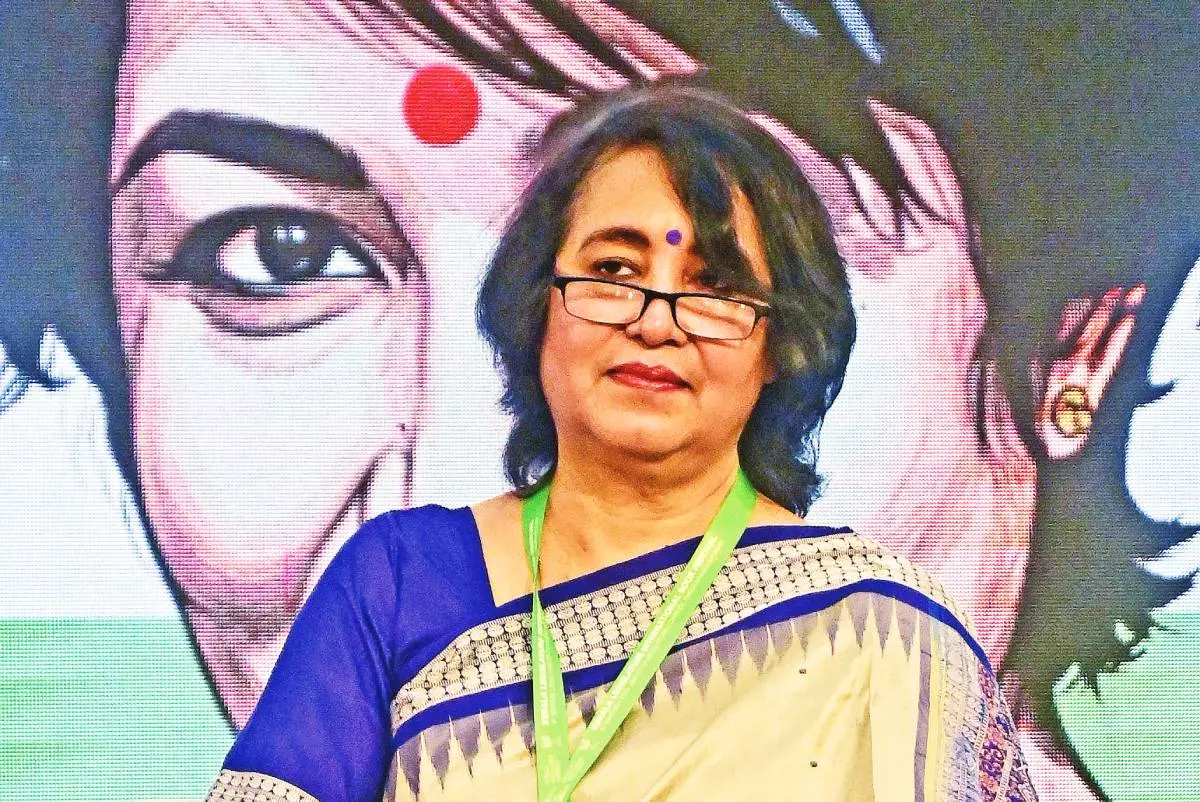
Kolkata: Nearly two decades after violent protests cut short her residency in West Bengal, exiled Bangladeshi writer Taslima Nasrin is scheduled to return to Kolkata next month. The upcoming visit carries significant political weight, arriving shortly after a shift in state power that has reignited regional debates over secularism, identity politics and free speech.
Nasrin announced via social media that she would be attending an anti-fundamentalist literary gathering at Rabindra Sadan on August 1, where she is expected to perform poetry recitations.
The event, backed by a coalition of secular and free-speech organisations, has quickly moved beyond the literary sphere. It marks a sharp departure from the policies of past state administrations, with the newly elected BJP state government actively supporting the event and confirming that Chief Minister Suvendu Adhikari will attend.
"It will basically be an event to celebrate her coming to the city after 20 years. She was forced to leave Kolkata on November 21, 2007 after the then Left Front government bowed before fundamentalist forces. This is a new Bengal, and we have decided to honour her. Chief Minister Suvendu Adhikari himself will be present at the event," said Mohit Roy, a key convenor whose group, Paschimbangar Jonno, is among the co-hosts. Roy added that no discussions have taken place regarding whether this visit points toward a permanent return to the city.
The state’s current ruling party has openly used the visit to criticise its predecessors.
"Successive Left Front and TMC governments chose political expediency over free speech by refusing to facilitate her return, despite her repeated appeals to visit Kolkata for literary events and book fairs," a senior state BJP official said.
The topic had resurfaced nationally last year when BJP Rajya Sabha MP and current West Bengal party chief Samik Bhattacharya urged the Central Government in Parliament to step in and facilitate Nasrin’s return, framing her as a crucial voice against religious extremism.
At the time, the incumbent Trinamool Congress (TMC) administration showed no interest in acting on the request. Nasrin herself had voiced frustration over being caught in local partisan rivalries.
"I don't want to get kicked around anymore. Instead, it would please me if the governments allow me to travel to Kolkata to attend literature festivals and book fairs," she told PTI in an earlier interview.
The context surrounding Nasrin's connection to Kolkata remains deeply polarised. The writer gained international recognition in the early 1990s for her feminist work and critiques of religious orthodoxy. She fled Bangladesh in 1994 following severe threats and death fatwas after publishing her novel Lajja, which documented the targeting of Hindu minorities after the Babri Masjid demolition.
After spending a decade moving through Europe and the United States, she arrived in India in 2004, selecting Kolkata as her home due to shared Bengali cultural roots.
However, that residency collapsed in November 2007. The publication of portions of her autobiography, Dwikhandita, drew fierce objections from sections of Muslim organisations. The escalating street demonstrations eventually led to severe clashes, requiring an Indian Army deployment to restore order.
The Left Front administration, led by then-Chief Minister Buddhadeb Bhattacharjee, subsequently ordered Nasrin to leave the state to safeguard public peace. She was moved through Jaipur to Delhi, where she spent time under house arrest before receiving a long-term central residency permit.
While critics at the time lambasted the Left Front for sacrificing artistic freedom under pressure, the administration maintained that public safety and the prevention of communal violence had to take priority. The succeeding Trinamool Congress governments kept a distance from the issue, leaving the policy unchanged despite periodic calls from civil society groups.
For political analysts, the starkly different reception Nasrin is now receiving highlights an ongoing evolution in the state’s political discourse. While previous secular and regional administrations chose administrative caution to navigate religious sensitivities, the new political dispensation is using her return to challenge past approaches to freedom of expression and identity politics.
PTI