Nationwide protests erupt, Pakistani flags burned after deadly Pahalgam terror attack
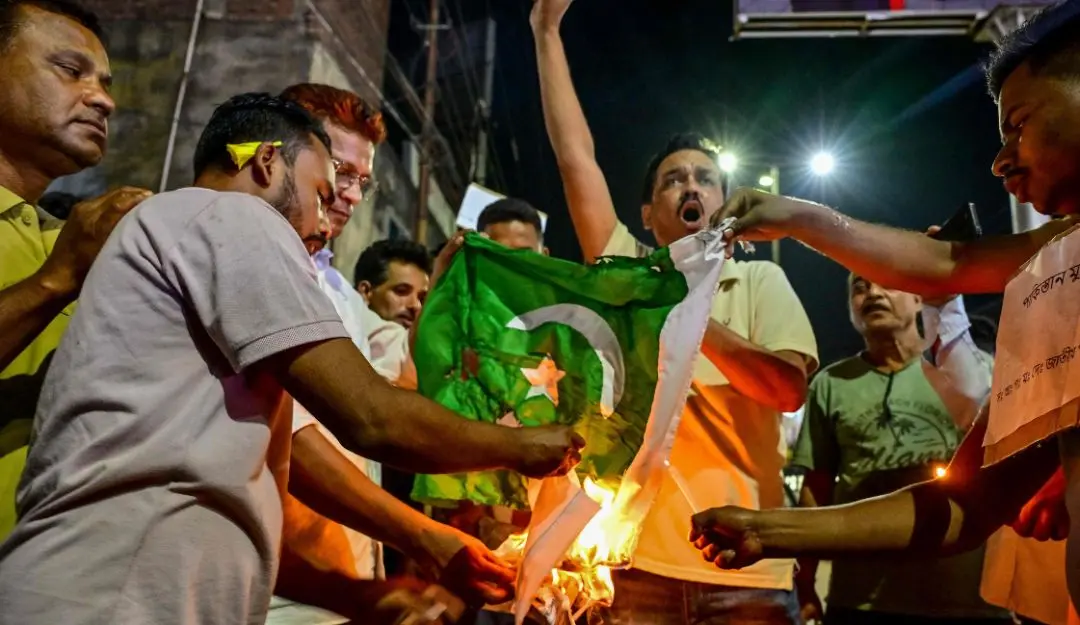
In the wake of Tuesday’s devastating terror attack in Pahalgam, Jammu and Kashmir, which claimed 26 lives, protests have erupted across India as citizens express their outrage amid the national mourning for the innocent victims.
In Delhi on Wednesday, members of the Indian Youth Congress held a candlelight vigil, condemning the attack. They burned Pakistani flags and called for immediate action against those responsible for the violence. Meanwhile, in Telangana, Youth Congress workers took to the streets demanding justice and accountability for the attack, while also calling for an end to cross-border terrorism.
In Jammu and Kashmir, protests were held in Pahalgam by local hotel owners and shopkeepers who joined in the candlelight vigil to honour the victims. In Srinagar, Sajad Lone, leader of the Jammu and Kashmir People’s Conference, led a protest march to denounce the tragedy.
In response to the attack, India’s government announced a series of punitive measures aimed at sending a stern message to Pakistan over its support of cross-border terrorism. Foreign Secretary Vikram Misri revealed that the 1960 Indus Waters Treaty will be suspended, and the integrated checkpost at Attari will be shut down with immediate effect. Additionally, Pakistani nationals will no longer be permitted to travel to India under the SAARC visa Exemption scheme.
A special meeting of the Cabinet Committee on Security (CCS), chaired by Prime Minister Narendra Modi, discussed the attack in detail. The committee condemned the attack in the strongest terms, offering condolences to the victims' families and pledging swift action against the perpetrators. The link between the attack and cross-border terrorism was highlighted during the briefing.
The attack, which took place in the Baisaran meadow of Pahalgam, marks one of the deadliest terror incidents in the region since the 2019 Pulwama attack, in which 40 CRPF personnel were killed. This latest attack is one of the most significant since the abrogation of Article 370 in 2019.