1,100 trees cut then ‘Namo Oxygen Parks’ launched: Why critics call it a government PR stunt?
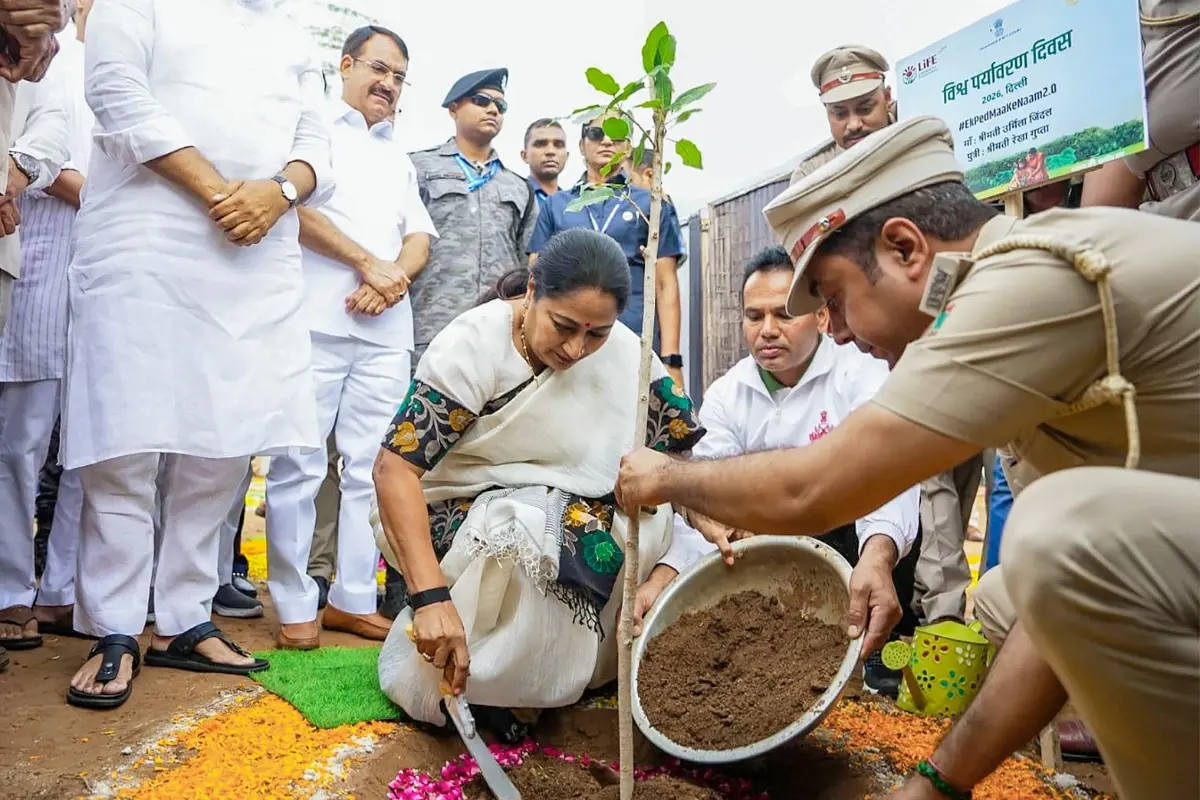
New Delhi: The inauguration of 18 Namo Oxygen Parks across Delhi on World Environment Day has been presented as a major step towards improving the capital's environment. However, the project has a significant backstory. The parks were created as part of a Supreme Court-directed compensatory afforestation programme following the controversial felling of more than 1,100 trees in Delhi's Southern Ridge in 2024.
Spread across 185.4 acres, the parks are intended to restore lost green cover and support Delhi's long-term environmental goals. Yet environmental experts point out that the project is fundamentally a restoration exercise aimed at compensating for ecological damage that had already occurred.
Why were the Namo Oxygen Parks created?
The origins of the project lie in the felling of over 1,100 trees in a protected ridge area in south Delhi. The trees were cut to facilitate the widening of a road leading to the Central Armed Police Forces Institute of Medical Sciences (CAPFIMS).
The large-scale tree cutting sparked criticism from environmentalists and residents, who questioned both the necessity of the project and the environmental cost involved. The matter eventually reached the Supreme Court, which examined the circumstances surrounding the felling and ordered compensatory measures to offset the ecological loss.
As part of these directions, 18 land parcels were handed over to the forest department for afforestation and ecological restoration. These sites have now been transformed into the Namo Oxygen Parks.
Supreme Court intervention and compensatory afforestation
The issue became part of contempt proceedings linked to the case involving the Delhi Development Authority (DDA) and allegations that the tree felling had been carried out without following the required procedures.
The Supreme Court ordered compensatory plantation to address the environmental damage caused by the loss of mature trees in the ridge ecosystem. The afforestation programme was intended not only to replace the lost trees numerically but also to help restore ecological balance over the long term.
The newly inaugurated parks correspond to the same 18 land parcels identified under the court-mandated restoration plan.
Where are the parks located?
The Namo Oxygen Parks have been established across several parts of Delhi.
Locations in north Delhi include Karala, Pansali, Prahladpur Banger, Shahpur Garhi, Alipur and Tikri Khurd.
In south Delhi, the parks are located at Maidangarhi and Satbari, while Dhoolsiras represents one of the major locations in west Delhi.
The inauguration ceremony was held at Maidangarhi, which is situated near the Southern Ridge area where the tree-felling controversy originated.
What has been planted?
Officials said the parks have been developed primarily using native tree species that are well suited to Delhi's climate and ecological conditions.
The plantation includes:
- Peepal
- Banyan
- Neem
- Jamun
- Mango
Native species were selected because they are generally more resilient, require less maintenance and provide better support for local biodiversity than exotic varieties.
Authorities believe these trees will contribute to improved air quality, increased carbon absorption and enhanced urban green cover as they mature.
Delhi government's larger green plan
During the inauguration, Chief Minister Rekha Gupta announced plans to expand the concept significantly.
The Delhi government aims to:
- Develop 100 oxygen parks across the city
- Plant approximately 70 lakh trees and saplings this year
- Increase overall green cover
- Improve air quality in pollution-prone areas
- Strengthen Delhi's urban forest network
Union Environment Minister Bhupender Yadav described the project as an important step towards creating cleaner and greener urban spaces.
Environment Minister Manjinder Singh Sirsa also highlighted efforts to notify nearly 11,000 acres as forest area, describing it as part of a broader environmental protection strategy.
Can saplings replace mature trees?
This remains one of the most debated aspects of the project.
Environmental scientists note that while newly planted saplings begin producing oxygen soon after planting, they require years to provide the full ecological services delivered by mature trees.
According to field biologists, it may take two to five years before many of the newly planted trees begin making a noticeable contribution to temperature regulation, habitat creation and biodiversity support.
Mature trees offer several environmental benefits that cannot be immediately replicated, including:
- Significant carbon storage
- Urban heat reduction
- Shade generation
- Soil conservation
- Bird and wildlife habitat
- Air pollution filtration
Experts therefore caution against viewing compensatory plantations as an instant replacement for mature forest ecosystems.
Environmentalists question the narrative
Several environmental activists have welcomed the restoration effort while questioning how it is being presented publicly.
Bhavreen Kandhari, who was among the first to raise concerns about the Southern Ridge tree-felling episode, argued that the parks should be recognised primarily as a legal and environmental obligation rather than a standalone achievement.
Critics say the project was necessitated by the loss of an already established ecosystem and should be viewed in that context.
According to environmental groups, the focus should remain on preventing future destruction of mature green spaces rather than relying solely on compensatory plantations after damage has occurred.
What happens next?
The long-term success of the Namo Oxygen Parks will depend on the survival and growth rate of the newly planted trees. Afforestation projects often face challenges including water shortages, poor maintenance, encroachment and low sapling survival rates.
If properly maintained, the parks could eventually contribute significantly to Delhi's green cover and environmental resilience. However, experts stress that restoring the ecological value of more than 1,100 mature trees will take years, and in some cases decades.
For now, the Namo Oxygen Parks stand as both a symbol of environmental restoration and a reminder of the ongoing debate over balancing infrastructure development with the protection of Delhi's fragile natural ecosystems.