Mumbai Learjet crash: Pilot errors, weather led to stall; AAIB seeks stricter pilot training
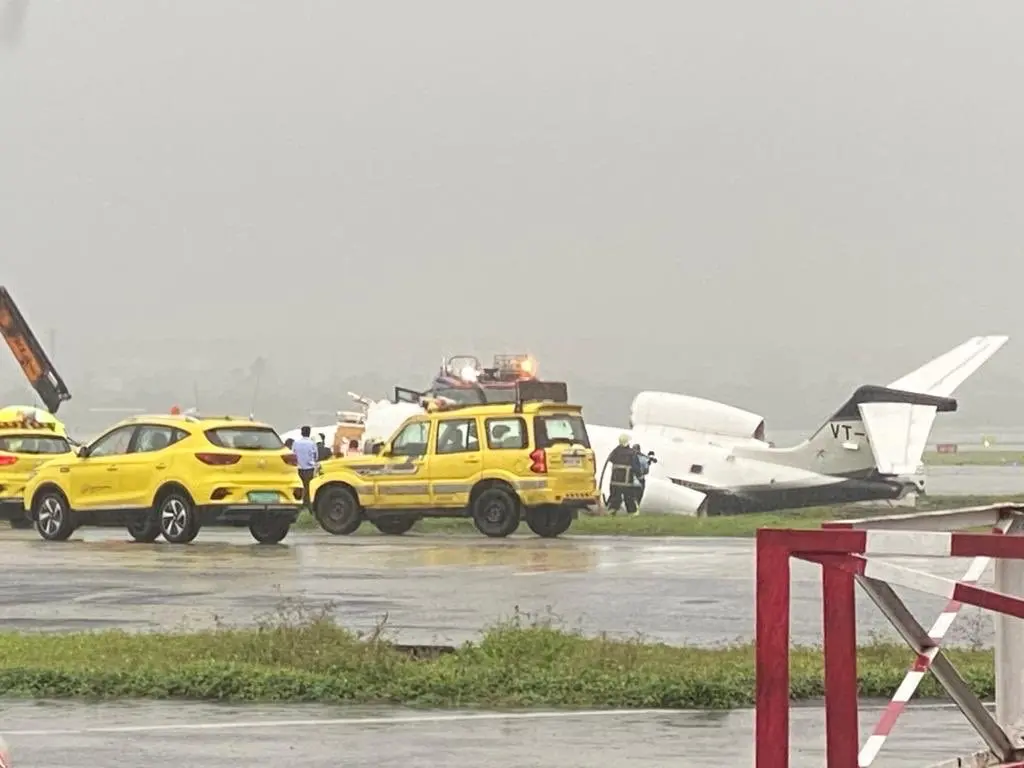
New Delhi: The crew of a VSR Ventures Learjet continued an unstable approach to Mumbai airport in marginal weather, and improper handling of the aircraft led to an aerodynamic stall at low altitude, according to the Aircraft Accident Investigation Bureau (AAIB).
The findings are part of the final report into the September 14, 2023, accident involving Learjet 45XR aircraft VT-DBL. The aircraft was operating a non-scheduled flight from Visakhapatnam to Mumbai when it veered off the runway while landing. All eight people on board- six passengers and two crew members- suffered serious injuries, and the aircraft was destroyed.
The AAIB identified the crew's decision to continue the unstable approach and the subsequent aircraft handling as the probable cause of the accident. It also cited marginal weather, poor visibility, a strong tailwind, inadequate airspeed monitoring and a delayed go-around call as contributing factors.
What led to the Mumbai Learjet crash?
The report said the crew did not follow standard operating procedures (SOPs) during the approach.
The flight crew failed to adequately monitor airspeed as the low-speed warning increased, while the monitoring pilot delayed calling for a go-around. A go-around is a standard safety manoeuvre in which pilots discontinue an approach and climb away when a landing cannot be completed safely.
The weather further reduced the crew's visual cues, while the strong tailwind added to the difficulty of the approach.
The AAIB also pointed to the crew's commitment to landing before Mumbai airport's restricted operating hours as a contributing factor.
Also read | Will new fares bring relief to flyers burdened with sky-high air fares
AAIB recommends pilot training checks
Following the findings, the AAIB has recommended that the Directorate General of Civil Aviation (DGCA) consider a one-time audit of training records of fixed-wing pilots, particularly those working with non-scheduled and general aviation operators.
The review would check whether pilots completed all mandatory simulator exercises, including training for critical emergencies.
The AAIB has also recommended adding stall-recovery exercises in the landing configuration to recurrent simulator training. The proposed training would cover recovery from a full stall or activation of the stall warning system during climb, cruise, approach and landing.
The agency further suggested that operators establish systems to verify pilot training records periodically and ensure that all mandatory exercises are completed.
Also read | When Pigs Fly! Meet the Pink Pig that is turning heads in the sky
Stricter rules for unstable approaches
The AAIB has recommended stronger enforcement of go-around procedures, with pilots to be reminded that they should discontinue an approach whenever it is not stabilised.
It also called for enhanced crew resource management training and more effective internal audits at non-scheduled and general aviation operators.
Crew resource management training focuses on cockpit communication, coordination and decision-making, particularly during high-pressure situations.
Recommendations for VSR Ventures and Airport Airports Authority of India
The AAIB has asked VSR Ventures to reinforce proper challenge-and-response checklist procedures among its pilots, ensuring aircraft settings and systems are correctly configured before critical operations.
It also recommended that the operator maintain technical and airframe logbooks in accordance with prescribed procedures.
The DGCA has been advised to assess the effectiveness of internal audits during its regulatory inspections and surveillance.
The report also recommended that the Airports Authority of India (AAI) reinforce procedures among air traffic controllers for maintaining required aircraft separation to reduce the risk of wake turbulence.
The recommendations follow the AAIB's investigation into the 2023 accident and are aimed at preventing similar incidents.