PM Modi cites 4% farm growth, Rs 4 lakh crore exports to highlight India's agricultural progress
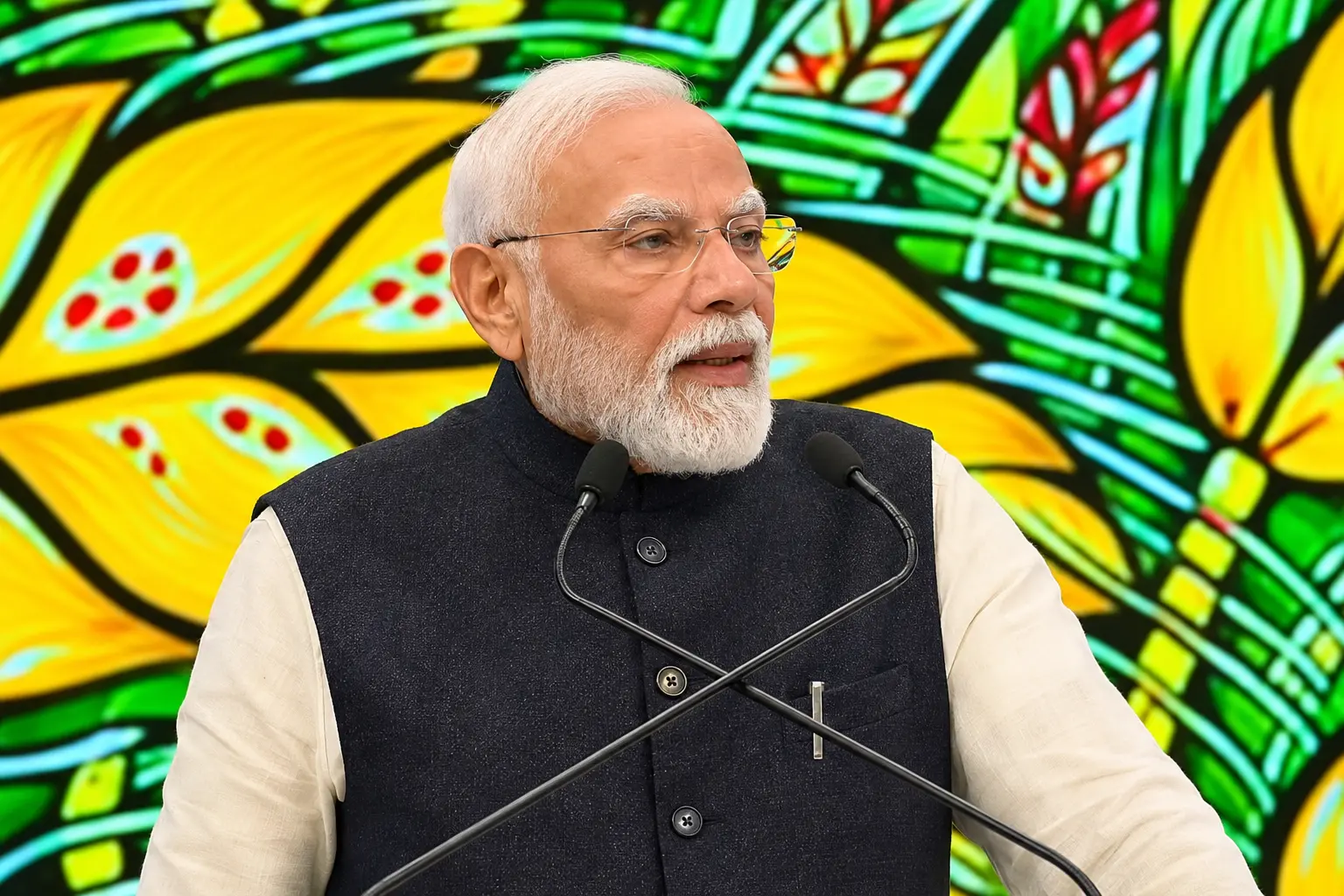
New Delhi: India's agricultural sector recorded annual growth of more than 4 per cent during the past decade, marking the first such decade since Independence, Prime Minister Narendra Modi said on Thursday, while asserting that millions of people, including small farmers, had moved out of poverty during the period.
Addressing the Kisan Tak Bharat Agriculture Conference organised by the India Today Group, Modi cited agricultural growth and poverty reduction as two indicators of the country's development, arguing that the transformation of rural India had been among the significant achievements of the past decade.
Referring to a World Bank report, the Prime Minister said nearly 50 crore people had overcome poverty in just 12-13 years, with the sharpest decline recorded in rural areas.
He added that a considerable number of small farmers had also managed to escape poverty.
PM Modi maintained that agriculture was much more than an economic activity, describing it as an integral part of India's culture, traditions and social fabric.
He said the vision of a developed India, or Viksit Bharat, could not be realised without modernising agriculture and making farmers financially independent and self-reliant.
Taking a swipe at previous governments, he said successive administrations had largely measured agricultural success through the country's ability to maintain adequate foodgrain stocks. However, he argued that changing markets, technology, weather conditions and dietary preferences required a more comprehensive approach to farming.
'It is not enough to fill the grain stores,' Modi said, stressing that farmers needed new skills and opportunities to adapt to changing circumstances.
He identified agriculture as one of the seven streams of power needed to achieve Viksit Bharat, a vision he outlined from the Red Fort.
Fertiliser support, fuel costs and farmer relief
Highlighting the Centre's efforts to contain cultivation expenses, Modi said the government had spent Rs 16 lakh crore on fertiliser support over the past 12 years, an amount he described as exceeding the entire annual budgets of several countries.
He cited the example of Di-ammonium phosphate (DAP), saying a 50-kg bag costing approximately Rs 5,000 in the international market was being made available to Indian farmers for Rs 1,300 despite the ongoing conflict in West Asia.
The Prime Minister also referred to the volatility in global crude oil prices, which, according to him, had climbed from USD 70 to USD 122 per barrel within weeks.
He said diesel prices would otherwise have required an increase of approximately Rs 50 per litre.
Instead, the government raised diesel prices by only Rs 7 per litre, absorbing the remaining Rs 43, he said. Modi added that the Centre was bearing a financial burden of around Rs 14,000 crore every month to protect consumers and farmers from the full impact of international price fluctuations.
He further claimed that diesel prices in neighbouring countries had increased by 40-50 per cent.
Farm exports cross Rs 4 lakh crore
Pointing to India's expanding agricultural output, Modi said the country now exports agricultural products worth more than Rs 4 lakh crore annually.
He said India had emerged as the world's largest producer of milk, pulses, jute, rice, wheat, cotton, fruits and vegetables, fish and millets.
The Prime Minister highlighted the growth in allied agricultural activities, stating that milk production had increased by 70 per cent over the past decade, while egg production had risen by 90 per cent. Fish production had more than doubled during the same period.
Honey production, he said, had expanded from 80,000 tonnes to 1.5 lakh tonnes. Horticulture output had also climbed from approximately 280 million tonnes to over 350 million tonnes.
PM Modi urged farmers to move beyond excessive dependence on wheat, rice and sugarcane, arguing that diversification could create additional income opportunities.
He said connecting different agricultural revolutions under a common vision would allow farmers to develop multiple sources of earnings instead of relying on a limited number of crops.
Solar pumps, soil testing and FPOs
The Prime Minister also outlined several initiatives aimed at strengthening agricultural infrastructure and introducing technology into farming.
Under the PM-KUSUM scheme, approximately 12 lakh solar pumps had been provided to farmers, he said. The initiative, according to Modi, was helping cultivators reduce electricity expenses while creating opportunities to earn additional income by generating solar power on agricultural land.
He said the number of soil testing laboratories had increased to more than 8,400 from just a handful in 2014. India now also has over 7,500 Krishi Vigyan Kendras, which provide agricultural knowledge and technical support to farmers.
Emphasising the need to turn cultivators into entrepreneurs, Modi said small farmers had established a network of 10,000 Farmer Producer Organisations (FPOs). The government, he added, was helping these organisations access food-processing technology and improve their economic prospects.
Modi calls for shift towards natural farming
Towards the end of his address, the Prime Minister called for a decisive shift away from chemical-intensive agriculture, warning that excessive chemical use was damaging the environment and threatening the long-term health of agricultural land.
'With the chemicals we use, we are destroying the Mother Earth, killing her before our own eyes,' he said, cautioning that continued neglect could jeopardise the natural resources that sustain food production.
Modi said the government was promoting natural farming as an alternative and maintained that one cow could provide enough manure for 30 acres of land.
Distinguishing the approach from organic farming, he said natural farming was a practice farmers could adopt with relative ease.
He also urged agricultural equipment manufacturers and start-ups to prioritise the development of solar-powered machinery, underlining the importance of technology and sustainable practices in the sector.
Reiterating that agricultural modernisation and farmer self-reliance were indispensable to India's development ambitions, Modi said the country could not achieve its Viksit Bharat goal without transforming the way farming is practised.