10 Maoists, including KB Chief, surrender in MP: CM says ‘wipeout by 2026; surrender or be eliminated’
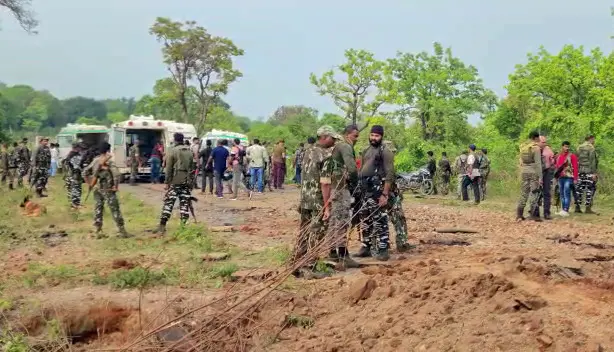
In one of the biggest blows to Maoist extremism in recent years, ten members of the Kanha-Bhoramdeo (KB) division — including its most wanted commander Kabir — surrendered en masse before Madhya Pradesh Chief Minister Mohan Yadav in Balaghat on Sunday.
The development marks a decisive moment for security operations in a region long considered a stronghold of Naxal influence.
Balaghat, historically among the state's most sensitive districts affected by Naxal violence, witnessed a rare display of capitulation as the entire squad led by commander Kabir laid down arms.
Officials described the surrender as a strategic victory for the state's anti-Naxal campaign ahead of what is expected to be an intensified crackdown in the coming months.
Addressing the gathering, Chief Minister Mohan Yadav issued his strongest statement yet on the state's anti-Naxal roadmap, declaring that Naxalism would “no longer survive on Madhya Pradesh soil” beyond the next year.
“Today, our police have done a big job,” he said. “We pledge that by January 2026, either the Naxalites will surrender or we will wipe them out. Many Naxalites have already surrendered. Prime Minister Narendra Modi ji and our resolve is that we will eliminate Naxalism from our land.”
The surrender of Kabir — a significant figure in the KB division — is being viewed as a psychological and operational setback to Maoist networks operating across the MP–Chhattisgarh–Maharashtra axis.
Security agencies believe his exit, along with his squad, could accelerate additional surrenders and further fragment the Maoist presence in the border zones.
Chief Minister Yadav reiterated that the state’s intensified anti-Naxal push is aligned with the national strategy led by Prime Minister Narendra Modi and Union Home Minister Amit Shah, under which several Maoist-affected districts have shown rapid improvement.
“Two years ago, three of our districts were considered completely Naxal-affected. But last year, we freed Dindori and Mandla, and now Balaghat is also witnessing major success,” he said.
While Madhya Pradesh reports progress in dismantling Maoist structures, neighbouring Chhattisgarh — once the epicentre of Maoist insurgency — is also attempting to reshape its socio-economic landscape in insurgency-hit regions.
Sukma district, among the worst-affected areas, is currently undergoing development-led transformation through the ‘Aam Bagicha Project,’ aimed at boosting rural incomes via orchard-based livelihood initiatives.
Sukma Collector Devesh Kumar Dhruv said the initiative aligns with Chief Minister Vishnu Deo Sai’s directives and the Centre’s Lakhpati Didi mission.
Local communities are being encouraged to grow mangoes, coconuts, lemons, and other fruit varieties to diversify income sources. Villagers like Markam Dula say the project is already changing mindsets and offering new economic hope in remote forest belts.
The simultaneous advances — a massive Maoist surrender in Madhya Pradesh and a development-driven revival in Chhattisgarh — point to a broader strategic shift in India’s long-running fight against Naxalism.
Officials believe that both the security offensive and livelihood interventions are now converging to push the insurgency into irreversible decline.