‘An invitation to catastrophe’: Ex-IAF officer slams Major Khushboo Patani’s air pistol advice
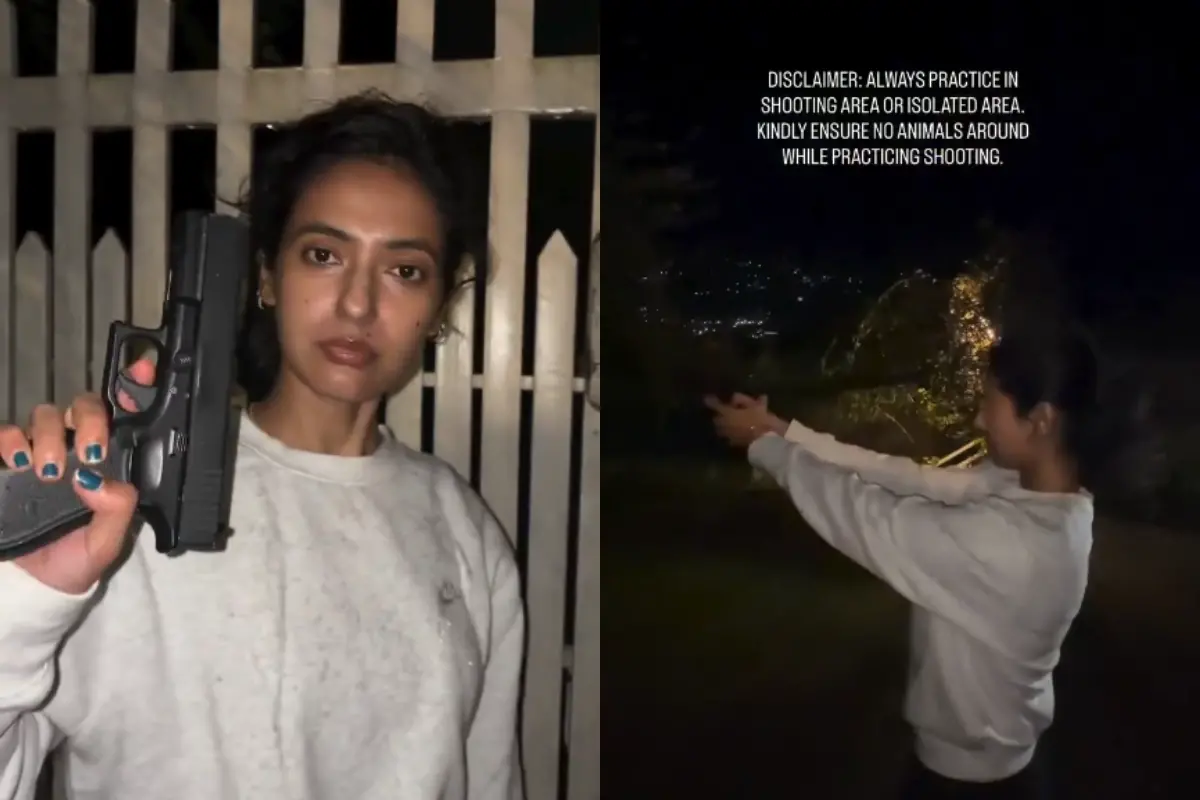
New Delhi: Former Indian Army officer Major Khushboo Patani (Retd.) has sparked widespread debate across India after publishing a video urging women to carry CO₂-powered Glock 17 Gen 4 air pistols for personal self-defence. Demonstrating a .177 calibre air pistol modelled on the military service sidearm, Patani argued that women must take immediate responsibility for their personal security rather than relying on external assistance. Patani highlighted that such air guns do not require an arms licence in India, encouraging women to visit local shooting ranges to build confidence.
Military Veteran Issues Sharp Critique
The proposal drew a direct and detailed counter-critique from military operations and security experts, led by Wing Commander (Dr.) Pushkal Vijay Dwivedi, a former Indian Air Force officer, military operations planner, ex-Director of Intelligence at BARC. In a public statement issued on social media platform X, Dwivedi addressed Patani directly, cautioning that offering flawed tactical guidance to civilian women was "an invitation to catastrophe." While acknowledging Patani’s positive intentions regarding women's safety, Dwivedi asserted that operational doctrine cannot be compromised, warning that carrying a replica firearm creates severe vulnerabilities during real-world street violence.
Breach of Firearm Safety Fundamentals
In his operational analysis, Dwivedi highlighted critical breaches of the four cardinal rules of firearm safety during the video demonstration, stressing that tactical discipline makes no distinction between live weapons and air guns. According to Dwivedi, the video compromised basic muzzle discipline by sweeping uncontrolled arcs across domestic spaces and camera operators. He further pointed out improper index-finger placement along the trigger guard, noting that breaking trigger discipline under sudden stress causes negligent discharges. Additionally, Dwivedi warned that operating projectile devices in casual indoor settings ignores ricochet risks, instilling dangerous handling habits in untrained civilians.
The Tactical Fallacy of CO2 Replicas
Detailing the operational defects of deploying a .177 CO₂ replica in close-quarters encounters, Dwivedi explained that lead pellets or steel BBs produce negligible kinetic energy, causing superficial pain rather than central nervous system shutdown. Against an assailant fueled by adrenaline or narcotics, such pain compliance fails and risks further enraging the attacker. Furthermore, because the replica is visually indistinguishable from an actual Glock 17, drawing it instantly escalates a confrontation to a lethal level, exposing the victim to genuine gunfire or bladed attacks while simultaneously creating a dangerous friendly-fire risk from responding armed police units.
A Call for Realistic Survival Doctrine
Concluding his assessment, Dwivedi called for the dissemination of realistic survival strategies rather than relying on replica tools. He outlined a tiered self-defence framework, prioritising proven non-lethal tools such as major capsaicinoid pepper gels, high-lumen strobe flashlights, and empty-hand combative training focused on situational awareness and biomechanical striking. For situations genuinely requiring lethal force, Dwivedi stated that citizens should seek lawful licences for recognised civilian calibres backed by professional retention training, ensuring that personal protection strategies remain operationally sound.