MP Uniform Civil Code Bill explained: Key provisions on marriage, inheritance & live-in relationship
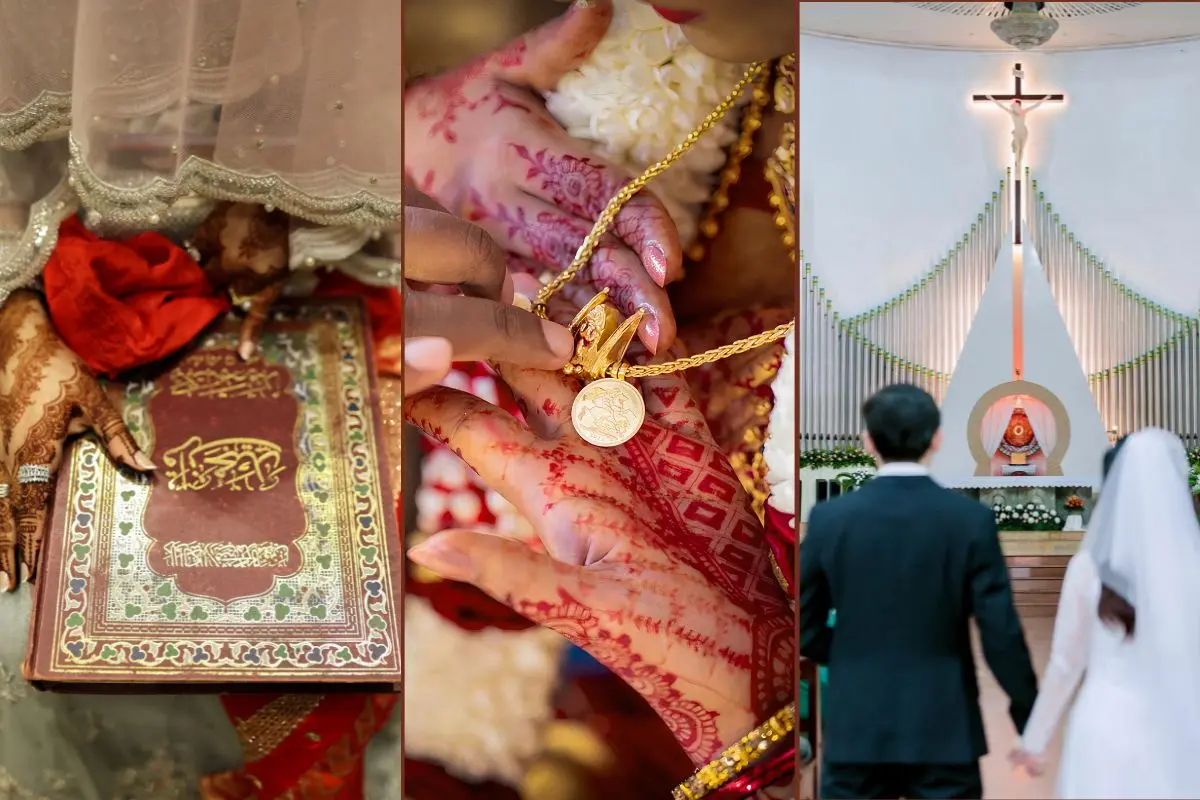
The Madhya Pradesh government on Monday introduced the Uniform Civil Code (UCC) Bill, 2026 in the Legislative Assembly during the Monsoon Session, taking the state a step closer to adopting a common civil law governing marriage, divorce, inheritance, maintenance and live-in relationships. If enacted, Madhya Pradesh will become the fourth state after Uttarakhand, Gujarat and Assam to implement a Uniform Civil Code.
Introduced in the House by State Minister Gautam Tetwal, the Bill comes a day after the state Cabinet, chaired by Chief Minister Mohan Yadav, approved the draft legislation. The government says the proposed law is aimed at ensuring equal civil rights for all citizens while exempting Scheduled Tribes protected under the Constitution.
It covers a wide range of issues—from making marriage and divorce registration compulsory to recognising children born through live-in relationships, banning practices such as triple talaq and 'nikah halala', and ensuring equal inheritance rights for sons and daughters. Here's a look at the major provisions.
Mandatory registration for live-in relationships
One of the most talked-about features of the proposed law is the regulation of live-in relationships.
The Bill requires couples entering a live-in relationship to submit a Statement of Live-in Relationship to the Registrar within one month of starting to live together.
According to the draft, both partners must be at least 18 years old, should not already be married to another person, must not fall within prohibited degrees of relationship unless permitted by custom, and must enter the relationship voluntarily.
If the legislation is enacted, couples who fail to register their live-in relationship within the prescribed period could face imprisonment of up to three months or a fine of Rs 10,000.
Providing false information may attract up to three months' imprisonment and a Rs 25,000 fine, while failing to submit the required declaration despite receiving notice from the Registrar could lead to imprisonment of up to six months and a fine of Rs 25,000.
Triple talaq, nikah halala and monogamy
The proposed Uniform Civil Code makes monogamy mandatory across communities, allowing a person to have only one living spouse at a time.
It also prohibits the practice of triple talaq and makes compelling, promoting or facilitating humiliating practices such as 'nikah halala' after divorce a punishable criminal offence under the proposed law.
Marriage and divorce registration
The Bill makes registration of both marriages and divorces compulsory irrespective of religion, except for communities exempted from the legislation.
According to the proposal, registrations in urban areas will be carried out through the MP e-Nagarpalika Portal, while rural registrations will be handled through the Sub-Divisional Magistrate (SDM), municipality or gram panchayat.
Equal inheritance rights
The proposed legislation introduces a uniform and gender-neutral succession framework.
Under the draft, sons and daughters would have equal rights to inherit property regardless of their marital status. Widows and widowers would also receive equal treatment in matters relating to inheritance.
Rights of children
The Bill grants equal legal status to children born through marriage, adoption, surrogacy and assisted reproductive technology (ART).
Children born through live-in relationships would also receive legal recognition.
The draft further provides that if a male partner abandons a woman in a live-in relationship, she may seek maintenance through a competent court in a manner similar to a legally wedded wife.
In custody disputes, courts would be required to place the child's best interests and overall welfare above competing parental claims.
Who will be exempt?
The proposed Uniform Civil Code will not apply to Scheduled Tribes covered under Articles 342 and 366 (Clause 25) of the Constitution.
The government has also proposed exemptions for communities whose traditional rights are specifically protected under Part XXI of the Constitution.
Why does the government say the law is needed?
Chief Minister Mohan Yadav has said the proposed legislation is intended to establish a common civil law governing personal matters irrespective of religion. According to the government, the primary objective is to eliminate discrimination against women under different personal laws and ensure greater equality in matters relating to marriage, divorce, maintenance and inheritance.
The draft was prepared by a committee headed by retired judge Justice Ranjana Desai after studying similar legal frameworks introduced in states including Uttarakhand, Gujarat and Assam.
With agency inputs