Who was Madhav Gadgil? ‘People’s Scientist’, champion of Western Ghats and grassroots ecology
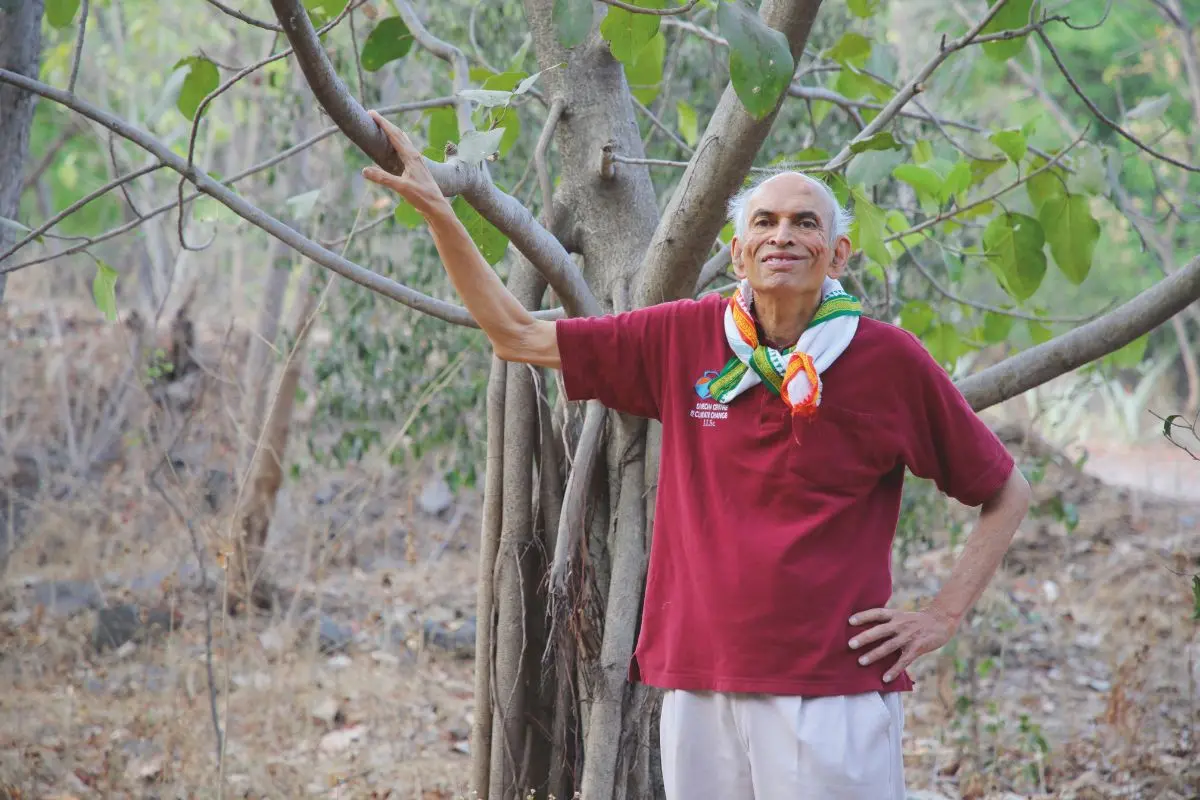
Madhav Gadgil, one of India’s most influential and uncompromising ecologists, passed away on Wednesday night in Pune at the age of 83. Widely regarded as the conscience-keeper of India’s environmental movement, Gadgil reshaped how conservation was understood—placing local communities, not corporations or distant policymakers, at its heart.
Born in 1942 in Pune amid the hills of the Western Ghats, Gadgil’s fascination with nature began early. Influenced by his birdwatcher father, he learnt to identify birds even before he could read. That early curiosity matured into a lifelong commitment to understanding—and protecting—India’s ecological and cultural diversity.
Educated in Pune and Mumbai, Gadgil later earned his doctorate in mathematical ecology from Harvard University, where he won the IBM Computer Center Fellowship. Yet despite his international academic standing, he always described himself as a “people’s scientist,” committed to research that directly served society.
For over three decades, Gadgil was a faculty member at the Indian Institute of Science, where he founded the Centre for Ecological Sciences. His work bridged theory and practice, often conducted in collaboration with tribal communities, farmers, fisherfolk, and herders.
He went on to play a key role in drafting India’s Biological Diversity Act and advising global institutions on environmental governance.
Also read: Madhav Gadgil bags UNEP's Lifetime Achievement Award 2024 | VIDEO
Gadgil is best remembered for chairing the Western Ghats Ecology Expert Panel in 2011. The panel’s report—popularly known as the Gadgil Report—recommended that nearly 75% of the Western Ghats be declared ecologically sensitive. The warning was stark: unchecked mining, infrastructure expansion and deforestation would trigger landslides, floods, and long-term ecological collapse.
The report proved controversial and politically inconvenient. A subsequent panel led by K Kasturirangan diluted many of its recommendations. Years later, Gadgil’s concerns appeared prescient as repeated landslides and floods devastated parts of the Western Ghats, including Kerala’s Wayanad.
In recognition of his life’s work, Gadgil was named one of six ‘Champions of the Earth’ for 2024 by the United Nations Environment Programme. Despite the lack of policy follow-through, he remained a “durable optimist,” hopeful that people-powered movements would eventually force change.
Author of seven books and more than 225 scientific papers, Gadgil leaves behind a legacy that continues to challenge India’s development narrative—urging the country to listen, at last, to the science it once sidelined.