₹500 for 50 years of airport rights? Adani's Lucknow deal faces ₹249.63 crore stamp duty question
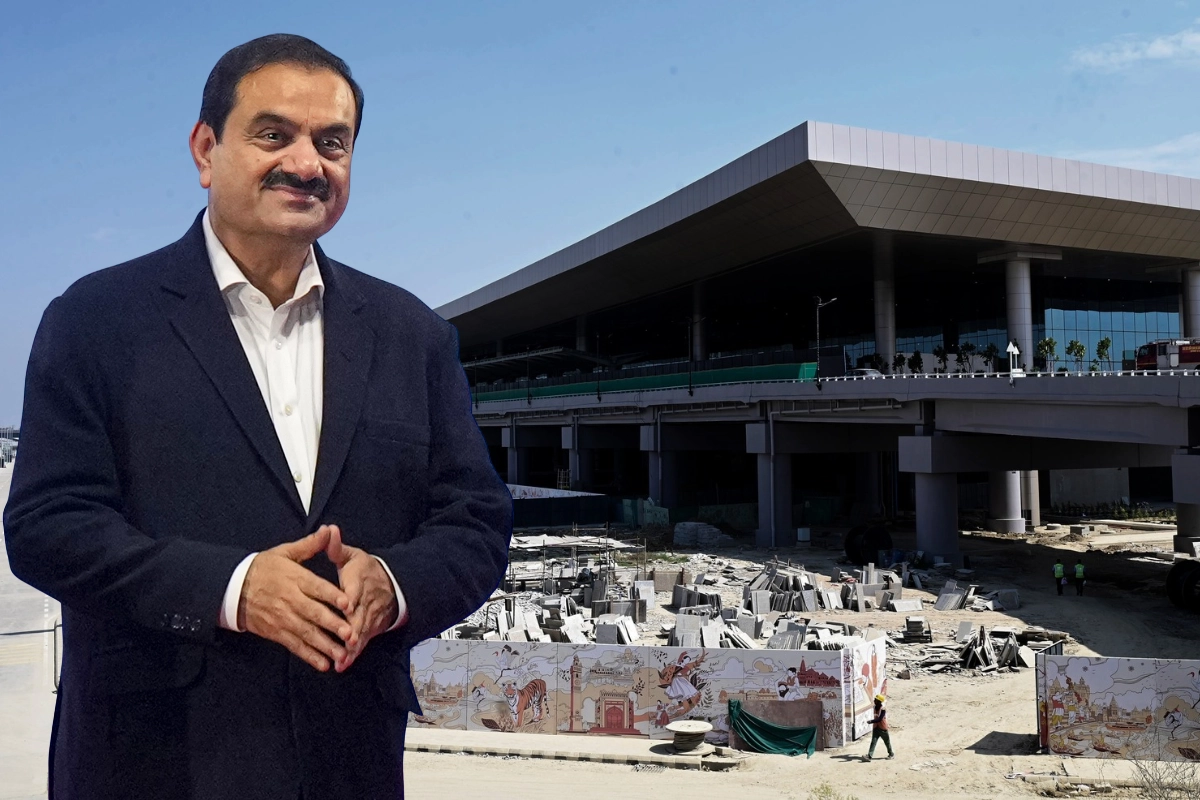
Lucknow: How did a 50-year agreement granting a private company rights to operate, manage and develop a major international airport get executed on a stamp certificate worth just ₹500? And why did subsequent government assessments put the potential stamp duty shortfall at ₹249.63 crore? These are among the questions arising from the concession agreement for Lucknow's Chaudhary Charan Singh International Airport, involving the Airports Authority of India (AAI) and Adani Lucknow International Airport Limited.
An investigation by New Delhi Post, based on official records obtained from the Uttar Pradesh Stamp Department, has uncovered a substantial discrepancy between the stamp duty paid when the agreement was executed and the liability subsequently assessed by government officials. The findings also bring the valuation of thousands of crores of rupees in airport land, the classification of the agreement and the treatment of public assets under scrutiny.
A 50-year airport concession on a ₹500 stamp certificate
The concession agreement was signed on February 14, 2020, between the Airports Authority of India (AAI) and Adani Lucknow International Airport Limited. It covered 1,258.80 acres of airport land and granted the private concessionaire rights relating to the airport's operation, management and development for 50 years.
Yet, the original e-stamp certificate classified the document under Article 5 – General Agreement. The property description was recorded as 'Not Applicable', the consideration was shown as zero, and the stamp duty paid was just ₹500.
This raises a fundamental question: how was an agreement involving long-term commercial rights over a major public infrastructure asset treated as a general agreement rather than a document attracting stamp duty based on the nature and value of the rights being granted?
The Uttar Pradesh Stamp Department subsequently examined whether the agreement should instead be classified as a lease deed, given the rights granted to the concessionaire over airport land and other immovable properties.
The distinction is significant because the classification of the agreement determines the applicable stamp duty. The department's subsequent assessments suggest that the original treatment of the document may have resulted in a substantial underpayment.
Stamp Department calculates ₹10.02 crore shortfall
A report dated June 4, 2022, prepared by the Assistant Commissioner, Stamps (First), Lucknow, examined the financial provisions of the concession agreement.
The report recorded the Estimated Deemed Initial Regulatory Asset Base (RAB), representing aeronautical assets, at approximately ₹143 crore. The initial non-aeronautical investment was recorded at ₹19 lakh, taking the combined value to ₹143.19 crore.
The agreement also provided for a performance security of ₹125 crore.
Citing the lease rights granted under Clause 10.2.2, the investigating officer considered the agreement, prima facie, to be in the nature of a lease deed. The officer consequently examined its stamp duty liability under Article 35 of Schedule 1-B of the Indian Stamp Act, 1899.
Based on the stated value of ₹143.19 crore, the department assessed the prima facie stamp duty payable at ₹10,02,33,000.
Against this assessment, the concessionaire had paid only ₹500.
After adjusting the amount already paid, the identified stamp duty shortfall stood at ₹10,02,32,500, or approximately ₹10.02 crore.
The assessment raised an uncomfortable question about how an agreement involving such substantial assets and long-term land rights was initially documented with a nominal stamp duty payment.
₹3,566 crore airport land valuation: potential stamp duty shortfall jumps to ₹249.63 crore
The scrutiny did not end with the June 2022 assessment. A supplementary valuation report dated August 6, 2022, brought a much larger land valuation into the picture.
The report, submitted by Assistant Commissioner, Stamps Satish Kumar Tripathi and Sub-Registrar Nirmal Singh, assessed 1,018.835 hectares of land spread across approximately 1,200 Gata numbers in eight villages at ₹3,566.07 crore.
Based on this valuation, officials identified a prima facie potential stamp duty shortfall of ₹249.63 crore.
The scale of the assessment significantly changes the picture. What initially appeared in the records as a ₹500 stamp duty payment for a long-term airport concession was subsequently examined against land valued at more than ₹3,566 crore.
Even more significantly, the supplementary report indicated that the valuation of airport buildings, constructions and other assets was still pending and required further examination.
In other words, the ₹3,566.07 crore assessment did not represent the complete valuation of all airport assets. The department had yet to complete the assessment of the buildings and other constructions associated with the airport.
The land records also included parcels belonging to AAI, the Uttar Pradesh government and land classified as defence land. This raises serious questions about the ownership, classification, transfer of rights and permissions relating to the land covered by the long-term concession.
How were these different categories of public land accounted for in the concession arrangement? What valuation methodology was applied? And was the applicable stamp duty determined after taking the full extent of the land and rights granted to the concessionaire into consideration?
These are questions that require clear answers from the authorities.
Additional Commissioner orders proceedings under Stamp Act
The investigation also examined a direction issued on July 18, 2022, by the Additional Commissioner, Stamps, Prayagraj.
The official directed the Assistant Commissioner, Stamps, Lucknow, to initiate proceedings under Section 33 of the Indian Stamp Act, 1899.
The direction specifically stated that the agreement was in the nature of a lease deed and that the applicable stamp duty had not been paid. It called for the initiation of statutory proceedings to examine the liability.
This is important because the issue had moved beyond a mere discrepancy in the original stamp certificate. A senior stamp department official had directed statutory action to examine whether the agreement had been inadequately stamped.
The crucial question now is what happened after that direction. Whether the proceedings were completed, what determination was eventually made and whether any additional stamp duty was recovered are matters that require documentary clarification from the Uttar Pradesh government.
What does the Adani Group say?
New Delhi Post sent a detailed questionnaire to the Adani Group seeking its response to questions concerning the airport concession agreements.
In its official response, the group maintained that the airports were awarded through an open and competitive bidding process and that individual concession agreements were executed between AAI and airport-specific concessionaire companies.
The group clarified that Adani Airport Holdings Limited was not a party to the agreements. It also stated that ownership of airport land continued to vest with AAI, while the concessionaires' rights were restricted to the purposes and duration specified in the agreements.
On stamp duty and registration, the company said the respective concessionaires were dealing with these matters before the competent authorities in accordance with applicable law.
The company further stated that City Side Development was undertaken only on earmarked land and remained subject to contractual restrictions and statutory approvals. It declined to share certain contractual and business records, citing commercial confidentiality.
The group's response addresses the broader contractual structure and its position on land ownership. However, it does not, in the material made available for this investigation, provide a detailed documentary explanation of the specific ₹500 stamp duty payment, the subsequent ₹10.02 crore assessment or the supplementary assessment that flagged a potential shortfall of ₹249.63 crore.
The central questions concerning the classification of the Lucknow agreement, the valuation adopted for stamp duty purposes and the status of the proceedings initiated by the Stamp Department therefore remain important.
Questions for the Uttar Pradesh government and AAI
The documents raise questions that cannot be answered merely by pointing to the competitive bidding process through which the airport concession was awarded.
A competitive bidding process and compliance with stamp duty and registration laws are separate requirements. The former does not automatically resolve questions about the latter.
The Uttar Pradesh government and AAI need to clarify:
- Why was the 50-year concession agreement initially classified under Article 5 – General Agreement instead of being examined as a lease deed?
- On what basis was the consideration recorded as zero and the property description marked 'Not Applicable'?
- Why was the agreement executed with a stamp duty payment of just ₹500 despite covering 1,258.80 acres of airport land?
- What happened to the proceedings directed under Section 33 of the Indian Stamp Act on July 18, 2022?
- Was the supplementary valuation of ₹3,566.07 crore accepted, challenged or revised?
- Were the airport buildings, constructions and other assets subsequently valued?
- Has any additional stamp duty been assessed, demanded or recovered?
- How were government-owned and defence-classified land parcels accounted for in the concession arrangement?
These are not merely technical questions about paperwork. They concern the valuation and legal treatment of public land and infrastructure placed under a private concession for half a century.
Why the Adani airport deal deserves closer scrutiny
The Lucknow airport agreement raises broader questions about the government's oversight of public infrastructure concessions and the financial obligations attached to them.
A 50-year concession involving more than 1,258 acres of land is a substantial long-term commercial arrangement. Its classification, valuation and stamp duty treatment should be transparent and supported by clear documentation.
The contrast between the original ₹500 stamp certificate, the subsequent ₹10.02 crore assessment and the supplementary ₹249.63 crore potential shortfall is particularly significant.
It also raises questions about the due diligence exercised by the authorities when the agreement was executed in 2020. Why did the initial documentation record zero consideration and no applicable property description? Why did the Stamp Department subsequently have to examine whether the agreement was effectively a lease deed? And why did the assessment expand to a land valuation running into thousands of crores?
The issue also warrants examination of whether similar classification and stamp duty practices were followed in other airport concession agreements awarded to the Adani Group.
To be clear, the ₹249.63 crore figure is a potential shortfall identified in a supplementary government assessment, not a final adjudicated liability. The final amount, if any, will depend on the outcome of the statutory proceedings and the competent authority's determination.
But that qualification does not diminish the significance of the official findings. The government records have identified a substantial potential stamp duty liability, questioned the original classification of the agreement and brought a multi-thousand-crore land valuation into the investigation.
The Uttar Pradesh government, AAI and the concessionaire must provide documentary clarity on how the agreement was stamped, valued and processed.
When public land is placed under private control for 50 years, the public has a legitimate interest in knowing whether every applicable legal and financial obligation has been met.