Bilkis Bano protest triggers action at Jamia: 12 students served show-cause notices
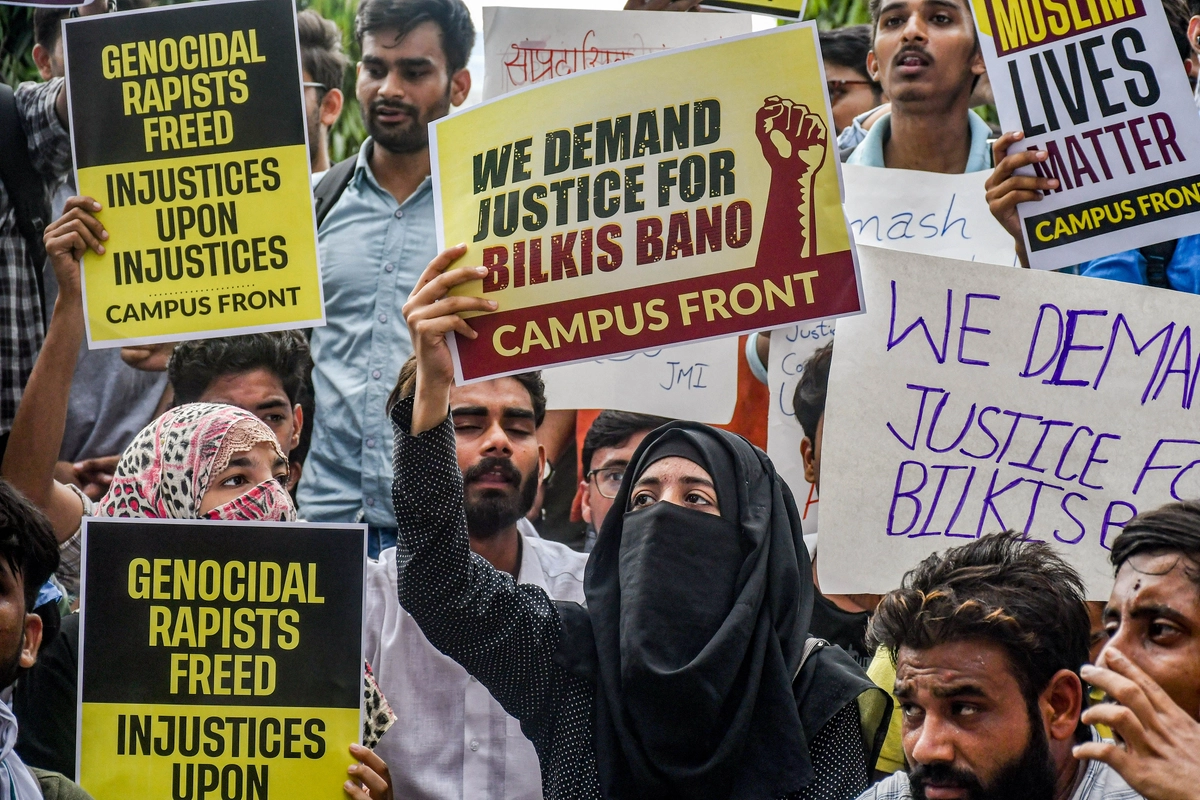
New Delhi: Jamia Millia Islamia has issued show-cause notices to students who participated in a protest on campus in solidarity with Bilkis Bano, following the Supreme Court's decision to grant conditional bail to two convicts in the 2002 gang rape and murder case.
The demonstration took place on November 23, after the Supreme Court suspended the life sentences of Bipinchand Kanaiyalal Joshi and Pradip Ramanlal Modhiya and granted them bail, subject to conditions imposed by the trial court.
The university has asked the students to explain their participation in the gathering. The notices reportedly allege that the demonstration was held at a location not designated for protests and disrupted normal campus activities.
Reports have cited different numbers of students receiving notices, ranging from six to at least 10. The figure of 12 cited in some accounts requires further confirmation.
Why did Jamia issue show-cause notices?
The protest was organised at the university's central canteen to express solidarity with Bilkis Bano and oppose the Supreme Court's bail order.
According to reports, the university administration said students were expected to hold demonstrations at a designated protest location rather than near the central canteen.
The administration has maintained that students have the right to express dissent but must follow campus rules and ensure that academic activities are not disrupted.
The show-cause notices ask the students to explain why disciplinary action should not be initiated against them. The university has not announced any final disciplinary decision.
The distinction is significant: the administration has cited the location and alleged disruption as grounds for issuing the notices, rather than announcing action against the students for the subject of their protest.
What did the Supreme Court decide in the Bilkis Bano case?
On October 28, 2026, a Supreme Court bench comprising Justices MM Sundresh and Prasanna B Varale suspended the life sentences of two convicts, Bipinchand Kanaiyalal Joshi and Pradip Ramanlal Modhiya, and granted them conditional bail.
The two men had challenged the Bombay High Court's 2017 decision upholding their convictions and life sentences.
The Supreme Court took note of their more than 17 years of incarceration and the severe physical disability of one of the appellants. It also observed that issues of fact and law remained to be considered in their appeals.
The bail order does not amount to an acquittal. Their appeals against conviction remain pending.
What happened to the 11 convicts in January 2024?
The latest Supreme Court order has brought the case back into public focus after an earlier landmark ruling in January 2024.
On January 8, 2024, the Supreme Court struck down the Gujarat government's decision to grant remission to all 11 convicts in the case. It held that the Gujarat government was not the appropriate authority to grant remission and directed the convicts to surrender and return to prison.
The court found that the remission orders were without jurisdiction. The 11 men subsequently returned to prison. The two men who received bail in October 2026 are among those 11 convicts.
What is the Bilkis Bano case?
Bilkis Bano was gang-raped during the 2002 Gujarat riots. Seven members of her family, including her three-year-old daughter, were killed during the violence.
Eleven men were convicted in connection with the gang rape and murders and sentenced to life imprisonment.
The case became the subject of renewed legal and political debate in 2022 when the Gujarat government granted remission to the convicts, leading to their release. That decision was subsequently overturned by the Supreme Court in January 2024.
The latest bail order has triggered fresh reactions, including the protest at Jamia Millia Islamia. Bilkis Bano has said she was neither informed nor heard before the bail decision and has indicated that she intends to challenge it.