Sheikh Hasina’s stay; good terrorists and more: MEA Jaishankar explains India’s equation with Bangladesh and Pakistan
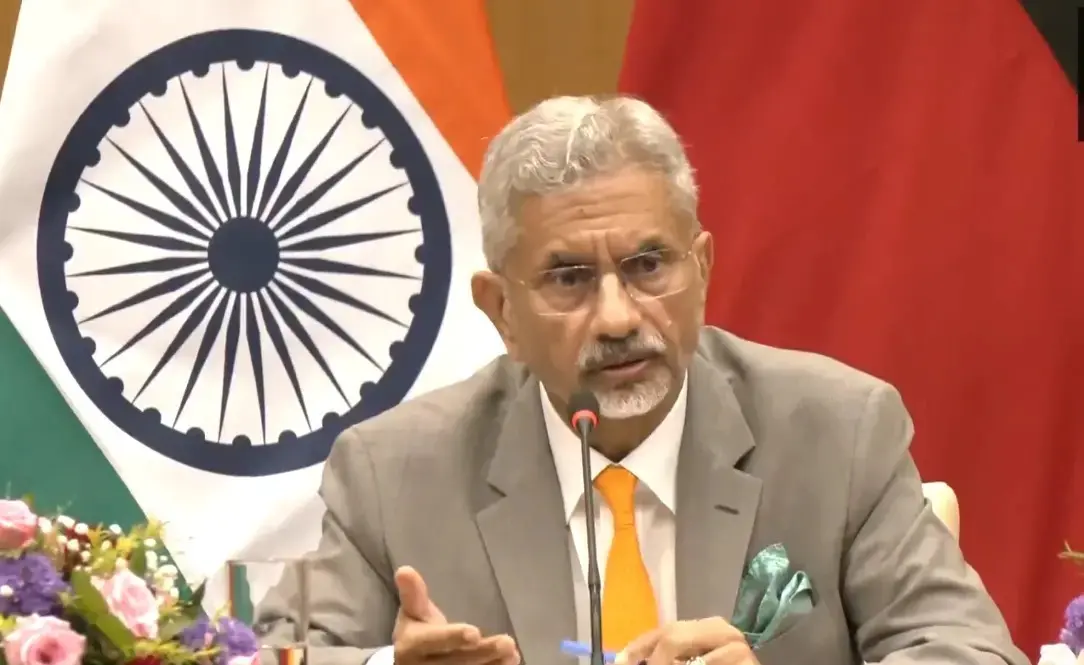
New Delhi: External Affairs Minister S. Jaishankar on Saturday addressed India’s security challenges, Pakistan’s role in terrorism, and former Bangladesh Prime Minister Sheikh Hasina’s stay in India, during an exclusive interaction with NDTV’s CEO and Editor-in-Chief, Rahul Kanwal, at the HT Leadership Summit.
Hasina’s stay in India: “Circumstances matter”
When asked whether Sheikh Hasina could remain in India indefinitely, Jaishankar noted that her decision is shaped by the circumstances under which she arrived.
Hasina fled to India in August last year after her democratically elected government collapsed amid violent unrest in Bangladesh, which left hundreds dead and thousands injured. Recently, a special tribunal in Dhaka sentenced her to death in absentia for “crimes against humanity” related to the harsh suppression of student-led protests.
“Well, that’s a different issue, isn’t it? She came here in a certain circumstance, and I think that circumstance clearly is a factor in what happens to her. But again, that is something in which she has to make up her mind,” Jaishankar said.
The minister expressed optimism about the future of bilateral relations and underlined India’s democratic expectations for Bangladesh.
“As far as we are concerned, we wish Bangladesh well. We think as a democratic country, any democratic country likes to see the will of the people ascertained through a democratic process,” he said.
“I am quite confident that whatever comes out of the democratic process would have a balanced and mature view about the relationship, and hopefully things would improve,” he added.
Pakistan’s role in terrorism
Jaishankar pointed out that a significant share of India’s security challenges, including terrorism, stems from the Pakistani Army. He emphasised that while threats exist, New Delhi is prepared to “deal with it.”
“When you look at the terrorism, when you look at the training camps, when you look at the sort of policy of a kind of, I would say, almost ideological hostility towards India, where does that come from? It comes from the army,” he said.
He cautioned against over-obsessing over Pakistan, saying: “I can only say that at the end of the day, look at the state of Pakistan and, you know, see the differentials and the capabilities and, frankly, the reputation on either side. I think, look, we should not get over-obsessed and hyphenate ourselves with them.”
Asked about Pakistan Army chief Asim Munir, Jaishankar drew a distinction:
“Like there are good terrorists and bad terrorists, there are good military leaders and not-so-good ones,” he said.
India’s targeted military response: Operation Sindoor
When questioned about India’s targeted military response, Operation Sindoor, against high-value terror camps in Pakistan and Pakistan-occupied Kashmir following the Pahalgam terror attack, Jaishankar highlighted India’s unique framework of norms and responsibility.
“I think where India is concerned, there are things we do, and there are things we don’t. We have rules, we have norms. If we take any step, we are accountable in this country, to the people, to the media, to the civil society. I think it would be unreal to compare ourselves with them, and in many ways, we would be doing ourselves an injustice,” he said, when asked if the operation could have been carried out differently.