'Gas promised by Mr Modi has remained gas’ Jairam Ramesh targets govt on energy policy
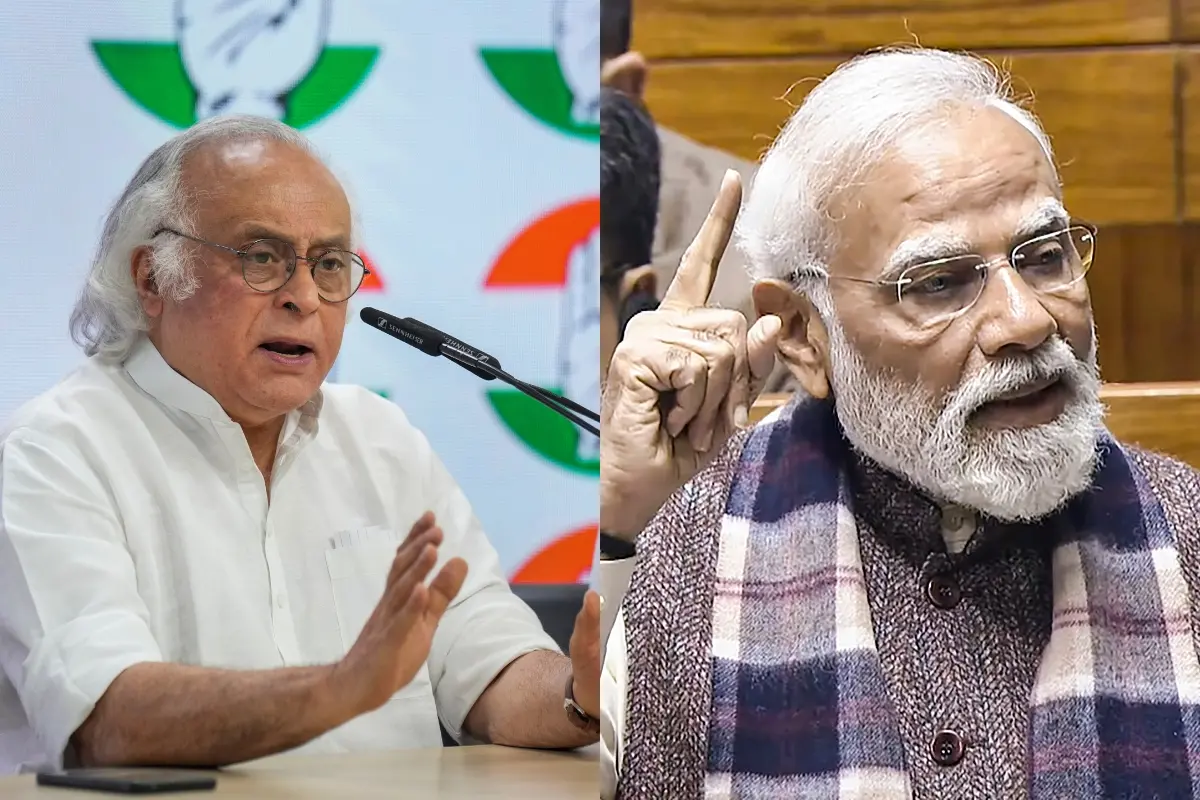
New Delhi: Jairam Ramesh on Friday criticised the Central government over India’s growing reliance on imported energy, arguing that the promise of self-reliance has not translated into reality.
In a post on X, the Congress leader raised concerns about the country’s increasing dependence on crude oil, LPG, and natural gas imports, despite repeated emphasis on Atmanirbharta by the government.
He pointed to figures showing that India’s reliance on crude oil imports rose from 84 percent in 2014 to 2015 to 90per cent in 2024 to 2025. Similarly, dependence on LPG imports increased from 46 percent to 62 percent during the same period.
“All this when the mantra was supposed to Atmanirbharta,” he wrote, questioning the gap between policy messaging and outcomes. He added that “the natural gas story is murkier”.
Ramesh also referred to earlier claims regarding India’s potential energy independence, particularly in the natural gas sector. He recalled that on June 26, 2005, Narendra Modi, then Chief Minister of Gujarat, had announced that the Gujarat State Petroleum Corporation had discovered what was described as the country’s largest gas reserve in the deep waters of the Krishna-Godavari basin.
According to Ramesh, the discovery was presented as a development that would make India energy independent.
What allegations were raised about the GSPC case?
The Congress leader further alleged discrepancies linked to the project, citing multiple reports by the Comptroller and Auditor General of India between 2011 and 2016.
He claimed that these reports pointed to a financial irregularity amounting to Rs 20,000 crore within GSPC. He added that the issue was later addressed through the merger of GSPC with Oil and Natural Gas Corporation in August 2017.
Summing up his criticism, Ramesh remarked that the “gas grandly promised by Mr Modi has remained just that, gas”.
What steps has the government taken on fuel prices?
Earlier in the day, the government announced a reduction in excise duties on fuel. The duty on petrol has been lowered to Rs 3 per litre, while diesel now carries no excise duty per litre. In addition, a windfall tax on diesel exports has been fixed at Rs 21.5 per litre.
Why are global factors influencing fuel policy?
The decision comes at a time of heightened global energy uncertainty, driven by the conflict involving the United States and Israel with Iran, and a blockade imposed by Tehran on the Strait of Hormuz.
This critical shipping route accounts for around one-fifth of the world’s crude oil and gas supply, with an estimated 20 to 25 million barrels transported daily. Prior to the conflict, India sourced roughly 12 to 15 percent of its oil through this route.
What is the impact on oil companies and consumers?
The reduction in duties is expected to provide some relief to Oil Marketing Companies, which had been facing losses on the marketing front due to rising crude oil prices. Despite this, retail prices of petrol and diesel have remained unchanged for now.
What additional measures have been introduced?
The government has also introduced a Special Additional Excise Duty on Aviation Turbine Fuel. With certain exemptions, the effective rate has been set at Rs 29.5 per litre. These revised measures came into force on March 26.
What has the government said about fuel availability?
Amid concerns triggered by developments in West Asia, the Government of India has assured that fuel supply across the country remains stable. Authorities stated that petrol pumps are functioning normally and urged citizens not to panic or engage in unnecessary stockpiling.
“There are adequate stocks of petrol and diesel available at all petrol pumps in the country,” the ministry said, reiterating that people should not rely on rumours.
The government also confirmed that all refineries are operating at high capacity levels, supported by sufficient crude inventories. It added that domestic LPG production has been ramped up to meet consumption needs.
ANI inputs