'Operation Himrahat': Swift Indian Army action saves 46 tourists from extreme weather in East Sikkim
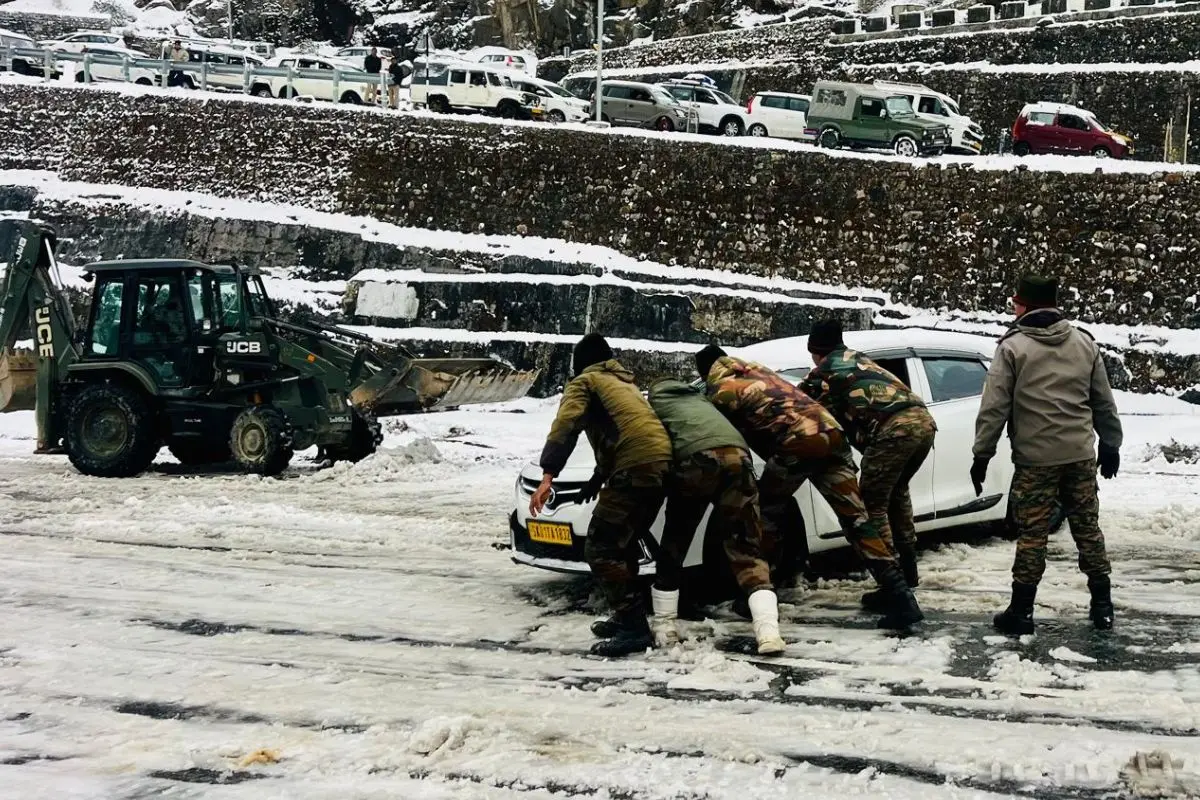
Gangtok: The Indian Army successfully evacuated 46 stranded tourists in high-altitude areas of East Sikkim under Operation Himrahat, following heavy snowfall and extreme weather conditions, officials confirmed on Monday.
Defence authorities said that sudden, intense snowfall on February 22, combined with sub-zero temperatures, disrupted movement across several vulnerable stretches of East Sikkim, leaving tourist vehicles stranded and civilians exposed to harsh climatic conditions.
Responding promptly, Army personnel launched a coordinated relief and rescue operation, providing immediate assistance to affected tourists. The rescued individuals were shifted to the nearest Army camp, where they received medical examinations, warm shelter, hot meals, heating facilities, and essential relief materials to mitigate the effects of extreme cold and high-altitude stress.
Medical teams closely monitored the health of all rescued tourists, confirming their stable condition before facilitating onward travel. In addition to evacuations, the Army assisted in the safe and orderly movement of over 150 tourist vehicles from affected routes to secure locations, while regulating traffic to prevent panic and further exposure to severe weather.
Defence officials emphasised that the timely intervention helped restore mobility in the region and prevented the situation from escalating despite challenging high-altitude conditions and freezing temperatures.
The operation highlights the Indian Army’s sustained role in Humanitarian Assistance and Disaster Response (HADR), particularly in remote and difficult terrains prone to natural disasters. Through rapid mobilisation and round-the-clock preparedness, the Army continues to ensure civilian and tourist safety during emergencies.
Officials noted that the successful execution of Operation Himrahat reinforces the Indian Army’s reputation as a dependable first responder during natural calamities and extreme weather conditions in mountainous regions.
IANS