Indian Army turns highway into helipad: Why Rudra, Dhruv, Chetak helicopters land near Pak border
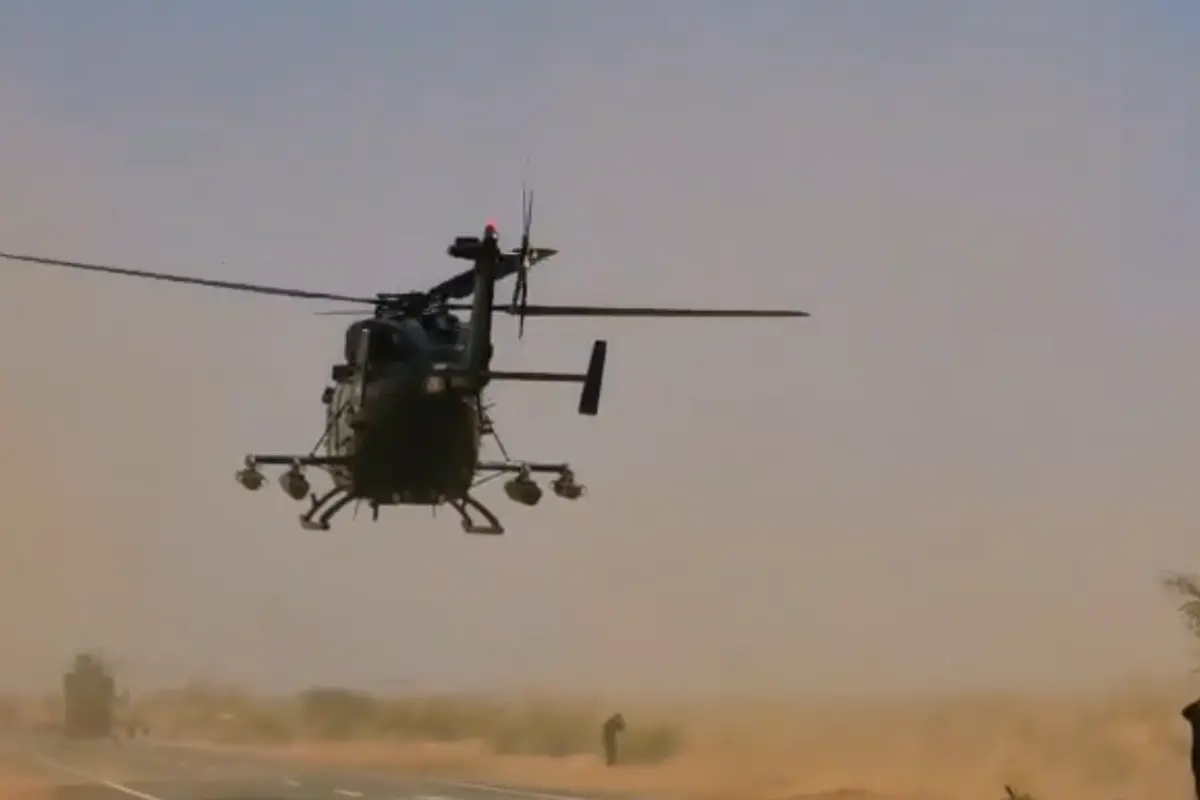
Rajasthan: The Indian Army used a section of National Highway 911 near Dantour in Rajasthan as a temporary helipad on Tuesday, with Rudra, Dhruv and Chetak helicopters carrying out landing and take-off operations close to the Pakistan border.
The exercise tested the Army’s ability to operate helicopters from alternative landing sites when conventional airbases, airfields or helipads are unavailable. Pilots practised approaching and departing from the highway, while ground teams coordinated helicopter movements at the designated landing area.
The drill was conducted near Dantour in Rajasthan’s western desert, where long distances and limited aviation infrastructure make alternative landing sites relevant for operational planning. The exercise provided pilots and ground crews with an opportunity to practise procedures for using a road as a temporary helicopter operating area.
ALSO READ | Indian Navy Commanders’ Conference from September 29; maritime security, technology to be focus
The helicopters involved included the Dhruv Advanced Light Helicopter, its armed Rudra variant and the Chetak helicopter. The Dhruv is a twin-engine helicopter designed and developed in India by Hindustan Aeronautics Limited (HAL). The Rudra is the armed version of the Dhruv and is used for roles including reconnaissance, escort and fire support. The Chetak, also manufactured by HAL, is based on the French Alouette III design and is produced in India under licence.
The exercise also coincided with the 10th anniversary of the Indian Army’s 2016 surgical strikes across the Line of Control. The strikes were carried out on the night of September 28-29, 2016, following the September 18 terrorist attack on an Army base in Uri, Jammu and Kashmir, in which 19 Indian soldiers were killed.
The use of a national highway as a temporary helipad demonstrates the Army’s focus on maintaining helicopter operations from locations beyond conventional aviation facilities, particularly in areas where access to established airfields may be limited.