4 European nations back India's permanent UNSC seat: Who backed the bid?
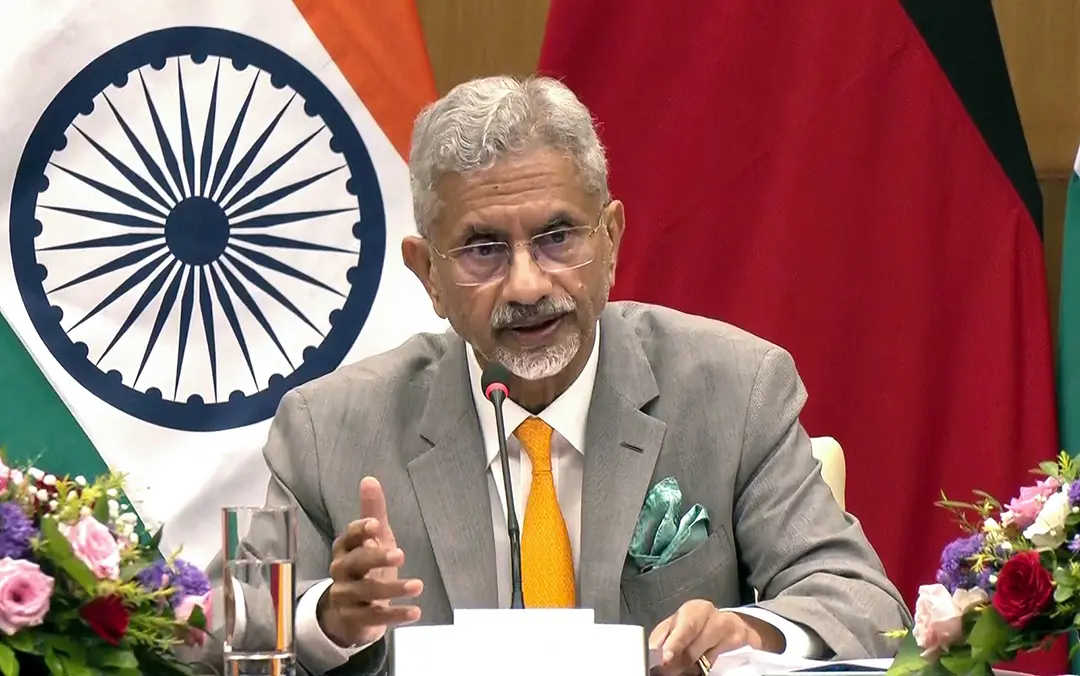
New Delhi: India's campaign for a permanent seat on the UN Security Council received fresh backing from Hungary, Poland, Slovakia and the Czech Republic at the first Visegrad Four-India meeting held alongside the 81st UN General Assembly in New York.
The four Visegrad Group countries — Hungary, Poland, Slovakia and the Czech Republic — have collectively voiced support for India's demand for permanent membership of the UN Security Council.
Slovak Foreign Minister Juraj Blanar said the four countries agreed that India, as a major country of the Global South and an emerging power in the Indo-Pacific, should have a permanent place on the Council.
The statement gives India additional diplomatic backing as negotiations over reform of the UN's most powerful security body continue.
Why India wants a permanent seat
India argues that the structure of the Security Council no longer reflects the geopolitical realities of the 21st century.
The Council was created in 1945, when much of Asia and Africa was still under colonial rule. India says the composition of its permanent membership should therefore be updated to reflect changes in population, economic influence and diplomatic representation.
India has served eight times as an elected member of the Security Council, most recently in 2021 and 2022.
New Delhi also points to its contribution to UN peacekeeping and its involvement in areas including counterterrorism, development, maritime security and international diplomacy.
ALSO READ | UN veto bomb: Russia and China pull the plug on US Iran plan
India has support from several major powers
India's campaign is not limited to the V4 countries.
France and the UK have supported India's permanent membership, while the US has expressed support for India's inclusion in an expanded Security Council. Russia has also backed India's bid.
India is also part of the G4 grouping with Brazil, Germany and Japan. The four countries support one another's campaigns for permanent membership.
The G4 has proposed expanding the Security Council from its current 15 members to 25 or 26.
Its model calls for six additional permanent seats — two for Africa, two for the Asia-Pacific region, one for Latin America and the Caribbean, and one for the Western Europe and Others group — alongside four or five additional non-permanent seats.
China remains a key obstacle
Support from individual countries does not automatically translate into Security Council reform.
The five current permanent members — the US, Russia, China, France and the UK — have differing positions on how expansion should take place.
China remains the only P5 country that has not explicitly backed India's permanent membership bid.
The broader reform debate includes questions over how many new members should be added, which regions should receive representation and whether new permanent members should receive veto powers.
The veto question
The veto remains one of the most difficult issues in any Security Council expansion.
The existing five permanent members can block substantive Council resolutions. Elected members do not have that power.
India has argued that any new permanent members should not be placed in a separate category without the same rights and responsibilities as the existing P5.
New Delhi has supported an "all or none" approach to veto rights, meaning the privileges of permanent membership should apply equally to existing and new permanent members.
ALSO READ | India backs UN ‘Correct the Map’ resolution, issues firm warning over J&K, Ladakh
A wider India-V4 relationship
The V4 meeting was not limited to India's UNSC campaign.
External Affairs Minister S Jaishankar described the first V4-India meeting as a "new historic occasion". India and the four Central European countries also agreed to explore an annual business forum and regular meetings between their foreign ministers.
Discussions covered technology, innovation, defence, space, connectivity and people-to-people links. The ministers also exchanged views on international conflicts and crises, including the Ukraine war and developments in the Gulf.
What the backing means
The V4 endorsement adds another regional bloc to the list of countries supporting India's permanent membership campaign, but it does not itself change the rules governing the Security Council.
Any expansion would require agreement through the UN reform process and amendments to the UN Charter, involving a broad range of UN members as well as the existing permanent members.
For India, the latest support therefore adds diplomatic momentum while the larger question of how — and whether — the Security Council should be restructured remains under negotiation.
The latest V4 support comes as India continues to build backing across different regions for a permanent Security Council seat. The G4 partnership with Brazil, Germany and Japan and support from countries including France, the UK, the US and Russia form part of that wider diplomatic campaign.
However, support from individual countries or regional groups does not guarantee reform. The unresolved questions over the number of new seats, regional representation and veto rights remain central to negotiations.
The V4 meeting also has a broader significance for India's relationship with Central Europe, with both sides discussing institutionalised economic and diplomatic engagement alongside the UNSC issue.