Taliban denies Masood Azhar is in Afghanistan: How India plans to corner Pakistan
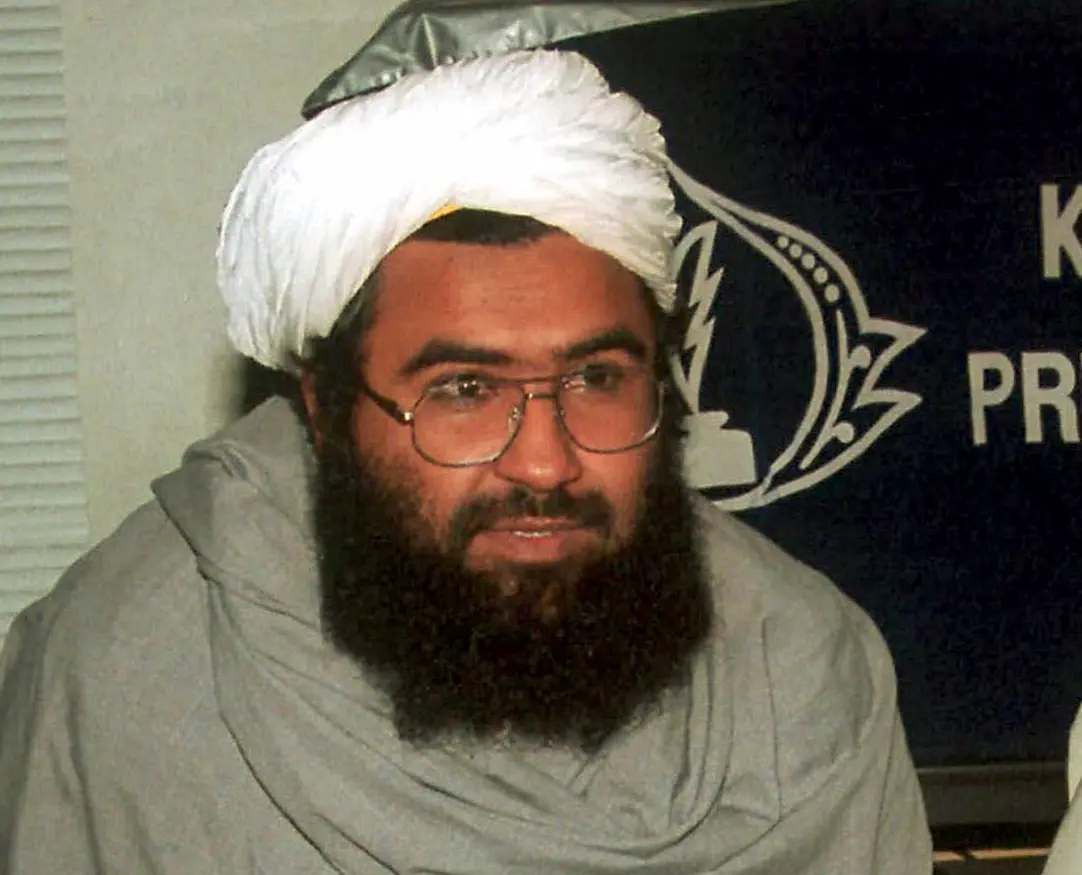
New Delhi: India is preparing to raise the issue of Jaish-e-Mohammed (JeM) chief Masood Azhar at the Financial Action Task Force (FATF) plenary meeting in Paris, putting Pakistan's counter-terrorism record under renewed international scrutiny. The diplomatic push comes after the Taliban authorities in Afghanistan rejected Pakistan's claim that Azhar was in the country, creating fresh questions about the whereabouts of the United Nations-designated terrorist.
According to people familiar with the matter, Indian officials have approached diplomats from partner countries and key FATF members to build support ahead of the October 28-30 meeting. New Delhi's central argument is that Pakistan's claims about Azhar's location need to be examined alongside its record of implementing international sanctions against designated terrorist individuals and organisations.
The issue carries significance beyond the search for one individual. It brings together India's long-running concerns over cross-border terrorism, Pakistan's past record under FATF monitoring and the international community's efforts to prevent terrorist groups from accessing financial resources.
Why India is raising the Masood Azhar issue now
The immediate trigger is the Taliban's public rejection of Pakistan's claim that Azhar is in Afghanistan. In September, Taliban spokesperson Zia Ahmad Thakal said Azhar was not in the country and that Pakistan had not formally communicated with the Afghan authorities about his presence there. He also reiterated the Taliban administration's stated position that Afghan territory should not be used against other countries.
Pakistan has previously maintained that Azhar fled to Afghanistan, while Indian authorities have continued to question whether Islamabad has taken sufficient action against the JeM chief.
The conflicting claims have given India an opportunity to renew its argument before an international forum. According to reports, New Delhi is particularly concerned about the lack of publicly established evidence of action against Azhar comparable to measures taken against some other UN-designated terrorist figures.
India's effort at the FATF meeting is therefore expected to focus on Pakistan's implementation of counter-terrorism obligations, rather than simply repeating its demand for information about Azhar's whereabouts.
Who is Masood Azhar, and why is India pursuing him?
Masood Azhar founded Jaish-e-Mohammed, a Pakistan-based militant organisation that India has accused of involvement in several major terrorist attacks.
His name has figured prominently in India's security concerns for more than two decades. The attacks associated with JeM include the December 2001 assault on the Indian Parliament, the January 2016 attack on the Pathankot Air Force station and the February 2019 Pulwama bombing.
Azhar's release from Indian custody also remains a significant part of the history surrounding his case. In December 1999, he was freed along with two other militants in exchange for passengers held hostage after Indian Airlines Flight IC-814 was hijacked and taken to Kandahar, Afghanistan.
Years later, India secured a major diplomatic breakthrough when the United Nations Security Council designated Azhar as a global terrorist on May 1, 2019. The designation followed sustained diplomatic efforts by India and supporting countries, including the United States, the United Kingdom and France, after repeated objections had delayed the process.
The UN listing brought Azhar under an international asset freeze, travel ban and arms embargo. However, the designation itself did not resolve questions about his location, the enforcement of sanctions or the continued activities of the organisation he founded.
How India secured Azhar's UN terrorist designation in 2019
India's campaign to have Azhar listed by the United Nations was one of its most prominent diplomatic efforts against a figure it accused of orchestrating attacks on Indian targets.
For years, China blocked proposals to designate the JeM chief under the UN Security Council's 1267 sanctions framework. Beijing eventually withdrew its objection in May 2019, clearing the way for the designation.
The decision came a few months after the Pulwama attack, in which a suicide bomber killed 40 Indian paramilitary personnel. JeM claimed responsibility for the attack, which sharply escalated tensions between India and Pakistan.
The designation placed Azhar under international sanctions and strengthened the framework for restricting his access to funds, international travel and weapons. It also increased scrutiny of whether states were effectively implementing the relevant restrictions.
For New Delhi, the episode demonstrated how sustained diplomatic engagement could turn a bilateral security concern into a matter of international accountability.
FATF and Pakistan: What happened between 2018 and 2022?
The Financial Action Task Force is an intergovernmental organisation that sets standards to combat money laundering, terrorist financing and the financing of the proliferation of weapons of mass destruction.
Its assessments examine whether countries have adequate laws, financial safeguards and enforcement mechanisms to identify and disrupt illicit financial activity. The organisation does not operate as a police agency and does not itself arrest suspected terrorists.
Pakistan was placed on the FATF grey list in June 2018 because of deficiencies in its efforts to counter money laundering and terrorist financing. It remained under enhanced monitoring until October 2022, when the FATF removed it from the list after assessing its progress against the required action plans.
During this period, Pakistan faced pressure to improve the enforcement of financial sanctions, investigate terrorist financing networks and demonstrate effective action against designated individuals and organisations.
The grey-listing process did not amount to a declaration that every allegation against Pakistan had been proved. Rather, it reflected the FATF's assessment of deficiencies in the country's financial safeguards and the progress required to address them.
Pakistan's removal from the list in 2022 did not eliminate all international scrutiny of its counter-terrorism measures. The current dispute over Azhar has brought the question of enforcement back into focus.
The 2001 Parliament attack and its diplomatic consequences
The December 2001 attack on the Indian Parliament brought India and Pakistan to the brink of a major military confrontation. India attributed the attack to Pakistan-based militant organisations, including JeM and Lashkar-e-Taiba.
Under intense international pressure, Pakistani authorities detained Azhar following the attack. However, the detention did not result in a lasting resolution of India's concerns about his activities.
The episode established a pattern that has recurred in subsequent years: a major terrorist attack leads to renewed diplomatic pressure, demands for action against militant organisations and questions about the effectiveness of measures announced by Pakistan.
For India, the central issue has remained whether action against individuals and organisations translates into sustained disruption of their operational and financial networks.
Pathankot attack in 2016: Pressure for action against JeM
The January 2016 attack on the Pathankot Air Force station further strained relations between India and Pakistan. Indian authorities linked the attack to JeM and sought action against those suspected of involvement.
The incident affected bilateral diplomatic engagement and led to investigations by Pakistani authorities. India continued to demand credible action against the organisation and its leadership.
The Pathankot case reinforced New Delhi's argument that counter-terrorism cooperation should be measured by investigative progress and enforceable outcomes, rather than announcements alone.
Together with the Parliament attack and Pulwama bombing, it remains part of the wider context behind India's efforts to secure international scrutiny of JeM and Azhar.
Pakistan's bounty announcement and India's response
Pakistan has maintained a financial reward for information leading to Azhar's capture. India has questioned the significance of such announcements, arguing that a bounty does not by itself demonstrate effective action against a UN-designated terrorist.
The issue has become more contentious because Pakistan has cited Afghanistan as Azhar's possible location, while the Taliban authorities have publicly denied that he is in their country.
India's position is that Pakistan should demonstrate concrete compliance with its international obligations and clarify the status of individuals subject to sanctions.
However, the conflicting public claims do not, on their own, establish Azhar's current location. That question remains distinct from the broader issue of whether Pakistan is effectively enforcing counter-terrorism measures.
What is at stake at the October 2026 FATF meeting?
The October 28-30 plenary in Paris brings together representatives from across the FATF's international network to discuss financial integrity, money laundering and terrorist financing. The meeting is taking place under the presidency of the United Kingdom's Giles Thomson.
India is expected to use the gathering to draw attention to three related concerns:
- Enforcement of UN sanctions: Whether Pakistan is effectively implementing restrictions against designated individuals and organisations.
- Terrorist financing: Whether financial controls are sufficient to prevent funds and resources from supporting militant networks.
- Accountability: Whether Pakistan can demonstrate meaningful action against individuals linked to organisations accused of carrying out attacks in India.
The outcome will depend on the FATF's procedures, the evidence presented and the assessments made by its members. India's decision to raise the issue does not automatically mean Pakistan will face a new listing or other formal penalty.
The latest diplomatic initiative places Azhar's whereabouts and Pakistan's enforcement record back on the international agenda. The Taliban's denial has weakened the basis of Pakistan's public claim that the JeM chief is in Afghanistan, but it does not independently establish where he is.
For India, the immediate objective is to obtain greater international scrutiny of Pakistan's obligations and the measures taken against designated terrorist networks. The broader test will be whether diplomatic pressure produces verifiable evidence of enforcement, stronger financial safeguards and effective action against those responsible for terrorist activities.
The FATF meeting is therefore an important diplomatic opportunity for New Delhi, but its practical impact will depend on what evidence emerges, how member countries assess it and whether the discussions lead to measurable follow-up action.