India slams UN report calling Dawood Ibrahim’s D-Company an ‘India-based’ terror group
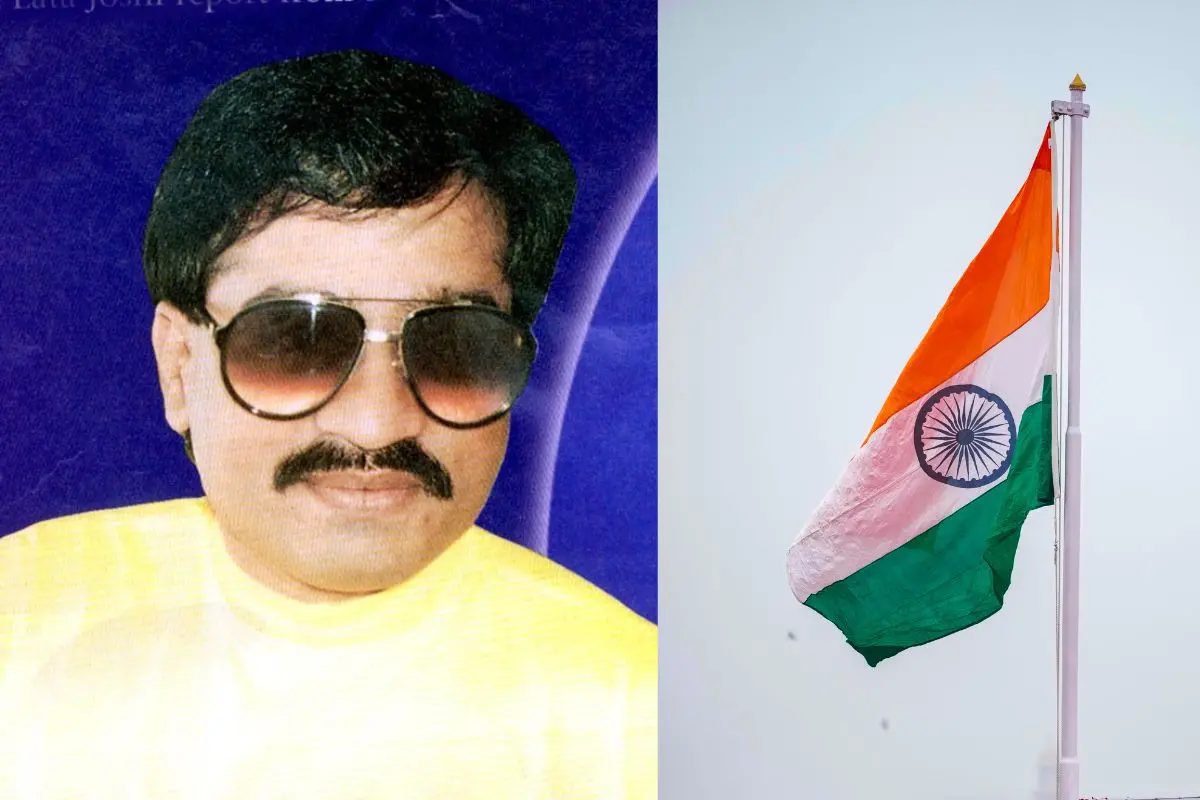
In a sharp rebuttal at the United Nations General Assembly's Third Committee, India has strongly rejected a UN human rights expert's report that described gangster Dawood Ibrahim's terror network, D-Company, as an "India-based" group. India pointed out glaring factual errors in the report and reaffirmed that the wanted criminal has long been sheltered in Pakistan.
Indian diplomat Raghoo Puri, First Secretary at India's Permanent Mission to the UN, delivered the firm rejection on Wednesday (local time) during a discussion on a report by Ben Saul, the UN Special Rapporteur on Human Rights while Countering Terrorism.
Cautioning the global body about the serious damage caused by unverified statements, Puri warned that releasing flawed reports harms the UN's credibility.
"My delegation has been pointing out in other forums as well our serious concern at the unacceptable situation of the SR releasing reports with factual inaccuracies, while not being held accountable for them," Puri told the UN Assembly, pointing out that "this presents Member States with a fait accompli, which is unfortunate for this organization that is facing challenges of legitimacy".
"It is in this context that we would like to point out some particularly glaring inaccuracies as far as my country is concerned," he added.
India rejects 'India-based' tag for Dawood Ibrahim
The dispute broke out after Saul's report mentioned that in 2003, the UN Security Council listed the leader of "the India-based D-Company" for ties to Al-Qaeda.
Rejecting this description, India stressed that Dawood Ibrahim and his criminal gang have been wanted by Indian law enforcement since the 1993 Mumbai serial bomb blasts. This fact is officially recorded in the UN's own 1267 Al-Qaeda Sanctions Committee records.
"Read in isolation, this line paints a very different picture from the actual reality," Puri remarked.
"This organization and its listed leader, Dawood Ibrahim, has been wanted in India for terror attacks since 1993. This is clearly written in the narrative summary of reasons of listing under the 1267 sanctions regime. Not mentioning this fact is regrettable, and such incompetent— incompetence on part of special mandate holders does this organization tremendous harm," the diplomat stated.
Fugitive fled country long before 2003 UN listing
Setting the record straight, Puri explained that Dawood Ibrahim had fled India many years before his 2003 UN listing. His Al-Qaeda ties were established while he was operating from outside Indian borders.
"Let me correct it for the record. This individual fled India much before the 2003 listing, and it was during this period, from outside our country, that he was listed for being associated with Al-Qaeda and with Osama bin Laden," Puri said.
The Indian diplomat reminded the Assembly that UN records themselves confirm Dawood lives in Pakistan — the same country where US Navy SEALs found and killed Al-Qaeda chief Osama bin Laden in Abbottabad in 2011.
"To date, he remains a wanted criminal in my country, and as per the UN's listing entry, resides in the same country where Osama bin Laden was found and neutralized," Puri stated.
UN rapporteur faces bias and funding scrutiny
Apart from the error regarding Dawood Ibrahim, India expressed serious concern over political bias in Saul's report, demanding high standards of fairness and honesty from UN officials.
Ben Saul, who serves as the chair of international law at the University of Sydney and is an elected Fellow of the Australian Academy of Social Sciences, is facing international scrutiny over funding allegations.
An investigation published in May 2026 by UN Watch, an independent monitoring group, titled 'From Watchdogs to Ideologues', revealed that Saul received financial support from China.
"The Chinese government is his largest funder, giving USD 150,000 in 2024," the 104-page UN Watch investigation noted.
Terror sponsors cannot hide behind human rights
India also criticized state sponsors of terrorism for using human rights arguments as a shield to justify their violent actions.
"It seems to have become fashionable for sponsors of terror to use human rights and the framework of counterterrorism to justify their misdeeds. Human rights framework cannot be the refuge of the perpetrators of terror and those who propagate radicalization and extremism. Terrorism can never be justified," Puri cautioned.
Pakistan military blamed for anti-India propaganda
In the same session, Puri firmly rejected comments made by the Pakistani delegate regarding Jammu and Kashmir and Ladakh, calling them false propaganda driven by Pakistan's military leadership.
"Regarding the statement just made by the delegate of Pakistan, everyone in this room knows that what has been mentioned against my country, including about the Union Territory of Jammu and Kashmir and Ladakh, is pure propaganda made for very narrow political gains. And these have been on account of the actual rulers of Pakistan, which is its military," Puri asserted.
Reaffirming India's territorial sovereignty, he added: "I would like to reiterate for the record that Jammu and Kashmir and Ladakh are an inalienable part of India, and have been so, and will always remain. I would not like to dignify the statement of— by the Pakistani delegate with any further comment".
This rebuttal follows statements made on Tuesday at the UN Third Committee by Ministry of External Affairs Deputy Secretary Barkha Tamrakar. Speaking on enforced disappearances, Tamrakar insisted that human rights must not be used as a political tool or for selective country targeting, pointing to India's strong constitutional and institutional safeguards.