What is the MiG-21 that India will bid farewell to after six decades?
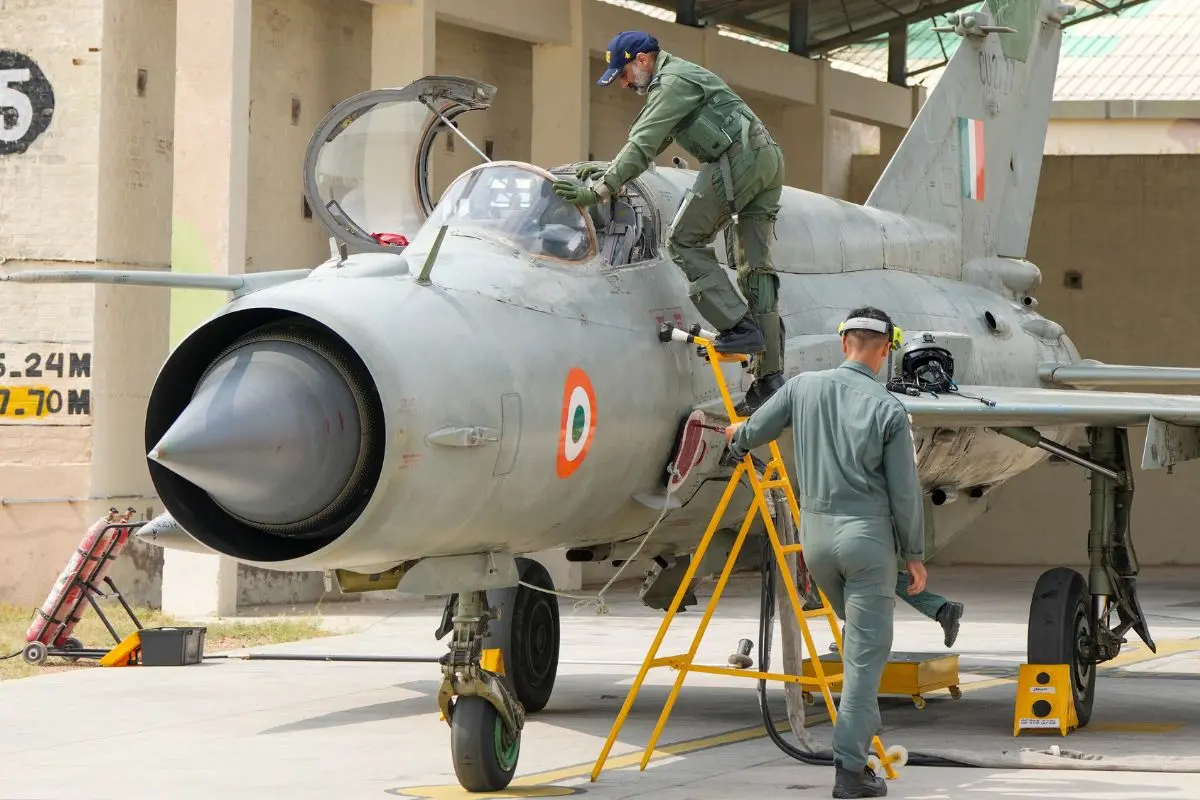
After more than six decades in service, India is set to retire its legendary MiG-21 fighter jets. The Indian Air Force (IAF) will officially de-induct the aircraft on September 26, 2025, in a ceremony at the Air Force Station, Chandigarh, marking the end of an era.
A Symbolic Exit
To honour its legacy, the farewell will feature a flypast, guard of honour, and a ceremonial handing over of the aircraft’s maintenance logbook (Form 700) to the chief guest — a gesture that signals the termination of its active service records.
In a poignant gesture, Air Chief Marshal AP Singh flew solo sorties in the MiG-21 in August 2025 from Nal Air Force Station, symbolising the aircraft’s swan song.
The MiG-21: What Made It Iconic
First Supersonic Jet: The MiG-21 (NATO reporting name “Fishbed”) was developed in the Soviet Union in the 1950s, and India inducted its first units in the early 1960s.
Workhorse of the Skies: Over its service life, the MiG-21 formed the backbone of the IAF’s fighter fleet. It played key roles in several conflicts — notably the 1971 Indo-Pak war, where it bolstered air superiority for India.
Upgrades Over Time: The latest variant in Indian service was the MiG-21 Bison, fitted with upgraded avionics, radar, and beyond-visual-range missile capability.
A Controversial Legacy: While admired for its agility and combat record, the MiG-21’s later years were marred by a high accident rate, earning it the unfortunate nickname “flying coffin.”
The Final Chapters
The last operational flights for the MiG-21 were flown in August 2025 from the Nal Air Force Station in Bikaner.
After the ceremonial decommissioning in Chandigarh, remaining MiG-21 airframes will be flown to Nal for technical inspection. Serviceable parts may be salvaged, while others will be scrapped or displayed in museums and public institutions.
The final two squadrons carrying the MiG-21 Bison — No. 3 “Cobra” Squadron and No. 23 “Panthers” Squadron — will be “number-plated,” meaning they will be preserved in name for the future.
A New Dawn — What Comes After
With the MiG-21’s retirement, the IAF will increasingly rely on modern platforms like the indigenous Tejas LCA (Light Combat Aircraft) Mk-1A, along with existing Rafale and Su-30MKI fleets, to fill the gap.
Though its flying days are ending, the MiG-21’s place in India’s aviation history remains indelible. As one of the most enduring fighters to have served the nation, it leaves behind a legacy of both triumph and challenge — a story of ambition, innovation, risk, and change.