India achieves 50% renewable energy capacity, but coal still powers the nation
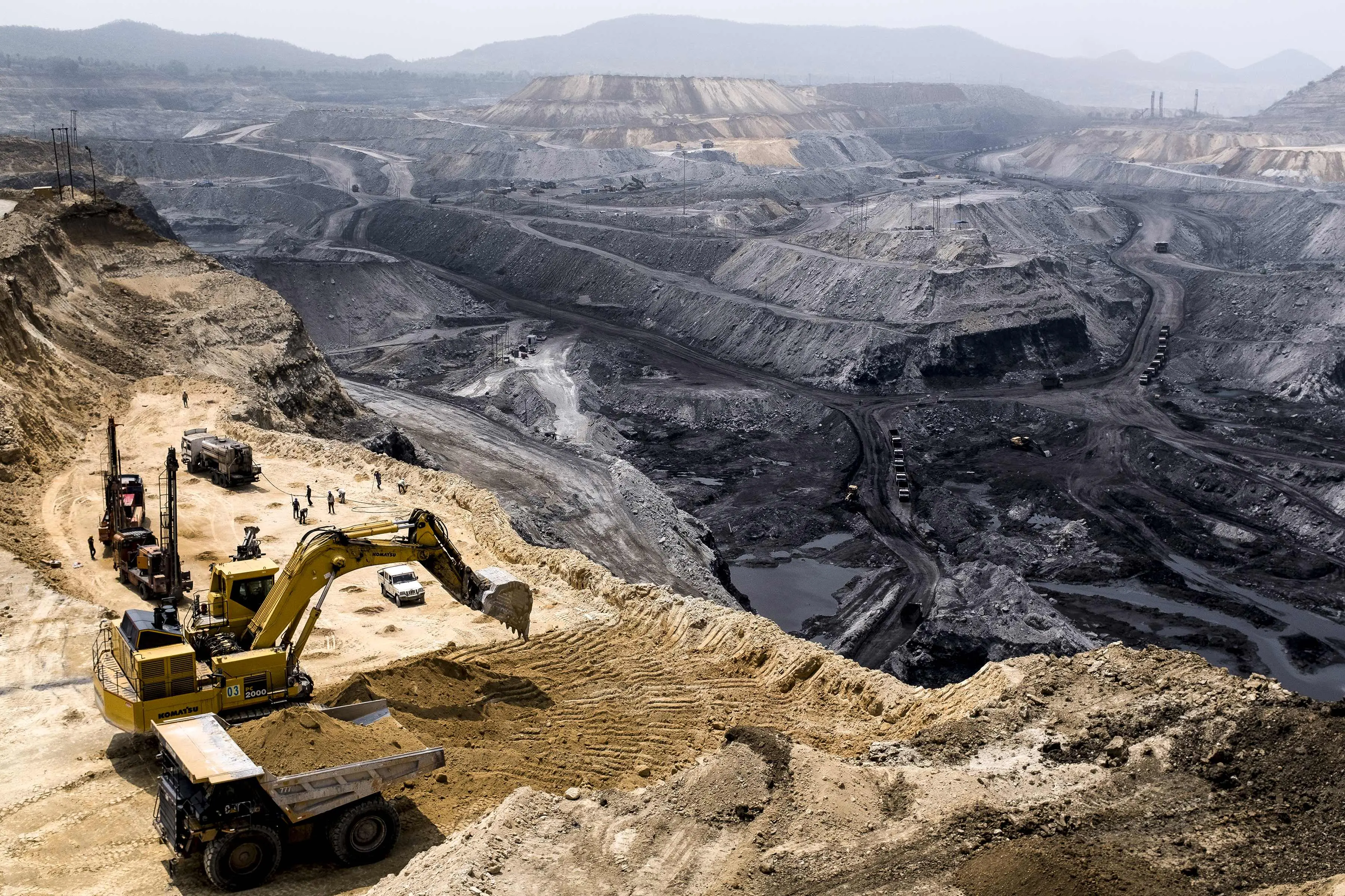
New Delhi: In his Independence Day address, Prime Minister Narendra Modi hailed a significant achievement in India’s energy transition journey: non-fossil fuel sources now account for 50 percent of the country’s installed energy capacity—five years ahead of its 2030 target under the Paris Agreement. However, despite this progress, India’s energy reality remains heavily tied to coal.
The announcement marks a pivotal moment for the world’s most populous nation, which remains the third-largest emitter of greenhouse gases. "A landmark in India's energy transition journey," said Renewable Energy Minister Pralhad Joshi, following the July release of new energy capacity figures.
“Five years early,” he added, referring to the country’s early fulfilment of a key climate commitment, and signalling progress towards India’s broader goal of achieving net-zero carbon emissions by 2070.
Installed capacity vs actual generation
While the 50 percent figure is a noteworthy milestone, experts caution that the headline number does not tell the full story.
"Overall, actual generation from renewable sources is still quite low," said Avantika Goswami from the New Delhi-based Centre for Science and Environment (CSE), highlighting the gap between installed capacity and power actually delivered to the grid.
Indeed, nearly 75 percent of India’s electricity is still produced by coal-fired power plants—among the most polluting sources of energy. Despite its clean energy commitments, India increased coal production by five percent last year, reaching one billion tonnes, according to the Ministry of Coal.
“Coal remains crucial,” the ministry stated, underscoring the ongoing reliance on fossil fuels to meet the country’s growing power demands.
Coal still dominates India’s energy mix
The ministry describes coal as “a crucial contributor to India's energy mix,” powering over 74 percent of electricity generation and supporting vital sectors such as steel and cement. The government has referred to the current trend as “India’s coal boom.”
This dependency places India in a difficult global position. It ranks behind only China and the United States in total carbon emissions. However, with a population of 1.4 billion, India’s per capita emissions remain just one-third of the global average, according to official data.
“Looking at India's per capita emissions, the effort it is making, India is doing pretty well,” said Harjeet Singh, head of the Satat Sampada Climate Foundation.
India has committed to reducing emissions intensity by 45 percent by 2030, even as its energy needs are projected to more than double by 2047.
“Some of that demand is likely to be met by the addition of renewables,” Goswami noted.
Solar power leading the way
Currently, India has 484.8 GW of installed energy capacity, with half coming from non-fossil fuel sources. Solar leads the charge, with 119 GW installed—making India the third-largest solar power producer globally.
Large-scale solar and wind projects, including one of the world’s biggest renewable energy parks under construction in a desert region the size of Singapore, represent the country’s ambition to scale up clean energy.
Other contributions come from hydroelectric, wind, and nuclear sources—though nuclear accounts for less than two percent of the total mix.
Storage remains the critical bottleneck
However, intermittent generation from solar and wind poses challenges. India’s battery storage capacity is limited to just 505 MWh, a fraction of what’s needed to support consistent renewable power supply.
Speaking at a battery storage systems plant inauguration in June, Minister Joshi acknowledged the issue: “But without storage, we will either waste that energy or fall back on coal when renewables dip.”
Battery storage requires rare earth metals, a market dominated by China, which controls around 70 percent of global supply.
“We still remain dependent on China,” said Singh, pointing to a strategic vulnerability. Chinese Foreign Minister Wang Yi’s visit to New Delhi on August 20 reportedly included discussions on rare earth metal supply.
Diversifying energy storage and improving coal efficiency
To address the storage gap, India is exploring pump-hydro energy projects. These systems use surplus renewable energy to pump water into elevated reservoirs, which can then be released to generate electricity during peak demand.
But experts say infrastructure development must go hand in hand with policy and operational changes.
Goswami argues that India’s energy shift requires more than just capacity additions. “The transition to cleaner power must come from ‘emission intensity reduction’ of often inefficient coal plants, combined with better integrated renewable energy in the grid that ‘will actually make the shift happen’.”
As India celebrates a major climate milestone, the path forward hinges on reducing coal dependency, scaling up storage, and ensuring clean energy can reliably power the nation’s future.
AFP