Project 18: India's Next-Generation Destroyers to bolster naval power in the Indian Ocean
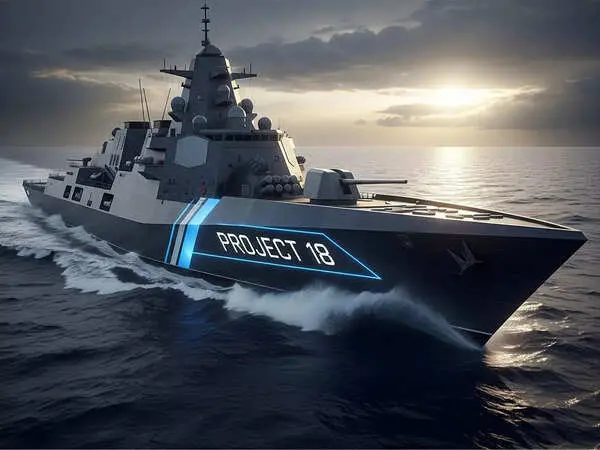
New Delhi: India is set to construct a new class of advanced warships under the name Project 18, aiming to significantly boost its naval power and presence in the Indian Ocean Region.
Heaviest warships in Indian Navy's history
The new vessels are expected to have a displacement of around 13,000 tonnes, making them the largest and most powerful surface ships ever built in India. This will be a major upgrade from the current Visakhapatnam-class destroyers, which weigh around 7,400 tonnes.
Under international classification, warships above 10,000 tonnes fall into the cruiser category — a segment that India currently does not possess. Project 18 will mark India’s entry into this class of warships.
Between 6 and 24 ships to be built
Initially, between six and ten ships may be built, but the number could rise to 24 over the coming decades. This would represent a shift from India’s usual practice of building only six ships per class. Project 18 is being developed under the Indian Navy’s Next-Generation Destroyer (NGD) programme.
The design has already been completed by the Warship Design Bureau, and construction is estimated to take 7–8 years per vessel.
Designed for superior firepower
Each ship will feature 114 vertical launch systems capable of firing a range of India’s home-grown missiles, such as:
- BrahMos and BrahMos Next Generation
- Long-Range Land-Attack Cruise Missiles (LR-LACM)
- Precision-Guided Long-Range Surface-to-Air Missiles (PGLRSAM)
- Short-Range Surface-to-Air Missiles (SRSAM)
- Supersonic Missile-Assisted Release of Torpedo (SMART)
The ships will also support future hypersonic BrahMos missiles and will carry two multi-role helicopters.
Equipped for modern warfare
The ships will be able to carry unmanned underwater vehicles and kamikaze drones, used for surveillance, detecting mines, and attacking submarines.
Advanced radar systems will give the ships 360-degree awareness and the ability to detect threats up to 500 kilometres away. These include:
- Active Electronically Scanned Array (AESA) radar
- Long-Range Multi-Function Radar (LRMFR)
- S-Band Active Antenna Array Unit (AAAU)
- Volume Search Radar
Stealth technology and electric propulsion
The warships will have stealth features to reduce visibility on enemy radar. Their design will absorb radar waves, making them harder to detect at sea.
They will use an advanced electric propulsion system powered by gas turbines and diesel generators. Around 75 percent of the ships' components will be manufactured in India, supporting the country’s goal of defence self-reliance.
Supporting India's carrier battle groups
The Project 18 warships are expected to complement and strengthen India’s existing aircraft carrier battle groups, such as those led by INS Vikramaditya and INS Vikrant.
At present, India has 64 ships under construction, but still lags behind China’s massive naval fleet. Project 18 is a key step in reducing that gap.
Long-term plan for a 175-ship navy
The Indian Navy aims to grow into a 175-warship force by 2035. Project 18 plays a vital role in that vision, aligning with India’s long-term maritime strategy.
Each ship is estimated to cost at least ₹17,570 crore. This ambitious project will require a significant increase in defence spending, which currently stands at 1.9 percent of GDP.
Construction timeline
Preparations for the project are expected to begin in 2026, with a formal invitation for shipyard bids also likely that year. The contract to build the ships is expected to be awarded in 2028.
If the timeline stays on track, the first warship could be completed within 4 to 7 years of construction, with the others following in later years.