What are the suspicious signals being picked up by Ham radios along the India-Bangladesh border?
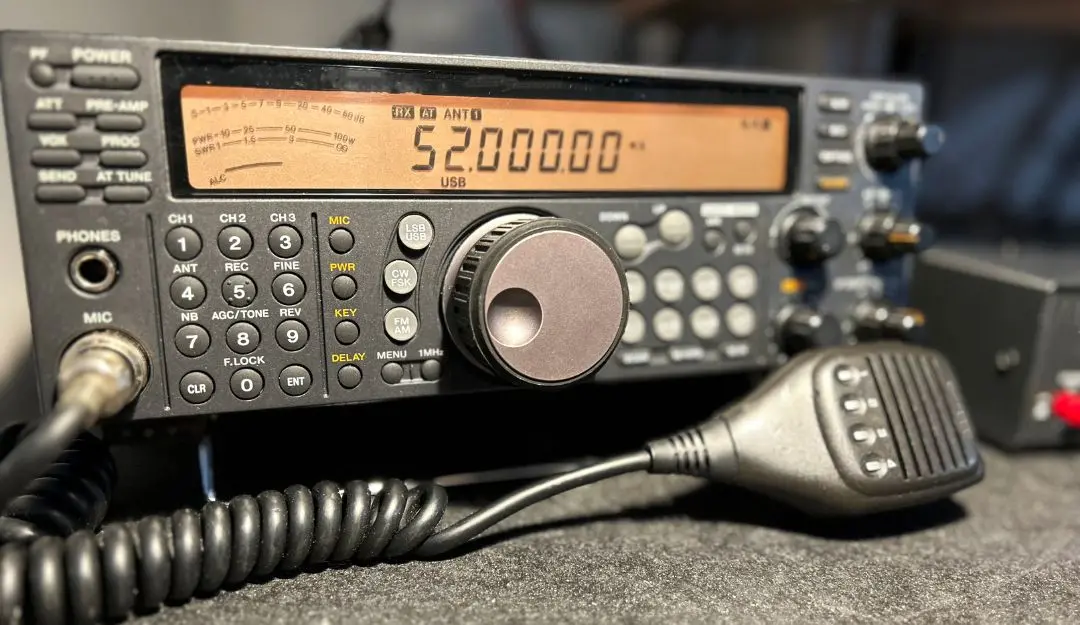
Kolkata: Amateur Ham radio operators have detected unauthorised late-night radio transmissions in coded Bengali, Urdu, and Arabic along the Indo-Bangladesh border in South Bengal, raising security concerns amid growing unrest in Bangladesh.
The signals, intercepted between 1 am and 3 am over the past two months, have been reported from Basirhat and Bongaon in North 24 Parganas and the Sunderbans in South 24 Parganas. Alarmed by these transmissions, Ham radio operators alerted the Ministry of Communications, which forwarded the matter to the International Monitoring Station (Radio) in Kolkata for further investigation.
What makes these signals suspicious?
According to Ambarish Nag Biswas, secretary of the West Bengal Radio Club, the transmissions follow an unusual pattern. "The global norm among Ham radio users is that if a third party enters an ongoing communication, they must identify themselves using a radio identification code or call sign. But in these cases, whenever we asked for identification, the signals went silent. The pattern remained the same in all instances," he said.
Biswas explained that the first such signal was detected in mid-December by a Ham radio operator in Sodepur, North 24 Parganas. Initially dismissed as an isolated incident, similar signals were later picked up from Basirhat, Bongaon, and South 24 Parganas. Even during the Gangasagar Mela in mid-January, multiple Ham radio users reported hearing these coded transmissions.
"These signals are in coded Bengali, Urdu, and Arabic, sometimes with a Bangladeshi accent. There are also instances of another unidentified language," Biswas added.
Security agencies step in
Following reports from Biswas, security agencies have begun investigating the matter. Officials from the Ministry of Communications and a senior security agency representative visited him to gather more details about the signals.
A senior BSF official, when contacted, acknowledged the seriousness of the situation. "Unidentified radio chatter along the border is always a matter of concern. If we receive details from Ham radio users, we will use our resources to track the source of these transmissions," he said.
Officials suspect that smugglers and extremist groups may be using Ham radio frequencies to communicate, as these are harder to monitor compared to mobile networks and emails, which are more easily tracked.
Similar incidents in the past
This is not the first time Ham radio operators have detected suspicious transmissions along the Indo-Bangladesh border. In 2002-03, similar communications were intercepted, leading to the arrest of six extremists operating illegal radio stations from Gangasagar in South 24 Parganas. At that time, the transmissions were in Pashto.
A similar incident occurred in 2016, when suspicious radio activity was detected in border areas. In 2017, just before communal clashes erupted in Basirhat, Ham radio users picked up unidentified transmissions from the region.
Why this issue is gaining attention now?
India and Bangladesh share a 4,096-km border, with 2,217 km along West Bengal—much of it porous. The latest radio activity comes amid heightened tensions between the two nations following the ouster of Sheikh Hasina from power in Dhaka last August. Relations have further strained after Hasina fled to India on August 5.
Adding to the tensions, the recent arrest of Hindu monk Chinmoy Krishna Das has intensified concerns, with India expressing alarm over continued attacks on minorities, particularly Hindus, in Bangladesh.
Amidst the rising uncertainty, Ham radio operators continue to monitor the situation. "Ham radio users are not only hobbyists but also serve as the eyes and ears in remote areas where traditional communication networks may not be accessible," Biswas said.
(With inputs from PTI)