From tractor driver’s hut to NASA: The journey of India’s rocket scientist Dr Anand Megalingam
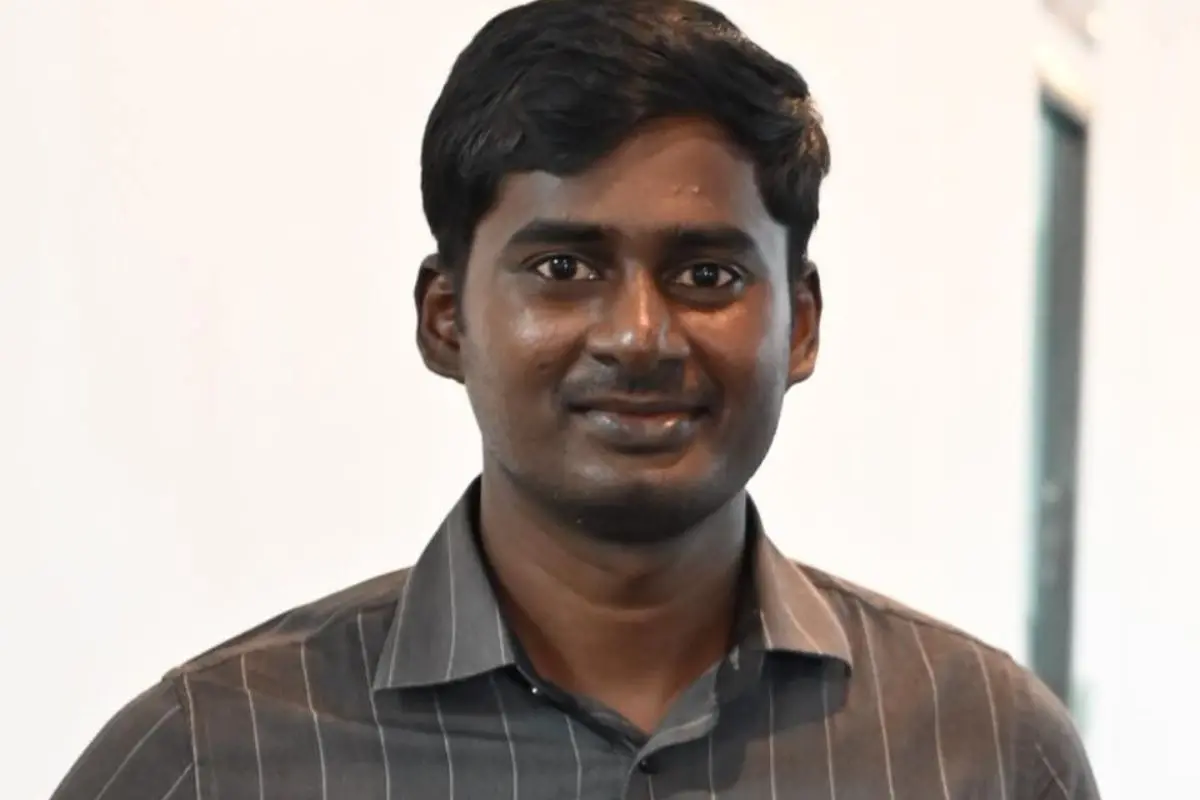
Dr Anand Megalingam, once denied entry into the United States, has returned not as a visitor but as a globally recognised aerospace innovator, handpicked by the US Department of State and trained through NASA-led programmes. His journey, which began in a modest rural hut in India, has now placed him among an elite cohort of 23 experts selected worldwide for one of the most prestigious international leadership and aerospace initiatives.
For many, this achievement stands as a remarkable professional milestone. For Dr Anand, it is a moment filled with symbolism. Years ago, while striving to pursue advanced opportunities in aerospace research, his US visa application was rejected, even as India had already begun to acknowledge his work in reusable rocket systems. He offered no protest, made no public complaint. Instead, he channelled setback into momentum, returning “to the launchpad” of his ambitions.
Today, the same nation that once declined him a visa has welcomed him into some of its most advanced scientific institutions, recognising not only his technical acumen but his growing influence on global space innovation.
Childhood forged in hardship
Dr Anand’s path began far from laboratories and research centres. Raised in a farming household in rural India, he grew up in a small hut where financial constraints were an everyday reality. His father worked as a tractor driver to support the family, while young Anand walked nearly six kilometres daily to attend school, an early routine that quietly built endurance and determination.
Academic stability did not come easily. Seeking a secure career, he initially pursued Computer Science but found himself disconnected from the subject. Struggling and uninspired, he eventually dropped out, a moment that could have ended his ambitions altogether. Instead, it marked a turning point.
Choosing to rebuild from scratch, he shifted to Aeronautical Engineering, the field that truly stirred his passion. This time, he excelled, graduating as a Gold Medallist with an exceptional 9.8 CGPA, one of the highest in his institution’s history.
Building Space Zone India from the ground up
Fuelled by the belief that India should not only participate in the global space race but shape it, Dr. Anand founded Space Zone India. His father became his first partner in the mission.
From limited resources and high aspirations emerged one of the country’s most closely watched private aerospace ventures. Under his leadership, Space Zone India launched RHUMI-H, India’s first reusable hybrid rocket to take flight from a mobile platform. The success positioned the organisation among Asia’s rising private space players.
The subsequent RHUMI-1 mission drew international attention, highlighting the capability of Indian private enterprise to deliver world-class aerospace innovation.
Yet, even as his achievements grew, so did the rejections. When his US visa was refused, many expected frustration. Instead, Dr Anand issued a statement that would later define his outlook, “Borders are for people. Innovation has no boundaries.”
From visa rejection to NASA recognition
In a twist that reflects the unpredictability of ambition, the US government later selected him for an exclusive month-long programme involving NASA scientists, military officials, aerospace leaders and Space Force commanders. The initiative offered firsthand exposure to cutting-edge technologies in defence systems, launch infrastructure, aerospace engineering and innovation management.
“The level of technology being used in the US space ecosystem is extraordinary. The training was deeply valuable, and we will apply these learnings to our upcoming missions in India,” Dr Anand said on his return.
His inclusion signals a broader shift, global institutions are now taking serious note of India’s private aerospace talent.
The RHUMI Twin Mission
Space Zone India is preparing for its next landmark project, the RHUMI Twin Mission, which aims to launch two rockets simultaneously from Chennai, a first in Indian private aerospace history. The organisation is also expanding into advanced aerospace systems, satellite technologies, reusable launch platforms and defence-aligned innovations intended to strengthen India’s indigenous capabilities.
The company is presently seeking strategic investors, research partners and defence collaborations to accelerate these objectives.
“Our mission is not just to launch rockets,” Dr. Anand says. “It is to build technologies that make India stronger, safer, and globally respected.”