IMD issues red, orange alerts as brutal heatwave sizzles India; UP’s Banda hits 48.2°C
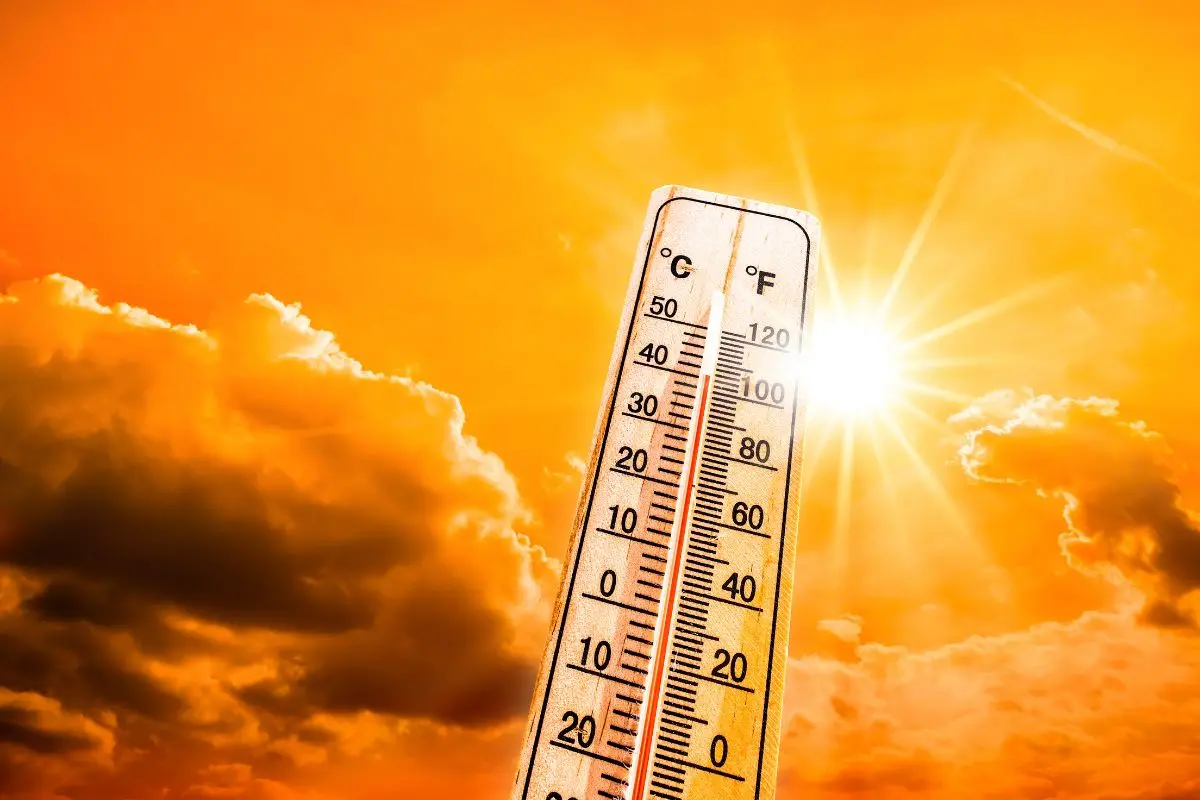
New Delhi: Large swathes of India continue to endure a punishing heatwave, with temperatures breaching the 45 degrees Celsius mark in numerous territories. The relentless weather has forced the India Meteorological Department (IMD) to issue critical Red and Orange alerts for several states, prompting an immediate call to action. In response, municipal corporations, healthcare facilities, and regional administrations have aggressively scaled up their infrastructure to manage a surge in heat-related medical emergencies.
Scorching conditions, severe water deficits, and blistering winds have disrupted daily life across Delhi, Uttar Pradesh, Bihar, Rajasthan, Maharashtra, Telangana, and Gujarat. Medical professionals have issued urgent advisories, asking people to remain indoors during peak afternoon hours and maintain high fluid intake.
Forecast predicts no immediate relief
According to meteorological assessments, the extreme thermal conditions are projected to linger for at least another week over vast areas of Northwest, Central and East India. IMD scientist Naresh Kumar observed, "We anticipate that heatwave conditions will persist across parts of Northwest, Central, and most of East India for the next 6 to 7 days. We have issued an 'Orange Alert' for Punjab, Haryana, NCR-Delhi region, Uttar Pradesh, Madhya Pradesh, Vidarbha, Coastal Andhra Pradesh and Odisha." He further noted, "We have also issued a 'Red Alert' for East Uttar Pradesh, East Madhya Pradesh and certain parts of Vidarbha for the next three days."
The capital region is currently registering temperatures consistently above 45 degrees Celsius, a trend expected to dominate the remainder of the week.
Capital actions emergency measures
Faced with escalating temperatures, Delhi hospitals and local authorities have mobilised crisis management plans following the admission of the season’s first critical heatstroke patient. A 24-year-old male from West Bengal was brought to Dr Ram Manohar Lohia Hospital in an unconscious state while travelling via train.
Highlighting the critical nature of the case, Dr Ajay Chauhan stated, "This was a young man, 24 years old, from West Bengal, who was travelling by train. He had no comorbidities, but suddenly he started vomiting, felt extremely tired, and had loose motions. We immediately tried to cool him down by immersing him in water and ice water up to the neck. The patient's condition is still very serious. Heat stroke is a very life-threatening condition."
In response to the broader public risk, Delhi Chief Minister Rekha Gupta confirmed that the state machinery is operating at an accelerated pace. She shared via a social media post, "13 mobile heat relief units are continuously reaching crowded areas to provide cold and clean drinking water, ORS packets, first aid, cotton gamchhas and caps."
Simultaneously, medical experts have highlighted the physiological dangers of extreme heat exposure. AIIMS Delhi professor Neeraj Nishchal warned, "As the heat increases, the sweating process in the body increases. This leads to dehydration. Along with sweat, electrolytes, especially sodium, begin to decrease. Alcohol should be completely avoided."
Northern and eastern belts sizzle
Uttar Pradesh is witnessing an intense thermal spell, particularly across Lucknow, Prayagraj, Banda and the Bundelkhand zone. To handle incoming cases, the Lucknow Civil Hospital has configured specialised climate-controlled zones. Chief Medical Superintendent Devesh Chandra Pandey explained, "We have made a ward of 10 beds. We have set up a cold room area, which encapsulates three rooms where the AC is continuously on. We have stocked up on ORS and ice packs."
Meteorological factors are compounding the crisis in the state. IMD scientist Mohammed Danish stated, "Bundelkhand, Prayagraj and Agra are hotter than Lucknow. Banda has recorded 46-48 degrees Celsius, among the highest in the country." Indeed, Banda retained its position as the nation's hottest locality for three consecutive days by clocking 48.2 degrees Celsius.
Discontent is simmering among local populations regarding ecological degradation. Banda resident Puneet Saxena remarked, "It is a sort of 'Agni Pariksha' for Banda residents. I believe the reason for this rise in temperature is trees being cut down and illegal mining." Echoing this sentiment, fellow resident Syed Imran Ali added, "The biggest reason is illegal cutting down of trees to make roads. All the old huge trees that caused cooling due to their shadows have ceased to exist here."
The environmental strain is translating directly into public health challenges. Banda physicians report a sharp spike in patients suffering from dizziness, fever, vomiting, and dehydration. In Moradabad, paediatrician Veer Singh pointed out a worrying rise in childhood dehydration, noting, "With the rise in temperature, the number of patients has also increased because people get dehydrated at a time like this."
Further east, Bihar is facing a comparable thermal crisis, especially in Patna and western territories. IMD scientist Anand Shankar observed, "The discomfort level is quite high. Warm night conditions may also prevail in districts such as Kaimur, Rohtas and Aurangabad." This prompted the Patna District Magistrate to reshape school schedules, completely suspending primary classes and cutting short middle school hours.
Central and southern regions face deficits
In Maharashtra, the Vidarbha province remains heavily impacted. Meteorologist Pravin Kumar pointed out that Wardha soared to 47.1 degrees Celsius while Nagpur cleared 46 degrees Celsius, prompting Red Alerts for Akola, Amravati and Wardha.
Further south, Telangana is witnessing major medical intake tied to the weather. Government General Hospital official B V Naga Mohan Rao stated, "Temperatures are hovering around 45 to 46 degrees Celsius. I strongly advise children and elderly individuals to refrain from stepping outside during peak hours."
Compounding the crisis, IMD scientist GNRS Srinivasa Rao indicated that the heatwave would colonise newer districts in central Telangana over the coming days. He added, "For the last four to five days, Hyderabad has been recording maximum temperatures ranging from 39 degrees Celsius to 41 degrees Celsius. Yesterday, Khammam district recorded the highest temperature in the state, while Adilabad district recorded the highest last week."
Touching upon the arrival of relief, Rao mentioned, "The monsoon is expected to make landfall over Kerala between May 25 and May 28. From there, it typically takes another week to reach Telangana."
Meanwhile, coastal Andhra Pradesh is anticipating three more days of intense heat even as the southwest monsoon inches forward.
The human cost of the weather is visible in severe water resource depletion across multiple states. In Haryana’s Charkhi Dadri district, desperate citizens are waiting endlessly for water tankers or paying exorbitant prices out of pocket. The crisis is even more pronounced in rural Gujarat; in Valsad district, villagers are navigating treacherous 45-foot-deep dry wells with ropes to scrape water from the very bottom.
Economic impact and minor relief
The intense thermal environment has heavily dinged local economies, particularly the tourism sector in Rajasthan. Udaipur restaurant owner Hemant Soni observed, "This time tourism has been greatly affected because the heat has prevented tourists from coming." Local guides confirmed that international footfalls have plunged significantly.
In Jharkhand, proactive medical measures are underway, with Ranchi’s Sadar Hospital establishing an exclusive heatstroke wing. Deputy Medical Superintendent Bimlesh Kumar Singh reassured the public, stating, "We have made all the arrangements for heat stroke. Patients will not face any problem."
Conversely, the mountainous state of Himachal Pradesh is looking at a brief respite. Shobhit Katiyar, the regional meteorological chief, stated, "Heatwave conditions are being observed throughout Himachal Pradesh. We are likely to get very light rain tomorrow, which may provide temporary relief." However, he warned that this window would be brief, with temperatures expected to surge upwards again after May 24.
Across the country, citizens are being repeatedly urged to avoid direct sunlight, use ORS packs, maintain high fluid intake, and suspend outdoor routines during high-temperature windows.
ANI