‘We do not stand for cheating’: IIT Bombay students clarify their stand after Sahil’s death
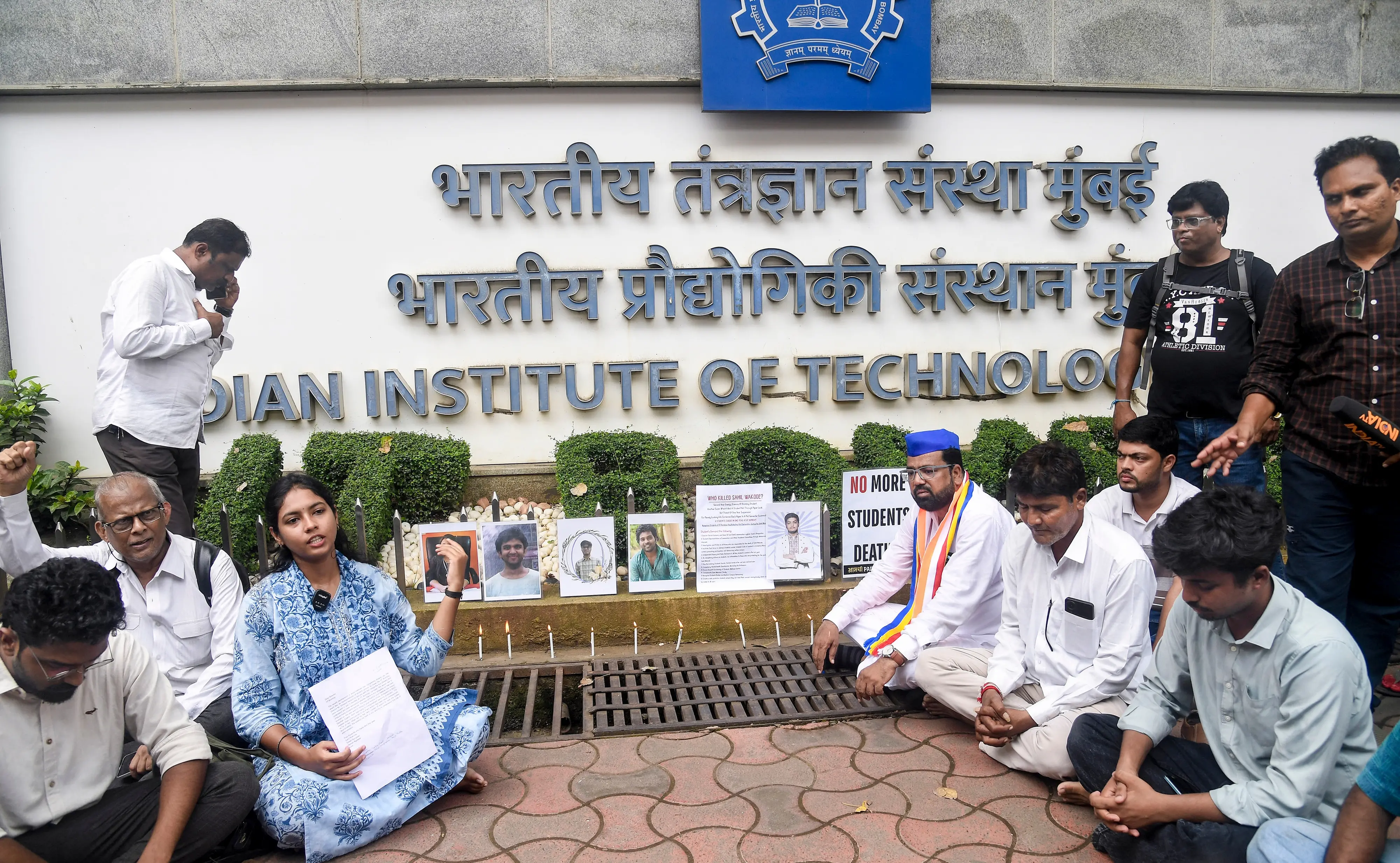
Mumbai: IIT Bombay student representatives have clarified that their protest following Sahil Wakode's death was not intended to justify academic misconduct, while calling for institutional reforms and a fair investigation into the circumstances surrounding his death. The institute's administration has agreed to work on an 18-point charter of student demands.
In a statement dated September 21, IIT Bombay student representatives said they do not support cheating or any form of academic misconduct.
They said Wakode's death had prompted students to examine institutional systems and processes and that the protest was intended to raise concerns about those issues rather than defend alleged academic misconduct.
The students said their demands were formally submitted to the institute's Director, who signed the document and agreed to work towards implementation within specified timelines.
What are the 18 demands?
The charter focuses on institutional accountability, student welfare, mental-health support and the investigation into Wakode's death. Among the demands reported from the charter are:
- Immediate suspension of Professor Suryanarayana Doolla and action against any other person found responsible after the investigation.
- An independent inquiry into the circumstances surrounding Wakode's death.
- Student and external representation in the inquiry process.
- A public apology over what students described as the defamation of Wakode in the institute's earlier communication.
- Greater accountability for senior institute officials.
- An open house involving senior administrators and students.
- A code of conduct for professors.
- Mental-health sensitisation for faculty and staff.
- Improvements to counselling and healthcare services.
- A 24-hour psychiatrist-on-call facility.
- Changes to the Disciplinary Action Committee process.
- Greater student representation in institutional decision-making.
- A task force involving students, faculty, mental-health professionals and external experts to examine student distress.
- An assurance that students participating peacefully in the protest will not face disciplinary action.
- A written implementation plan for the reforms.
What students said about Professor Doolla
The student representatives also clarified their position on Professor Suryanarayana Doolla, who was the examination invigilator involved in the incident preceding Wakode's death and has been named in a police case.
Students said they were not presuming his guilt or prejudging the investigation.
Their stated demand was that Doolla be relieved of his administrative responsibilities as Dean of Administrative Affairs while the investigation continued, which they described as a precaution intended to protect the independence of the inquiry.
IIT Bombay subsequently relieved Doolla of his duties as dean while retaining him as a faculty member.
Students reject outside political influence
The student representatives said the issue should remain student-led and addressed within IIT Bombay.
They said Wakode's death should not become a platform for external political organisations or other outside interests to shape the concerns of the student community.
The students said they wanted the reform process to remain rooted in the experiences and concerns of those on campus.
The institute also held an open house involving the Director and other administrators, allowing students to raise questions directly.
The student representatives said they appreciated the Director's engagement with the student community and his approach towards addressing institutional issues.
The 18-point charter followed three days of student protests after Wakode's death. The Director had signed the charter after a prolonged meeting with protesting students, although reports noted that individual demands remained subject to institutional processes and investigation.
What happened to Sahil Wakode?
Wakode, a second-year student at IIT Bombay, died by suicide on September 18. The death followed an examination incident in which he was allegedly found using a mobile phone and accused of academic malpractice.
IIT Bombay has said he allegedly used an AI platform to seek answers during the examination and later clarified that the circumstances surrounding his death remain subject to investigation.
Wakode's family has made allegations of caste-based harassment and sought action against those they hold responsible. Police have registered a case involving abetment of suicide and provisions of the SC/ST (Prevention of Atrocities) Act, according to reports. These allegations remain part of the ongoing investigation.
The institute has disputed the caste-discrimination allegation, while IIT Bombay's Faculty Forum has defended Doolla's handling of the examination incident, saying he was following established academic procedures.
The student statement separates two issues that have become intertwined in the case: the allegation of academic misconduct during an examination and the broader concerns raised about institutional systems.
The 18-point charter goes beyond the specific examination incident. Its demands include changes to disciplinary procedures, mental-health services, student representation, faculty conduct and independent oversight.
The investigation will determine the facts surrounding Wakode's death and the allegations made by his family. The student representatives have explicitly said they do not want Professor Doolla's guilt presumed before that process is completed.
The developments also place student welfare and institutional accountability at the centre of the debate, with students seeking reforms designed to address distress and improve mechanisms for raising concerns on campus.