‘Why sell a profitable bank?’ Rahul Gandhi questions IDBI sale; Sitharaman accuses Congress of using banks for political gains
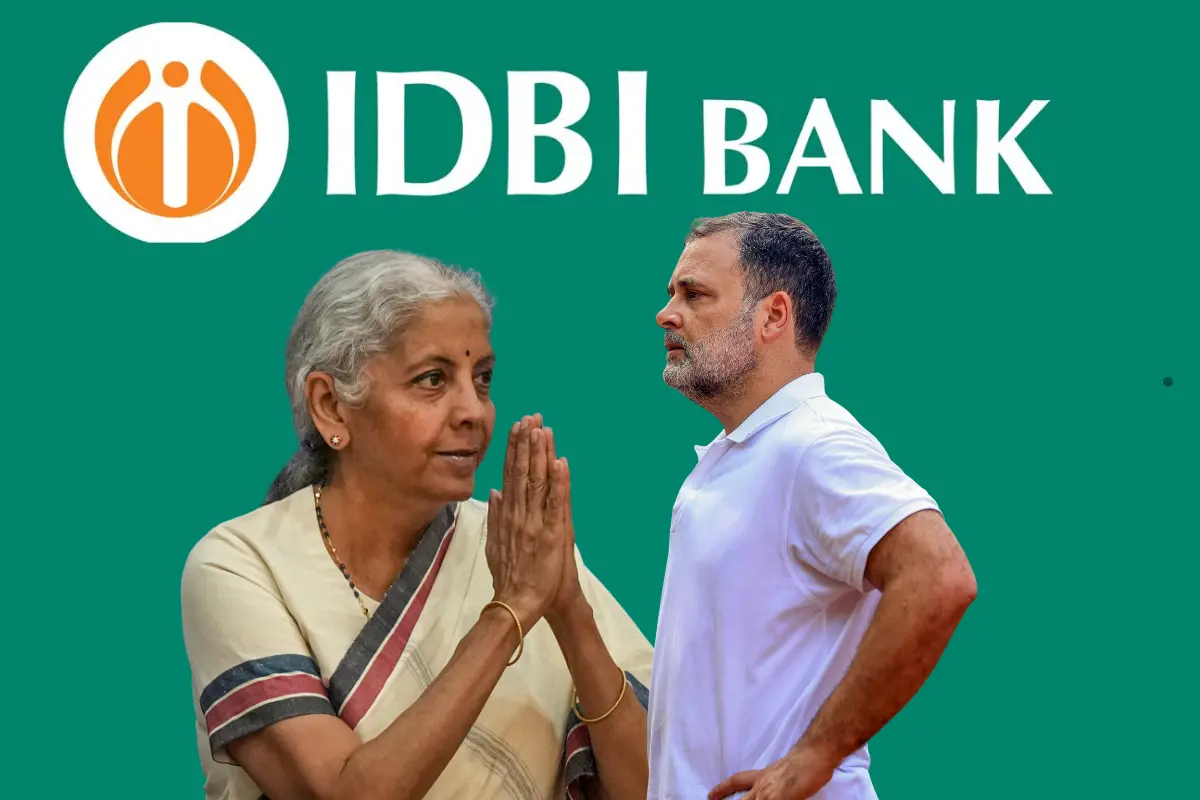
Mumbai: The proposed sale of IDBI Bank has triggered a fresh political confrontation between the Congress and the BJP, with Rahul Gandhi backing bank employees and Union Finance Minister Nirmala Sitharaman defending the government's decision to sell a majority stake in the lender.
In a letter addressed to IDBI Bank employees on October 29, Rahul Gandhi questioned why the government was selling a bank that had returned to profitability. He said the institution had been built using public money and should not be treated as an asset to be sold off. Gandhi also alleged that the government had failed to adequately explain the decision or address concerns about employees and depositors.
Gandhi said IDBI Bank had reported a profit of more than Rs 9,000 crore in the previous financial year, crediting employees for its turnaround. He also raised concerns about the future of reservation provisions for Scheduled Castes, Scheduled Tribes and Other Backward Classes if the bank becomes privately owned.
He referred to a 2003 assurance made by the government in Parliament that it would retain at least 51% ownership in IDBI. Gandhi argued that the proposed transaction would take the combined government and Life Insurance Corporation (LIC) holding from around 95% to 34%. He said the Congress supports a banking system in which public-sector institutions operate alongside private banks and pledged support for the employees' demands.
Nirmala Sitharaman hits back at Congress
Responding to Gandhi, Sitharaman accused the Congress of using banks and financial institutions for political purposes and pressuring bank employees to extend loans to influential individuals and businesses.
In a post on X, she cited several historical examples, including the 1957 LIC investment involving businessman Haridas Mundhra, the removal of SBI chairman R.K. Talwar in 1976, and allegations of political pressure over loans linked to Maruti. She also referred to allegations involving former Congress minister Pawan Kumar Bansal and loans to businesses linked to his family.
The Finance Minister further alleged that IDBI Bank had been handed over to the NDA government in poor financial condition, citing loans to large business groups, including Videocon, Winsome, ABG Shipyard and Kingfisher, that turned into bad loans.
Sitharaman said the NDA government had revived the bank through professional management, prudent lending practices and recapitalisation of more than Rs 25,000 crore. She also defended the strategic sale process, saying all due procedures had been followed.
What has the government said about the IDBI Bank sale?
The government approved the sale of a combined 60.72% stake in IDBI Bank to 10955230 Canada Inc., a subsidiary of Fairfax Financial Holdings, for approximately Rs 52,878 crore on October 14.
The transaction involves the sale of 30.48% of the bank's shares held by the Centre and 30.24% held by LIC. After the transaction, the government will retain 15% and LIC will hold 19%, taking their combined stake to 34%.
In a clarification issued on October 29, the Finance Ministry defended the bidding and valuation process. It said the initial round of bidding in the 2025-26 financial year had not been approved and that the subsequent best-offer round was conducted under a procedure determined by the Core Group of Secretaries on Disinvestment (CGD), which had been empowered by the Cabinet Committee on Economic Affairs (CCEA).
The ministry said the reserve price was neither increased nor decreased between the rounds. It also stated that two independent advisers used separate valuation methodologies and that the process was double-blind, meaning bidders did not know the valuations and valuers did not see the bids.
The government further said the revised bidding process increased the discovered transaction value by Rs 3,917 crore, while the potential liability linked to disputed tax demands covered under an indemnity was Rs 627 crore.
Why is the IDBI Bank sale controversial?
The dispute centres on three major issues: public ownership, employee protections and the valuation of the bank.
- Public ownership: Rahul Gandhi argues that a bank built with public money should remain under majority public ownership. The government maintains that the strategic restructuring will allow IDBI Bank to enter its next phase of growth while the Centre and LIC retain a combined 34% stake.
- Employee rights and reservations: Gandhi has raised concerns about the future of reservation provisions for SC, ST and OBC employees, along with existing service conditions. These concerns are central to the opposition from sections of the bank's workforce.
- Valuation and bidding: The Finance Ministry has defended the transaction, saying independent agencies assessed the bank's value and the bidding process followed the framework approved by the relevant government authorities.
The disagreement also reflects a broader debate over the government's approach to public-sector enterprises. The Centre sees strategic disinvestment as a way to restructure institutions and attract private investment, while the Congress argues that profitable public institutions should not necessarily be transferred to private ownership.
The transaction's final implications will depend on regulatory approvals, the completion of the sale and the arrangements governing employees after the change in ownership.
The proposed acquisition by Fairfax will require the relevant regulatory clearances, including approval from the Reserve Bank of India. The government and LIC are expected to retain a combined 34% stake after the transaction. Questions surrounding employee protections, reservations and the future role of public ownership are likely to remain part of the debate as the sale progresses.